Every commercial truck that rolls through Monroe County carries more than cargo. It carries a legal obligation to operate safely under a framework of federal and state regulations that most passenger vehicle drivers never think about.
When a trucking company, a fatigued driver, or a negligent maintenance provider breaks that obligation on I-490, I-390, or Route 104, the people in the smaller vehicles pay the price, and the price is almost always severe.
Rochester truck accident claims are not car accident claims with a bigger vehicle. They involve different evidence, defendants, insurance structures, and stakes. Our truck accident lawyer understand that those differences may help you recover compensation that reflects the real scope of harm after a Rochester crash.
Call William Mattar at (585) 444-4444 for a free consultation. We are available 24/7, and our No Fee Until We Win℠ promise means you pay nothing unless we recover for you.
Table of contents
- How William Mattar Approaches Rochester Truck Accident Claims
- The Chain of Negligence Behind Most Truck Crashes
- Why the Evidence Inside the Truck Matters Most After a Rochester Crash
- Where and Why Large Truck Crashes Happen on Rochester Roads
- Compensation Available in a Rochester Truck Accident Claim
- Shared Fault Does Not Eliminate Your Rochester Truck Accident Claim
- Deadlines That Affect Rochester Truck Accident Claims
- FAQs for Our Rochester Truck Accident Attorneys
- Take Action Now to Help Protect Your Rochester Truck Accident Case
How William Mattar Approaches Rochester Truck Accident Claims
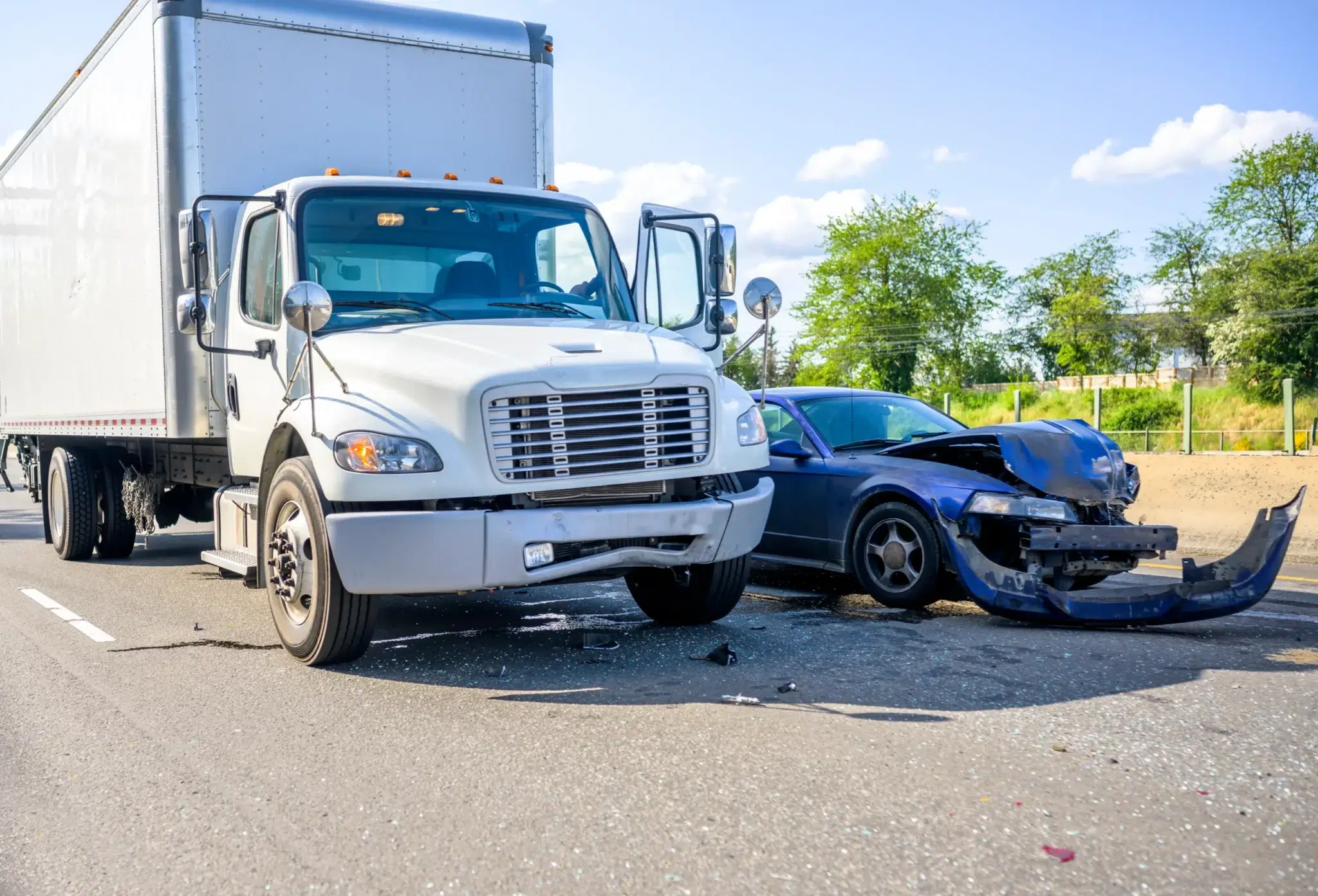
Since 1990, our firm has devoted its practice entirely to motor vehicle accident cases throughout New York State. This exclusive focus ensures that our attorneys works within this area of law every day, not just occasionally.
When it comes to truck accidents, that experience translates into a precise, systematic approach:
- We promptly send preservation requests to trucking companies to secure critical evidence before electronic data disappears.
- Our team reviews the carrier’s FMCSA safety record to uncover recurring violations.
- When needed, accident reconstruction specialists help us examine every detail of how the crash occurred.
- We trace responsibility through all involved parties: the driver, carrier, maintenance team, loading crew, and parts manufacturer.
- We manage the insurance process, from PIP claims and serious injury documentation to liability talks, allowing our clients to focus on their physical and emotional recovery rather than dealing with adjusters.
Past results do not guarantee future outcomes.
The Chain of Negligence Behind Most Truck Crashes
Car accident liability usually comes down to one question: which driver made the mistake? Truck accident liability asks a broader question: which parties in the commercial trucking chain failed to do their job?
That chain extends well beyond the person behind the wheel.
The First Link: The Driver
The driver may have been fatigued from exceeding federally mandated rest limits, distracted by a dispatch device, impaired, or speeding to meet a delivery window. Any of these behaviors may establish direct negligence.
The Motor Carrier
The motor carrier that hired or contracted with the driver has independent duties: screening driving records before hiring, enforcing rest requirements, maintaining the fleet, and training drivers for the specific vehicles and routes they operate. A carrier that cuts corners on any of these obligations may face direct liability for the crash, separate from whatever the driver did wrong.
Maintenance Contractors
Maintenance contractors who service the truck's brakes, tires, steering, and coupling systems may be held responsible when a mechanical failure causes or worsens a collision. If a brake inspection was skipped or a known defect was left unrepaired, that contractor's records become central to the case.
Cargo Loaders
Cargo loading operations control how freight is distributed and secured inside the trailer. An overloaded trailer, an unbalanced load, or improperly secured cargo can cause a truck to roll on a curved on-ramp or shed its load across multiple lanes of traffic.
Parts Manufacturers
Parts manufacturers may face product liability claims when a defective component, such as a faulty brake system, defective tire, or inadequate underride guard, contributes to a crash or worsens injuries than they would otherwise have been.
The strongest truck accident claims identify every link in this chain and hold each responsible party accountable.
Why the Evidence Inside the May Truck Matters Most After a Rochester Crash

After a car accident, the evidence usually comes from the scene: photos, police reports, and witness statements. In a truck accident, some of the most powerful evidence lives inside the truck's own electronic systems, and it has an expiration date.
Commercial trucks are equipped with electronic logging devices that record the driver's on-duty time, driving time, and rest periods. When an ELD shows that a driver operated beyond the hours outlined by federal regulations, it establishes a clear federal violation and may help prove that fatigue contributed to the collision.
Separately, event data recorders capture speed, braking patterns, throttle position, and vehicle dynamics in the seconds surrounding a crash, providing a second-by-second account that may confirm or flatly contradict the driver's version of events.
Unfortunately, event data recorder information operates on a continuous loop, and new data may overwrite crash information. Additionally, motor carriers are required to retain ELD records for only six months.
Without a formal preservation demand sent to the trucking company early in the process, this evidence may be gone before the injured person even finishes their first round of medical treatment.
Where and Why Large Truck Crashes Happen on Rochester Roads
Monroe County's road network handles a heavy volume of commercial traffic, and certain corridors see disproportionate risk.
- I-490/I-590 interchange: Curved ramps and tight merges that channel freight traffic through one of the region's busiest junction points, where stopping-distance errors and lane-change misjudgments lead to serious collisions
- I-390 corridor: Steep grades and frequent construction zones between the Thruway and the Finger Lakes region, where loaded trucks face braking challenges that passenger vehicles do not
- Route 104: East-west suburban route with intersection conflicts between through-moving commercial vehicles and turning local traffic
- Lyell Avenue and Lake Avenue: Industrial and commercial truck traffic sharing lanes with pedestrians, cyclists, and residential vehicles in tighter urban conditions
- East Main Street and the Port of Rochester area: Seasonal spikes in delivery and construction vehicle activity that increase conflict points during peak months
Lake-effect snow compounds every one of these risks. A road surface that was dry 20 minutes ago may be covered in heavy, wind-driven snow without warning. When a carrier sends a driver into those conditions without proper training or equipment, or when a driver fails to reduce speed as conditions deteriorate, the carrier and driver both bear responsibility for the consequences.
Compensation Available in a Rochester Truck Accident Claim
The gap between a car accident and a truck accident shows up most clearly in the injuries. A fully loaded commercial truck may outweigh a passenger vehicle by a factor of 20 or more, and that mass difference produces a distinct category of harm, one that affects every part of the injured person's financial future.
Future Earning Capacity
For many truck accident victims, this is the single largest component of the claim. A 35-year-old electrician who suffers a spinal cord injury loses not just the paychecks during recovery but potentially decades of future income.
Calculating that loss requires economic analysis that accounts for career trajectory, wage growth, benefits, and the specific limitations imposed by the injury. A Rochester truck accident attorney may work with vocational and economic professionals to document this loss in terms that hold up against the defense's own calculations.
Long-Term and Lifetime Medical Costs
Truck accident injuries, including traumatic brain damage, spinal cord damage, crush injuries, severe burns, and multiple fractures requiring staged surgeries, frequently involve treatment timelines measured in years rather than months.
The claim must account for projected future care, including follow-up surgeries, rehabilitation, adaptive equipment, in-home assistance, and pain management, not just the bills that have arrived so far.
Pain, Suffering, and Diminished Quality of Life
New York allows recovery for non-economic damages when the injury meets the state's serious injury threshold. Truck collisions commonly produce injuries in the qualifying categories: fractures, permanent loss of use, significant disfigurement, and permanent consequential limitation of a body organ or member.
For someone who can no longer work in their trade, play with their children, or live without daily pain, these damages reflect losses that no medical bill captures.
Fatal Truck Accident Claims for Surviving Families
When a truck crash takes a life, the personal representative of the estate may file a wrongful death claim within two years of the date of death. These claims may seek compensation for funeral and burial costs, loss of financial support, and the loss of parental guidance and services. The time deadlines associated with a case can vary depending on the case.
Our firm provides families with both legal representation and the space to grieve without being buried in insurance paperwork. Contact a truck accident wrongful death attorney in Rochester at (585) 444-4444 for a free consultation
Shared Fault Does Not Eliminate Your Rochester Truck Accident Claim

Trucking company defense teams invest significant resources in arguing that the injured driver contributed to the crash. Common arguments include following too closely, failing to account for the truck's blind spots, or making an unsafe lane change near a commercial vehicle.
New York's comparative negligence rule means these arguments, even when partially successful, do not eliminate the claim.
The electronic data inside the truck, including records showing the driver was speeding, fatigued, or failed to brake, is one of the most effective tools for demonstrating that the trucker’s or motor carrier’s negligence was the dominant cause.
Deadlines That Affect Rochester Truck Accident Claims
Multiple filing windows run simultaneously after a truck accident, and some are far shorter than people expect. Missing any one of them may weaken or permanently eliminate the right to compensation.
30 days or less: Event data recorder information inside the truck operates on a continuous loop and may overwrite crash data within weeks. This is one of the most urgent deadlines in any commercial vehicle case, and it is not set by a court. It is set by the technology itself. A preservation demand sent to the trucking company is the only way to stop the clock.
90 days: When a government-owned vehicle, an NFTA bus, a City of Rochester plow truck, or a poorly maintained government road contributed to the crash, a Notice of Claim must be filed within 90 days under General Municipal Law § 50-e. Courts may grant late filing in limited circumstances, such as when the injured person was incapacitated or a minor, but those exceptions are narrow and never guaranteed.
6 months: Motor carriers are required to retain ELD records for only six months. After that window closes, the hours-of-service data that could prove the driver was fatigued or operating illegally may no longer exist.
1 year and 90 days: Many claims against cities and other local government entities must be filed within this window, but some government defendants follow different deadlines.
2 years: Wrongful death claims must be filed within two years of the date of death. For many wrongful death claims against local government entities, a 90-day notice requirement still applies and usually runs from the date the representative is appointed
3 years: The general statute of limitations for a personal injury lawsuit in New York. This is the outermost boundary, but waiting anywhere close to it in a truck case means the most valuable electronic evidence will have been gone for years.
Claims against the State may follow different rules, and other exceptions may apply. A truck crash lawyer can help you determine the deadlines for your Rochester claim and how New York law and evidence gathering may impact that timeline. Every case is unique, so you should speak with a personal injury lawyer as soon as possible.
FAQs for Our Rochester Truck Accident Attorneys
Does it matter if the truck driver was an independent contractor?
Even if a truck driver is labeled an “independent contractor,” the trucking company may still be held liable. Courts look at how much control the company had over the driver’s work, and federal law requires carriers to meet safety obligations regardless of employment classification. An attorney can review these details to determine who’s liable in a truck accident and identify all potentially responsible parties.
What if a delivery truck hit me in a residential neighborhood?
Delivery trucks from carriers like FedEx, UPS, and Amazon operate on tight schedules through residential streets with limited visibility. If a delivery driver struck your vehicle while rushing to meet a quota or failing to check mirrors in a neighborhood setting, the driver and the delivery company may both bear liability. These claims follow the same legal framework as tractor-trailer cases.
What records should I try to keep after a truck accident?
Anything related to the crash and its aftermath. Medical bills, treatment records, prescription receipts, correspondence from insurance companies, pay stubs showing lost income, photographs of the vehicles and the crash scene, and the police report number. Our attorneys may help obtain additional records, including the truck's electronic data and the carrier's maintenance and inspection files, that you would not have access to on your own.
Can a passenger in my car file a separate claim?
Yes. Each person injured in a truck collision has an independent right to pursue compensation from the at-fault parties. A passenger's claim is separate from the driver's claim and is evaluated based on that individual's injuries, losses, and circumstances.
What if the truck was carrying hazardous materials?
Trucks transporting fuel, chemicals, or other hazardous cargo are subject to additional FMCSA regulations governing labeling, containment, driver training, and emergency procedures. A hazmat-related crash may involve environmental contamination, fire, or chemical exposure injuries, adding layers of complexity and additional liable parties, including the shipper and the company that loaded the materials.
Take Action Now to Help Protect Your Rochester Truck Accident Case

The trucking company's insurer already has adjusters reviewing the crash, and the electronic data inside the truck is already counting down toward being overwritten. Our team at William Mattar responds quickly to Rochester truck accident cases because the evidence that matters most has the shortest shelf life.
Call (585) 444-4444 or (844) 444-4444 to talk with a truck accident lawyer who will start protecting your claim now, not next week.