Most people who get into an Uber or Lyft in Buffalo do not think about what happens if the ride ends in a crash. And the answer is more complicated than a typical car accident.
Rideshare claims involve layered insurance policies that shift based on whether the driver had the app on, had accepted a trip, or was mid-ride at the moment of impact. Filing against the wrong policy or missing a coverage source may reduce what you recover by hundreds of thousands of dollars.
A Buffalo rideshare accident lawyer at William Mattar helps injured passengers, other drivers, pedestrians, and cyclists cut through that complexity.
Our firm has concentrated on motor vehicle accident cases for more than 35 years, and our Buffalo office handles rideshare injury claims across Erie County and Western New York.
Call (716) 444-4444 for a free consultation. We are available 24/7. No Fee Until We Win℠.
Table of contents
- Why Are Rideshare Accident Claims More Complicated Than Regular Car Accident Claims?
- How Does William Mattar Handle a Rideshare Accident Claim?
- Locking Down the Driver's App Status
- What Causes Rideshare Accidents in Buffalo?
- Ask William Mattar
- Who May File a Rideshare Accident Claim in Buffalo?
- What Compensation May Be Available After a Rideshare Accident?
- Common Questions for Our Buffalo Rideshare Accident Attorneys
- Get Help With Your Buffalo Rideshare Accident Claim
Why Are Rideshare Accident Claims More Complicated Than Regular Car Accident Claims?
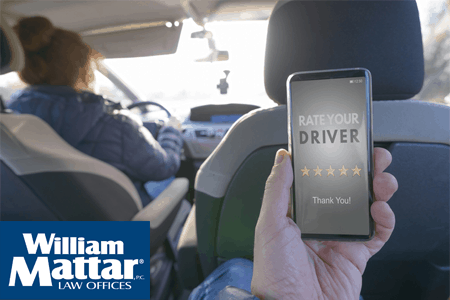
Rideshare accident claims are more complicated because they involve multiple insurance policies with different coverage limits that shift based on the driver's app status at the time of the crash.
A standard car accident in Buffalo typically involves two personal auto policies. A rideshare crash may involve the driver's personal policy, the rideshare company's commercial policy, and possibly the injured person's own coverage, all governed by different rules.
New York classifies Uber and Lyft as Transportation Network Companies (TNCs) under Vehicle and Traffic Law Article 44-B. This law sets specific insurance requirements that change depending on whether the driver is logged into the app, waiting for a ride request, or actively transporting a passenger.
Identifying the correct coverage period and the correct policy is the first step in any rideshare injury claim, and it is the step where mistakes are most costly.
How Does William Mattar Handle a Rideshare Accident Claim?
Rideshare claims often require a different playbook than standard car accident cases. The insurance layers are more complex, the corporate entities involved are larger, and the evidence needed to establish coverage is unique to the TNC model. Our legal team approaches these claims with that reality in mind from the first conversation.
Locking Down the Driver's App Status
One of the single most important facts in any rideshare claim is what the driver was doing on the app at the moment of impact. Our rideshare crash attorneys move quickly to preserve that evidence.
We can request trip logs and app activity records directly from Uber or Lyft, cross-reference timestamps against the police report, and secure GPS data showing the vehicle's route, speed, and whether a ride had been accepted. These records are controlled by the rideshare company. Without a prompt legal request, the data may become harder to obtain.
Navigating Multiple Insurance Layers
A single rideshare crash in Buffalo may trigger three or more insurance policies. These policies do not stack neatly, and each carrier has its own reasons to deny or limit the claim.
Policies that may apply to a Buffalo rideshare accident include the following:
- The TNC's commercial liability policy, which provides up to $1.25 million during active trips but significantly less during Period 1
- The rideshare driver's personal auto policy, which often excludes for-hire driving and may deny the claim entirely
- The injured person's own no-fault PIP coverage for medical expenses and lost wages
- The injured person's UM or SUM coverage, which may apply if the at-fault driver was uninsured or underinsured
- A third-party driver's liability policy, if someone other than the rideshare driver caused the crash
Identifying which policy responds first, which provides excess coverage, and which carrier is likely to deny the claim is the foundation of every rideshare case our firm handles.
Countering the Independent Contractor Defense
Uber and Lyft classify their drivers as independent contractors, not employees. This classification is central to their legal strategy after a crash.
When a driver causes injuries through negligent behavior, the rideshare company may argue that the driver's conduct was outside its control and that the company bears no direct liability beyond its insurance obligations.
Our Buffalo rideshare injury lawyers anticipate this defense and build the claim for recovery through the available policy limits regardless of how the company characterizes its relationship with the driver.
Challenging Low Valuations From TNC Insurers
The insurance companies behind Uber and Lyft's commercial policies handle high volumes of rideshare claims nationally. Their adjusters use standardized valuation models that often undercount future medical costs, minimize lost earning capacity, and discount pain and suffering.
Our firm pushes back with case-specific medical documentation, wage loss projections, and detailed demand packages that reflect the actual impact of the injuries, not a formula designed to close files quickly.
William Mattar has represented thousands of clients through the years. That experience includes rideshare claims against the commercial insurers behind both Uber and Lyft in Western New York.
Past results do not guarantee future outcomes.
What Causes Rideshare Accidents in Buffalo?
Rideshare accidents in Buffalo are caused by many of the same driver behaviors behind standard car crashes, but the rideshare context introduces additional risk factors that make collisions more likely.
App Distraction
Rideshare drivers rely on a phone-based app to accept rides, follow navigation prompts, and communicate with passengers. That phone is active and demanding attention throughout every trip.
Checking the screen for a new ride request or adjusting a route while driving through a busy corridor like Elmwood Avenue or Main Street can create the same cognitive distraction as texting behind the wheel.
Unfamiliar Routes and Sudden Maneuvers
Many rideshare drivers in Buffalo are not full-time professionals with deep knowledge of local roads. A driver following GPS directions may brake suddenly before a turn, cut across a lane to reach a pickup point, or stop in a travel lane on Delaware Avenue or near Canalside because the app told them the passenger is nearby.
These abrupt maneuvers catch surrounding drivers, cyclists, and pedestrians off guard.
Unsafe Pickup and Drop-Off Behavior
Rideshare pickups and drop-offs happen wherever the passenger requests them. That often means stopping in bike lanes, double-parking on narrow side streets, or pulling over in no-stopping zones near bars and restaurants in Allentown or Chippewa Street.
These stops create blind spots and force other vehicles and cyclists to merge around the stopped car, increasing the risk of a secondary collision.
Fatigue and Long Shifts
Rideshare drivers set their own hours, and there are no federal hours-of-service limits like those governing commercial truck drivers. A driver working a late-night shift after a full day of driving may be behind the wheel for 12 or more hours.
Fatigue slows reaction time and impairs judgment, especially during peak demand periods like Bills game traffic or weekend nights downtown.
Pressure to Accept and Complete Rides Quickly
The rideshare business model rewards speed. Drivers who complete more trips earn more money. That financial pressure may lead to speeding, rolling through stop signs, or rushing through yellow lights to reach a pickup location or finish a trip.
When that pressure overrides safe driving decisions, the passengers, other drivers, and pedestrians nearby bear the consequences.
Ask William Mattar
Q: What happens if I'm hurt as a passenger in an Uber or Lyft in Buffalo?
A: As a rideshare passenger injured during an active trip, you may file a no-fault PIP claim with the TNC vehicle's insurer for up to $50,000 in medical and wage loss benefits. If your injuries meet the serious injury threshold, a separate liability claim against the TNC's $1.25 million commercial policy may cover pain and suffering and additional economic losses.
Q: What if the rideshare driver was not at fault for the crash?
A: You may still have a claim. If another driver caused the accident, you file a liability claim against that driver's insurance. The rideshare company's SUM coverage may also apply if the at-fault driver was uninsured or underinsured. Multiple coverage sources are often available regardless of which driver was negligent.
Q: Does my own car insurance matter if I was a rideshare passenger?
A: It may. If the rideshare company's coverage is insufficient or if the at-fault driver was underinsured, your own SUM coverage may provide additional compensation. Reviewing your personal auto policy is part of the coverage analysis our attorneys perform on every rideshare case.
Who May File a Rideshare Accident Claim in Buffalo?
Multiple categories of people may be eligible to file a claim after a rideshare crash in Buffalo. The type of claim and the available coverage vary depending on how the person was involved:
- Rideshare passengers injured during a trip file against the TNC's commercial policy, which provides $1.25 million in coverage during Periods 2 and 3
- Drivers and passengers in other vehicles struck by a rideshare driver file against the TNC's policy based on the driver's app status at the time of the crash
- Pedestrians and cyclists hit by a rideshare vehicle may file against the TNC's policy and may also access no-fault PIP benefits through the rideshare vehicle's insurance
- Rideshare drivers injured by another motorist's negligence may file against the at-fault driver's personal auto policy and may also access their own UM/SUM coverage
No matter how you were involved in the crash, the first question is always which policy applies. Our attorneys identify every available coverage source before filing a single claim. A Buffalo personal injury lawyer can evaluate your insurance options and determine the best path toward recovering compensation.
Curious if you have a claim? Contact a rideshare accident lawyer in Buffalo now at (716) 444-4444.
What Compensation May Be Available After a Rideshare Accident?

Compensation after a rideshare accident in Buffalo may come from multiple insurance sources and cover several categories of loss. The amount available depends on the coverage period, the severity of injuries, and whether the serious injury threshold is met.
No-Fault PIP Benefits
New York's no-fault system pays up to $50,000 per person for medical expenses, 80% of lost wages up to $2,000 per month, and related costs. These benefits are paid regardless of who caused the crash.
Rideshare passengers typically file PIP claims with the TNC vehicle's insurance carrier.
Pain and Suffering Through a Liability Claim
To pursue pain and suffering damages, the injured person must meet New York's serious injury threshold under Insurance Law § 5102(d). The law defines eight qualifying categories. Many of the common victims in rideshare accidents may suffer injuries that meet this threshold after a Buffalo rideshare crash, including:
- Fractures of any bone
- Significant disfigurement
- Permanent loss of use of a body organ, member, function, or system
- Permanent consequential limitation of use of a body organ or member
- Significant limitation of use of a body function or system
Once the threshold is met, the liability claim proceeds against the applicable TNC policy or the at-fault driver's personal coverage, depending on the unique situation.
Other Recoverable Losses
Beyond PIP and pain and suffering, a rideshare accident claim may include lost earning capacity, out-of-pocket expenses tied to the injury, property damage, and costs of future medical treatment.
When a rideshare driver with $1.25 million in coverage caused the crash, the available recovery is significantly higher than a standard car accident claim involving only minimum personal auto insurance.
Common Questions for Our Buffalo Rideshare Accident Attorneys
How long do I have to file a rideshare accident claim in Buffalo?
The statute of limitations for most personal injury lawsuits in New York is three years from the date of the accident. The no-fault PIP application must be filed within 30 days. Acting early preserves every available deadline. If your injuries involve an Uber or Lyft collision, understanding when to file a rideshare injury lawsuit is especially important. The statute of limitations can be much shorter if a governmental entity is involved.
What if I do not know whether the driver was logged into the app?
Your attorney may request trip records directly from Uber or Lyft. These records show whether the driver was online, had accepted a trip, or was actively transporting a passenger at the time of the crash. The police report and the driver's own statements may also help establish the coverage period, which is critical when filing a claim after Lyft crash.
What if the rideshare driver's personal insurance denies my claim?
Personal auto policies in New York often exclude coverage for commercial or for-hire driving. If the driver was logged into the app, TNC coverage may apply through the driver’s policy, the TNC’s group policy, or both. A denial from the personal insurer does not mean there is no coverage. It often means the claim needs to be redirected to the correct carrier.
Are rideshare accidents covered differently in Buffalo than in New York City?
Yes. Rides originating outside New York City are governed by VTL Article 44-B, which requires $1.25 million in liability coverage during active trips. New York City rides fall under TLC regulations with different, and often lower, coverage requirements. This means that Buffalo rideshare claims follow Article 44-B coverage requirements, not NYC’s.
Get Help With Your Buffalo Rideshare Accident Claim

A rideshare accident in Buffalo raises questions that a standard car crash does not. Which policy applies? What was the driver's app status? Does the company or the driver bear responsibility? These are not questions you need to answer alone.
William Mattar handles Uber and Lyft claims for passengers, other drivers, pedestrians, and cyclists across Buffalo and Erie County.
Call our Buffalo rideshare accident lawyers now at (716) 444-4444 for a free consultation. We are available 24/7.