Rideshare accidents on Long Island create unique legal challenges that differ from typical car crash claims, especially when Uber or Lyft drivers are involved. A Long Island rideshare accident lawyer can help passengers, other drivers, pedestrians, and cyclists pursue compensation after a crash in Nassau County or Suffolk County.
These cases often involve overlapping insurance policies that shift depending on whether the driver was offline, waiting for a ride request, or actively transporting a passenger.
William Mattar can represent rideshare accident victims throughout Nassau and Suffolk County. Our attorneys handle complex issues such as coverage-phase disputes, multi-insurer negotiations, and platform liability questions that define Uber and Lyft claims in New York.
This includes navigating evolving TNC insurance rules under Vehicle and Traffic Law Article 44-B and the layered coverage structures that distinguish rideshare cases from standard car accident claims.
Call (516) 444-4444 for a free case evaluation. We answer phones 24/7.
Table of contents
- Rideshare Accident Claims Need Focused Legal Attention – William Mattar Can Help
- Why Uber and Lyft Accident Claims Are Different from Other Long Island Car Accidents
- Who Pays After a Long Island Uber or Lyft Accident?
- Long Island Uber and Lyft Accident Cases We Handle
- Why Insurance Companies Fight Rideshare Claims Aggressively
- Evidence That Strengthens a Long Island Rideshare Accident Claim
- Deadlines and Evidence Windows in a Long Island Rideshare Accident Claim
- What Compensation Is Available After a Rideshare Crash on Long Island?
- FAQs for Long Island Rideshare Accident Victims
- Speak With a Rideshare Accident Lawyer Today after a Long Island Crash
Rideshare Accident Claims Need Focused Legal Attention – William Mattar Can Help
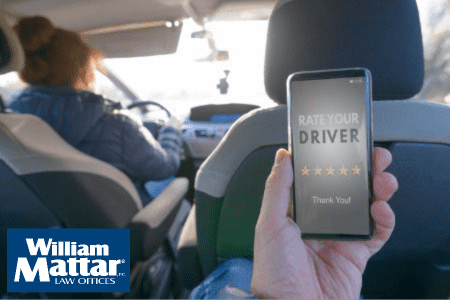
A rideshare crash isn't necessarily a one-insurer case. You may be dealing with Uber or Lyft's commercial carrier, the driver's personal auto insurer, a third-party driver's liability policy, and your own UM/UIM coverage, often all at the same time, all pointing fingers at each other.
At William Mattar, our car accident attorneys have handled New York motor vehicle accident claims for over 30 years, including the rideshare-specific disputes that emerged after New York's TNC insurance framework took effect in 2017.
We know how to read trip data, establish coverage phases, and push back when a platform insurer tries to slot your crash into a lower-coverage tier.
Call (516) 444-4444 for a free evaluation. We work on a contingency basis. No cost to get started, and no attorney's fees unless we secure a recovery.
Why Uber and Lyft Accident Claims Are Different from Other Long Island Car Accidents
A standard car accident on Long Island may involve two drivers, two insurance policies, and a relatively straightforward question about who was at fault. A rideshare accident adds layers.
Uber and Lyft are classified as transportation network companies under New York Vehicle and Traffic Law Article 44-B. The insurance that applies after a crash depends on which phase the rideshare driver was in at the time of the collision:
| Driver status | Minimum coverage |
| App off (personal use) | No rideshare company coverage applies. The driver’s personal auto insurance is usually the main policy in play. |
| App on (waiting for a request) | $75,000 per person for bodily injury or death, $150,000 per accident, and $25,000 for property damage, plus uninsured motorist and no-fault coverage. |
| Ride accepted (through drop-off) | $1,250,000 for bodily injury or death and property damage, plus $1,250,000 in supplemental uninsured/underinsured motorist coverage and no-fault benefits. |
The difference between a $75,000 policy limit and a $1.25 million policy limit may come down to seconds, specifically whether the driver had accepted a ride request when the crash happened. Rideshare companies and their insurers have every reason to argue that the driver was in a lower-coverage phase.
A Long Island rideshare accident attorney can gather trip data, app logs, and GPS records to establish which phase applies to your claim.
Who Pays After a Long Island Uber or Lyft Accident?

The answer depends on who caused the crash and what the rideshare driver was doing at the time. Multiple insurance policies may apply, and they don't always cooperate with each other.
When the Rideshare Driver Caused the Crash
If the Uber or Lyft driver caused the accident, the available coverage can depend on whether the app was off, the driver was waiting for a request, or the driver was on an active trip. The coverage limits depend on the phase the driver was in, as outlined above.
When Another Driver Caused the Crash
If a third-party driver caused the collision, that driver's liability insurance is the starting point. However, if the at-fault driver is uninsured or underinsured, the rideshare company's supplemental uninsured/underinsured motorist coverage may fill the gap during an active ride. Your own auto policy's UM/UIM coverage may also apply, depending on your situation.
When Fault Is Shared
New York follows a pure comparative negligence rule. You may pursue compensation even if you share some responsibility for the crash. Your recovery gets reduced by your percentage of fault, but partial responsibility does not eliminate your right to file a claim.
Identifying the available insurance policies is critical in rideshare accident cases. Our rideshare crash attorneys trace coverage across the rideshare platform's policy, the driver's personal policy, third-party liability policies, and your own coverage to build the strongest possible claim.
Long Island Uber and Lyft Accident Cases We Handle
Rideshare accidents on Long Island take many forms, and the legal issues shift depending on who was injured and how the crash happened. Our attorneys represent victims in rideshare accidents across all of these scenarios:
- Passenger injuries during an Uber or Lyft ride. Passengers on active rides have access to the highest coverage tier under New York law. The challenge is getting the insurer to pay the full value rather than pushing a discounted settlement.
- Crashes involving other drivers. If a rideshare driver caused your collision, the available coverage depends on whether they had a passenger, were en route to a pickup, or were waiting for a request. The phase determines which policy applies and at what limits.
- Pedestrians and cyclists hit by rideshare vehicles. Victims struck by Uber or Lyft drivers may be eligible for no-fault benefits through the driver's policy and may also pursue a liability claim. Crashes near LIRR stations, downtown Hempstead, Mineola, and Huntington are among the scenarios we handle.
- Rideshare accidents involving drunk or distracted drivers. Impaired or distracted driving by a rideshare operator may strengthen both the liability case and the argument for damages beyond PIP benefits.
Regardless of the type of crash, the insurance analysis starts the same way: identifying the coverage phase, tracing every applicable policy, and building a claim that reflects the full scope of your losses.
Why Insurance Companies Fight Rideshare Claims Aggressively
Rideshare accident claims involve multiple insurers, and each one has a financial incentive to shift responsibility to someone else's policy. These strategies and arguments might look like:
- The rideshare company's insurer argues the driver was in a lower-coverage phase. The difference between "app on, waiting" and "ride accepted" can potentially be the difference between $150,000 and $1.25 million in available coverage. Expect the TNC's insurer to scrutinize app logs and GPS data for any argument that the driver hadn't yet accepted the ride request.
- The driver's personal insurer denies the claim entirely. Many personal auto policies contain TNC exclusions that void coverage whenever the driver is using the vehicle for rideshare activity. If the platform's insurer also disputes coverage, the claim can stall between two insurers who both say it isn't their responsibility.
- A third-party driver's insurer disputes fault or argues comparative negligence. If another driver caused the crash, that driver's insurer may push back on liability or claim the rideshare driver shared fault, reducing what they owe.
Without an attorney tracking each insurer's position, gaps in coverage may go unidentified, and low offers may arrive before you understand what your claim is worth.
Rideshare accident attorneys at William Mattar handle communications with appropriate insurers, gather the trip data and app records needed to establish the correct coverage phase, and prevent premature settlement offers from closing your claim before the full picture is clear.
Evidence That Strengthens a Long Island Rideshare Accident Claim

Rideshare cases depend on evidence that doesn't exist in a typical car accident claim. Much of it is digital, time-sensitive, and controlled by the rideshare platform rather than by you. Preserving it early is critical because trip data and app records may become harder to obtain as time passes.
Evidence that may strengthen your claim includes:
- Driver status and trip data
- Trip receipts and ride history
- App screenshots and communications
- GPS and location data
- Dashcam and surveillance footage
- Police reports and witness statements
We act quickly to preserve this evidence, including sending spoliation letters to the rideshare company to prevent trip data from being deleted or overwritten. The sooner you contact a long Island rideshare accident lawyer, the stronger your evidentiary foundation.
Deadlines and Evidence Windows in a Long Island Rideshare Accident Claim
The legal filing deadlines for rideshare claims mirror those for other motor vehicle accidents in New York: a 30-day window to submit your no-fault application, a three-year statute of limitations to file a rideshare injury lawsuit under CPLR § 214, a 90-day notice-of-claim requirement if a government entity is involved, and a two-year deadline for wrongful death claims measured from the date of death.
But in rideshare cases, the practical deadline is often much shorter. Trip data, app activity logs, and GPS records are controlled by the rideshare platform, and they don't preserve that information indefinitely. The coverage phase that determines whether your claim falls under a $150,000 or $1.25 million policy may hinge on digital records that could become unavailable if your attorney doesn't send a preservation demand quickly.
That evidence urgency is the real reason to contact a rideshare accident lawyer early — not just to protect filing rights, but to lock down the data your claim depends on before it disappears.
What Compensation Is Available After a Rideshare Crash on Long Island?
The compensation in a rideshare accident claim depends on which insurance tier applies, how severe your injuries are, and whether those injuries clear New York's serious injury threshold.
Beyond no-fault PIP benefits, a rideshare accident claim may pursue:
Medical costs that exceed PIP limits. Rideshare passengers and other victims struck during an active trip may have access to coverage well above the $50,000 PIP cap. Surgical costs, extended rehabilitation, and ongoing specialist care tied to the crash all factor in.
Lost income. Rideshare crash victims include daily commuters, airport travelers, people heading to work — many of whom depend on their ability to be physically present at a job. When injuries prevent that, lost wages and long-term earning disruption become central to the claim.
Pain and suffering. The physical toll of crash injuries compounded by the stress of navigating a multi-insurer claims process that wasn't designed to make your life easier.
Loss of enjoyment of life. When injuries from a rideshare crash limit your mobility, independence, or ability to do the things that defined your routine, that loss is recoverable.
Our attorneys coordinate with medical providers and, where appropriate, financial consultants to build a damages case grounded in what the crash actually cost you. An experienced Long Island personal injury lawyer can help document these losses and pursue full compensation, rather than accepting the discounted figure the first adjuster to call you hopes you'll accept.
FAQs for Long Island Rideshare Accident Victims
How does New York's no-fault insurance apply to rideshare accidents?
The no-fault system operates the same way it does in any motor vehicle crash. What's different in a rideshare context is which PIP policy applies. If you were a passenger during an active ride, PIP coverage typically flows through the TNC's commercial policy. If the driver's app was off, the driver's personal auto policy is the relevant source. Sorting out which insurer handles your PIP claim is one of the first things a rideshare accident attorney does.
Can I sue Uber or Lyft directly after an accident on Long Island?
Uber and Lyft classify their drivers as independent contractors, which may limit direct claims against the company itself. However, the TNC's insurance policy is typically the primary source of coverage for injuries during an active ride. An attorney may help identify all available policies and assist with filing an Uber accident claim through the appropriate channels to pursue compensation.
What if the rideshare driver's app was off at the time of the crash?
If the driver was using the vehicle for personal purposes with the app turned off, the rideshare company's insurance does not apply. The driver's personal auto policy would be the available coverage. Your own UM/UIM coverage may also come into play if the driver's personal policy limits are insufficient.
Does it matter whether I was a passenger, another driver, or a pedestrian?
The type of claim and available coverage may differ depending on your role in the accident. Passengers during an active ride generally have access to the highest coverage tier. Other drivers, pedestrians, and cyclists may also have claims, but the applicable policies and coverage limits depend on the phase the rideshare driver was in and who caused the crash.
How long does a rideshare accident claim take to resolve?
Timelines vary based on the complexity of the insurance coverage, the severity of injuries, and whether liability is disputed. Rideshare cases might take longer than standard car accident claims because multiple insurers are involved, and coverage phase disputes must be resolved before settlement discussions can proceed.
What if I don't have my own car insurance?
You may still have a claim. No-fault benefits may be available through the rideshare driver's policy, and liability coverage from the TNC's insurer or the at-fault driver's policy may provide additional compensation. An attorney may help identify every source of coverage available to you.
Do I need to report the accident to Uber or Lyft?
Reporting the accident through the rideshare app creates a record of the trip and the incident, which may support your claim. However, be cautious about providing detailed statements through the platform. It is often advisable to let an attorney handle substantive communications with the rideshare company and its insurer.
Speak With a Rideshare Accident Lawyer Today after a Long Island Crash

An Uber or Lyft accident on Long Island drops you into an insurance maze that most people have never encountered before. Multiple policies, coverage phases, platform insurers pushing back, and a no-fault system on top of all of it. Figuring out who owes what shouldn't fall on you while you're recovering from injuries.
William Mattar, P.C. can handle Long Island rideshare accident cases from the first phone call through resolution. Our phones are always answered.
Call (516) 444-4444 to speak with a Long Island rideshare accident lawyer. The consultation is free, available 24/7, and comes with no obligation. No Fee Until We Win℠.
Past performance does not guarantee future results, including financial results or client satisfaction.