
New York Pedestrian Accident Lawyer
In New York, the law is designed to protect pedestrians. The state's No-Fault insurance system is intended to ensure that if you are hit by a vehicle, your medical bills and a portion of your lost wages are covered promptly, regardless of who was at fault. Theoretically, this provides a quick financial safety net while you recover.
The reality may be quite different. Insurance companies are businesses, and part of their model involves balancing claim payouts with profitability. They may investigate the accident to see if you were outside a crosswalk or distracted, or they might argue that your injuries do not meet New York’s serious injury threshold. Successfully making these arguments allows them to limit what they pay.
As New York pedestrian accident lawyer, William Mattar, P.C. understands how to help pedestrians receive maximum compensation. We work to pursue the maximum compensation available under the law for those injured in pedestrian accidents.
If you have questions about your rights after being struck by a vehicle, we are ready to help. Call us 24/7 at (716) 444-4444.
Why Choose William Mattar, P.C.?

William Mattar, P.C. has been dedicated to handling motor vehicle accident cases since our founding. This focus allows us to direct our resources, staff, and collective experience toward helping people injured on the road.
A Legacy of Focus Since 1990
William Mattar founded our firm in 1990 with a clear mission: to help accident victims. What started as a small office has grown into one of New York State’s largest motor vehicle accident firms.
Our purpose-built headquarters remains at 6720 Main Street in Williamsville near Eastern Hill Mall, and we have established intake locations across the state, such as Albany, Rochester, Syracuse, and Long Island, to serve clients where they are.
Our No Fee Until We Win Guarantee
The financial strain after an accident is immense, especially in serious pedestrian accident cases where medical bills and lost income add up quickly. To help ease this burden, we offer our No Fee Until We Win promise. Like most personal injury law firms, this means you do not pay attorney’s fees unless we secure a settlement or a favorable verdict for you.
Understanding Your Compensation Options
In New York, compensation may come from different sources, primarily through the state's No-Fault system and, in certain cases, a separate liability claim against the at-fault driver.
Economic vs. Non-Economic Damages
New York law generally divides compensation into two categories:
- Economic Damages: These are the measurable financial losses you have incurred. This includes all of your medical bills, projected future medical care, lost wages from being unable to work, the cost of rehabilitation or physical therapy, and expenses for things like household help if you are unable to manage daily tasks. Some economic damages are covered by no-fault insurance.
- Non-Economic Damages: These are the intangible losses that do not have a specific price tag but affect your quality of life. This includes pain and suffering, emotional distress, and the loss of enjoyment of life. In New York, to file a lawsuit for these damages, your injury must typically meet the Serious Injury Threshold as defined by law.
On a related note, some clients ask about punitive damages. These are damages intended to punish the defendant rather than just compensate the victim.
What If I Am Partially at Fault? (Comparative Negligence)
A common concern for pedestrians is whether they can still recover damages if they were partially at fault, for instance, if they were crossing outside of a marked crosswalk. New York follows a Pure Comparative Negligence rule.
This legal concept, outlined in New York CPLR § 1411, simply means that you are not barred from recovery even if you were partially to blame—an issue that often arises when analyzing the causes of pedestrian accidents. Instead, your total compensation award is reduced by your percentage of fault.
How Pedestrian Accident Claims Work in New York
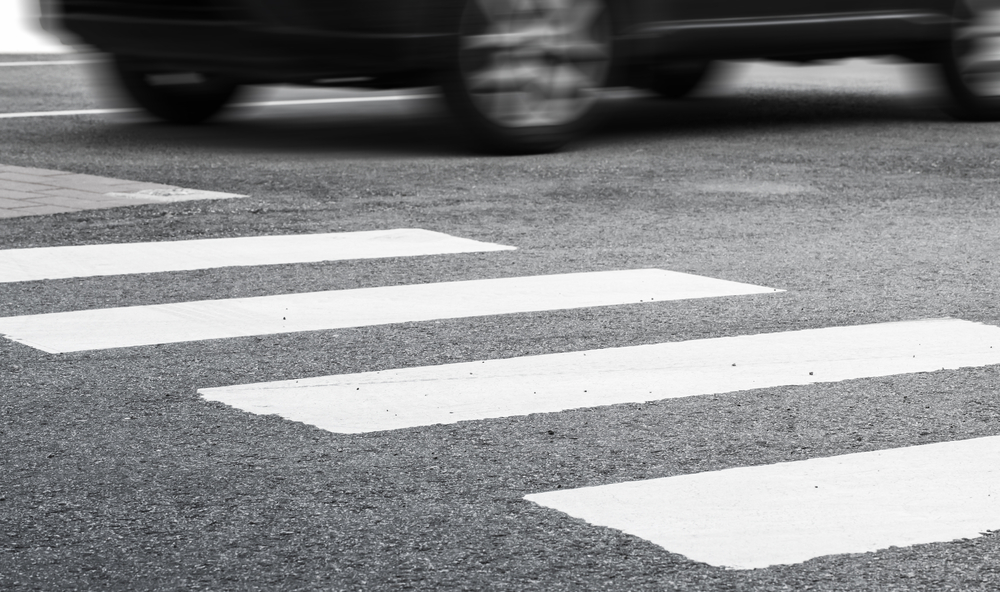
The process of getting compensated after being hit by a car in New York is shaped by a unique set of insurance laws. It is not always a straightforward matter of the other driver’s insurance paying for everything.
The No-Fault System and the Serious Injury Threshold
In most motor vehicle accidents, the no-fault carrier is initially responsible for paying up to $50,000 in basic economic loss. This is also called Personal Injury Protection (PIP) coverage and includes medical bills, 80% of lost wages (up to $2,000/month), and some other necessary expenses. This system is designed to provide immediate payment for these expenses without having to prove who caused the accident.
However, No-Fault benefits do not cover pain and suffering. To step outside of this system and file a lawsuit against the at-fault driver for non-economic damages, you must have sustained what the law defines as a serious injury. Under New York Insurance Law § 5102(d), this may include injuries like:
- A fracture
- Significant disfigurement
- Permanent limitation of the use of a body organ or member
- A medically determined injury that prevents you from performing your usual daily activities for at least 90 out of the 180 days following the accident.
If retained, we can help gather the necessary medical documentation to demonstrate that your injuries meet this important legal threshold, especially in cases involving disputes over pedestrian right of way.
Common Causes of Pedestrian Accidents
Many pedestrian accidents are preventable and happen because of a driver's lapse in attention. Some frequent causes include:
- Distracted Driving: Drivers who are texting, talking on the phone, or adjusting GPS systems frequently fail to see a pedestrian in a crosswalk until it is too late.
- Failure to Yield: Many accidents occur when a driver is making a turn, especially a left-hand turn. The driver may be focused on oncoming traffic and not on the person crossing the street with the right of way.
- Low Visibility: New York's variable weather and shorter daylight hours in the winter contribute to accidents. Pedestrians are harder to see at night, in the rain, or during a snowstorm.
Common Injuries
- Traumatic Brain Injuries (TBI): Impact with a vehicle's windshield or the hard pavement may cause concussions or more severe brain trauma.
- Lower Extremity Fractures: The bumper of a car typically strikes a pedestrian's legs first, leading to broken bones in the legs, knees, and ankles.
- Spinal Cord Injuries and Road Rash: Being thrown by the force of impact may lead to devastating spinal injuries, while sliding across the asphalt can cause severe skin abrasions known as road rash.
Important Deadlines (Statute of Limitations)
In New York, time limits for filing a claim are strict. Missing one could mean losing your right to compensation forever.
- General Rule: For most personal injury lawsuits, the statute of limitations is three years from the date of the accident under CPLR § 214. Every case is unique. This deadline can sometimes be much shorter.
- No-Fault Filing: The deadline to file your initial No-Fault application is much shorter, typically just 30 days from the accident date.
- Municipalities: If a government vehicle (like a city bus or sanitation truck) was involved, or if a poorly maintained road caused your accident, you must file a Notice of Claim first. The deadline for this is usually a mere 90 days. Every case is unique. Time is of the essence.The statute of limitations can also be much shorter, often just one year and 90 days.
Where Do Pedestrian Accidents Occur in New York?
Pedestrian accidents might happen anywhere, but certain locations and conditions present a higher risk.
Urban Intersections and Crosswalks
It is no surprise that densely populated urban areas see a high number of pedestrian incidents. The constant mix of foot traffic and vehicle congestion creates a hazardous environment. Intersections are particularly dangerous spots. Left-hand turns are a frequent cause of accidents, as a driver's attention is typically split between monitoring oncoming cars and checking the crosswalk for people—details that can significantly impact how you settle a pedestrian accident claim.
New York Accident Statistics
Dealing with the Insurance Company
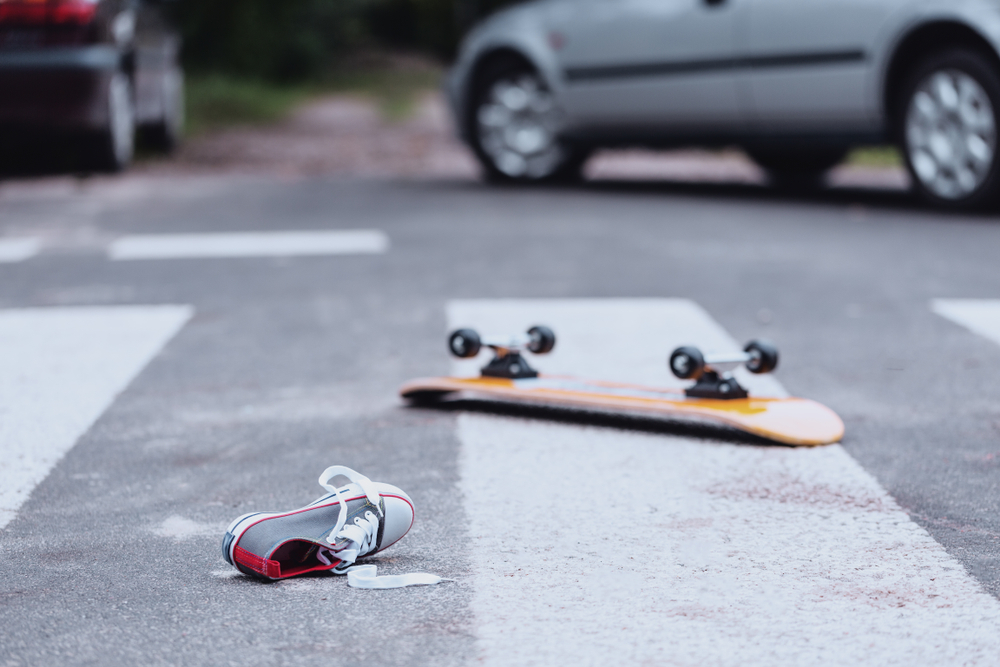
Soon after your accident, you will likely get a call from an insurance adjuster representing the driver. They may sound friendly and concerned for your well-being, but remember that they work for a business. Their job is to protect their company's financial interests by resolving your claim for the lowest reasonable amount.
Tactics to Watch Out For
Insurance adjusters use several standard approaches when handling claims. Being aware of them helps you protect your rights.
- The Early Lowball Offer: They might present a quick settlement offer before you even know the full extent of your injuries. You may not know if you need surgery or long-term physical therapy. Accepting an early offer closes your claim for good, even if your medical costs end up being much higher.
- Recorded Statements: An adjuster will ask for a recorded statement to get your version of events on record. They may ask leading questions designed to get you to admit some fault ("Were you listening to music on your headphones?") or to downplay your injuries ("So you were feeling well enough to go grocery shopping?").
- The Delay Tactic: In some cases, the adjuster slows down a claims process with requests for more and more paperwork. This might be a tactic to increase your financial pressure, making you more willing to accept a lower settlement just to get some money in hand as your bills mount.
- Medical Authorization Sweeps: They will ask you to sign a medical authorization form. What you may not realize is that the form could give them broad access to your entire medical history, not just records related to the accident.
FAQ for New York Pedestrian Accidents
What if the driver who hit me fled the scene (hit and run)?
If you are the victim of a hit-and-run, you may still have options for compensation. In New York, the Motor Vehicle Accident Indemnification Corporation (MVAIC), a state-created entity provides benefits to qualified victims of uninsured or unidentified drivers. Uninsured Motorist (UM) coverage on your own auto policy, or a household member's policy, may also apply.
Can I still claim compensation if I wasn't in a crosswalk?
Yes. As mentioned earlier, New York's pure comparative negligence law allows you to seek compensation even if you were partially at fault. While crossing outside a crosswalk (jaywalking) might reduce your final award, it does not automatically prevent you from recovering damages from a negligent driver who should have seen you and taken action to avoid the collision.
What if a child was the pedestrian injured?
When a minor is injured, the statute of limitations is often tolled, which means it is paused until the child turns 18. So, they generally have until their 21st birthday to file a lawsuit. However, it is never a good idea to wait that long. Evidence like security camera footage disappears, and witness memories fade. A parent or guardian should contact an attorney right away to preserve the child's rights.
Who pays my medical bills while the lawsuit is pending?
Your medical bills should be paid as they come in by the No-Fault (PIP) insurance policy covering the vehicle that hit you. No-Fault is the primary payer for your medical treatment up to the policy limit, which is at least $50,000.
What should I do immediately after a pedestrian accident?
Make your immediate priority your safety and health. Move out of the flow of traffic if you can, and always call 911 to get police and medical help. Tell the responding police officer your version of the facts to ensure the police report reflects your perspective.
Gather evidence at the scene by taking photos or video of the vehicle, the road conditions, crosswalks, traffic signals, and your injuries.
If you can do so safely, collect the driver's name, insurance information, and license plate number, and get contact information from any witnesses.
Finally, seek a full medical examination immediately, even if you feel fine. A doctor can identify internal injuries like concussions that may not show symptoms right away.
What is the difference between a settlement and a trial verdict?
Most pedestrian accident claims resolve through settlements.
A settlement is a voluntary agreement between you and the at-fault party's insurance company to resolve the case outside of a courtroom. A binding contract provides a guaranteed amount of compensation.
A trial verdict, on the other hand, occurs when you file a lawsuit and present your case to a jury or judge, who then decides the defendant’s liability and what amount of compensation they must pay.
Trials carry risk because they sometimes do not succeed, but a verdict may provide higher compensation than the final settlement offer. An attorney can evaluate all factors to determine the best path to pursue the maximum possible recovery for you.
Don’t Let Uncertainty Stop You From Seeking Justice
You do not have to face the insurance companies alone. New York law provides a clear path to recovery for injured pedestrians, and our team has the experience to guide you through every step of it.
We are available 24 hours a day, 7 days a week to listen to your story. There is no obligation, and our No Fee Until We Win promise means there is no financial risk to you.
Call William Mattar PC today at (716) 444-4444 to schedule your free case review.