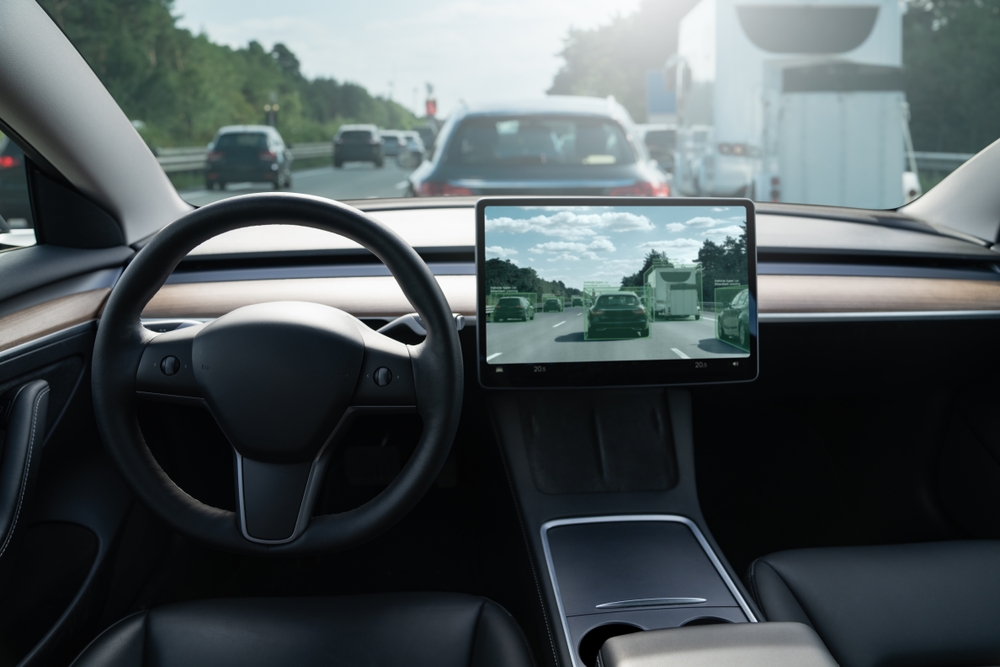
Manufacturers of autonomous vehicle technology paint a picture of a future free from traffic accidents. While that future may one day arrive, the technology is still in its early stages. When these systems fail, the consequences for unsuspecting motorists and pedestrians are often severe.
In a typical wreck, the question of fault usually lies with one or more of the drivers involved. However, when an autonomous vehicle (AV) is involved, liability becomes a tangled issue that often requires a New York Autonomous Vehicle Accident Lawyer to untangle. To protect their billion-dollar technologies, large tech companies typically have a vested interest in shifting the blame to the human behind the wheel.
These crashes are sometimes product liability cases wrapped inside a personal injury claim. Our team has years of experience handling motor vehicle accident claims, and we know how to preserve the digital evidence from a vehicle's onboard computers. We are deeply familiar with the interplay between New York Insurance Law Article 51 (the No-Fault Law) and the federal safety standards that govern this emerging technology.
If you were injured by a self-driving car or a vehicle using advanced driver-assist technology, you need a legal team that understands this unique and evolving area of law. Call William Mattar Accident Lawyers today at (716) 444-4444 for a free and confidential review of your case.
Why Choose William Mattar?

A Practice Focused Exclusively on Motor Vehicle Accidents
William Mattar founded a firm in 1990 with a clear purpose: to help people injured in motor vehicle accidents. For over 30 years, we have refined our practice to concentrate on this single area of law.
Unlike general practice firms that may handle a wide variety of cases, our focus provides us with a deep understanding of the nuances of traffic and insurance law—a distinct advantage when dealing with novel issues like autonomous vehicle litigation. This is where a car accident lawyer can help by applying focused experience to complex and emerging liability disputes.
Proven Results and Industry Recognition
Our commitment to professional excellence is reflected in our consistent AV Preeminent Rating from Martindale-Hubbell, the highest possible rating for both legal ability and ethical standards. We have also been recognized with Golden Gavel awards for our creative and thoughtful approach to difficult cases.
With over 120 dedicated employees, our firm has the resources and personnel required to stand up to large insurance carriers.
Accessible Legal Help Across New York State
While our principal office is located at 6720 Main Street in Williamsville, a staple of the Western New York legal community, our reach extends across the entire state. We have established intake locations in Albany, Rochester, Syracuse, New York City, and Long Island to serve clients wherever they are. No matter where in New York your accident occurred, we can help.
Our No Win, No Fee Guarantee
We believe everyone should have access to high-quality legal representation, regardless of their financial situation. That is why we offer a No Fee Until We Win guarantee. You pay nothing upfront, and we only receive a fee if we successfully recover compensation for you.
This arrangement is beneficial in AV cases, where investigations can be expensive and might require hiring dedicated technical consultants to analyze vehicle data.
Compensation in AV Accident Cases
The primary goal of a personal injury claim is to secure compensation that helps restore your financial, physical, and emotional well-being as much as possible after a crash. When asking, car accident can you claim injury, the answer depends on the facts of the case and the severity of your harm. In an autonomous vehicle case, this compensation is divided into several categories.
Economic Damages
These are the tangible, calculable financial losses you have suffered. They include:
- Medical Bills: All costs related to your treatment, from the initial emergency room visit to future surgeries, physical therapy, and medication.
- Lost Wages: Income you lost while unable to work during your recovery.
- Loss of Earning Capacity: If your injuries prevent you from returning to your previous job or limit your ability to earn a living in the future.
- Basic Economic Loss (BEL): Under New York's No-Fault law, your own insurance policy initially covers up to $50,000 in these types of expenses. There is no need to prove negligence or fault, or to succeed in a bodily injury liability claim.
Non-Economic Damages
These damages compensate you for the non-financial impact of your injuries. They are more subjective but just as real, covering:
- Pain and Suffering: The physical pain and emotional distress caused by the accident and your injuries.
- Loss of Enjoyment of Life: Compensation for the inability to participate in hobbies, activities, or daily routines you previously enjoyed.
- Mental Anguish: This may be particularly relevant in AV crashes, where the trauma of being harmed by a seemingly intelligent machine can be distinct and deeply unsettling.
Punitive Damages
In very rare instances, a third category of damages might be available. Punitive damages are not intended to compensate the victim but to punish the defendant for extreme wrongdoing. This might apply if it could be proven that a manufacturer knew its software was dangerously defective but chose to release it anyway, prioritizing profits over public safety.
What If I'm Partially at Fault?
Tech companies frequently argue that the human backup driver is at fault for not taking control of the vehicle fast enough. However, New York law follows a rule of pure comparative negligence which means that you might still recover damages even if you are found to be partially responsible for the accident. Your total compensation would simply be reduced by your percentage of fault.
A significant part of our role is to challenge any unjust attempt to shift blame onto you.
How Autonomous Vehicle Liability Works in New York
Traditional traffic laws were written with a simple assumption: a human being is in control of the vehicle. Autonomous vehicles shatter that assumption, creating a potential liability gap when a crash occurs. Liability usually depends on the vehicle's level of automation.
The SAE Levels of Driving Automation provide a framework for this analysis, which can be critical in a car accident case in New York involving advanced driver-assistance systems. These levels, adopted by the U.S. Department of Transportation, classify automation from Level 0 (no automation) to Level 5 (full automation). Most vehicles on the road today with features like Autopilot are Level 2, meaning the human driver is still expected to be fully engaged.
Identifying the Liable Parties
We will thoroughly investigate all potential liable parties, including:
- The Human Operator: In a Level 2 system, the driver is still legally responsible for monitoring the vehicle and the environment. If they were distracted or failed to intervene when the system faltered, they might bear some or all of the fault.
- The Vehicle Manufacturer: If the crash was caused by a flaw in the vehicle's design, such as software that misidentifies a stationary object or hardware like a Lidar or radar sensor that fails, the manufacturer may be held accountable.
- Third-Party Vendors: The intricate nature of modern vehicles means multiple companies are involved. The company that designed the GPS mapping software, built the optical sensors, or coded a specific algorithm may also be a liable party.
Common Types of AV Accidents
We are seeing certain patterns emerge in crashes involving driver-assist technologies:
- Phantom Braking: The vehicle's automatic emergency braking system engages for no reason, causing the car to stop suddenly and creating a high risk of a rear-end collision.
- Failure to Yield: The AI has difficulty interpreting human cues at intersections or four-way stops, leading to collisions.
- Sensor Blindness: The vehicle's cameras or sensors fail to see stationary objects in the road, like a stopped emergency vehicle or a highway barrier.
Common Injuries
The sudden, unexpected movements of a malfunctioning AV may lead to severe injuries, including:
- Whiplash and other soft tissue injuries from abrupt braking or acceleration.
- Traumatic Brain Injuries (TBI) from the force of impact.
- Injuries from airbags deploying in low-speed but unexpected crashes.
Relevant Legal Concepts
Building a case requires an understanding of several overlapping legal areas:
- New York Vehicle and Traffic Law (VTL): We analyze how existing traffic laws apply to a vehicle that was not being controlled by a human at the moment of impact.
- Strict Product Liability: Under New York law, manufacturers may be held liable for injuries caused by a defective product, regardless of whether they were negligent. This concept is known as strict product liability. This applies to defective software design or a failure to warn consumers about the system's limitations.
- The Serious Injury Threshold: To step outside of New York's No-Fault system and file a lawsuit for pain and suffering, the law requires that your injury meets a specific definition of serious. This includes fractures, significant disfigurement, or an injury that prevents you from performing daily activities for at least 90 out of the 180 days following the crash.
Statute of Limitations and Evidence Preservation
While the statute of limitations for most negligence claims in New York is generally three years, the most important deadline in an autonomous vehicle case is immediate. The vehicle’s black box (the Event Data Recorder) contains invaluable data about the crash, including what the sensors detected and what the AI was doing.
This data may be overwritten or deleted within days. Contact a lawyer immediately to preserve this evidence.
High-Risk Areas for Driver-Assist Accidents
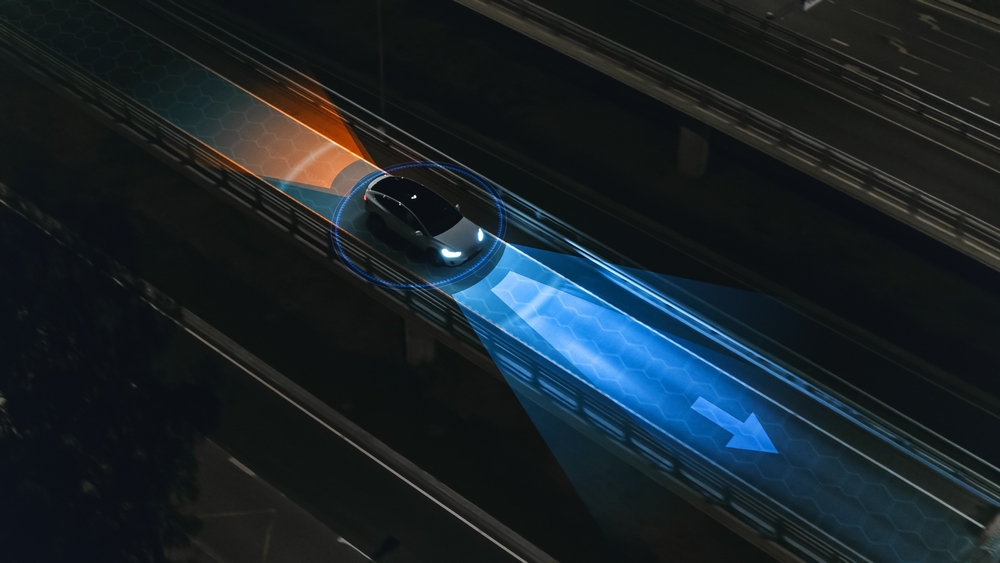
While an autonomous vehicle accident could happen anywhere, certain environments in New York pose a greater risk for failures of driver-assist technology.
- Highways and Interstates: Long, relatively straight roads like the New York State Thruway (I-90) and I-87 are where drivers are most likely to engage features like Autopilot or adaptive cruise control. Driver complacency might set in, leading to devastating high-speed failures when the system unexpectedly disengages or makes an error.
- Metropolitan Areas: The dense and chaotic traffic of New York City and Buffalo can confuse early-stage AI. The system may struggle to predict the actions of pedestrians, cyclists, and aggressive human drivers, leading to low-speed but still serious collisions.
- Weather-Related Failures: New York's harsh winters, particularly the Lake Effect snow that blankets Buffalo and Syracuse, present a huge challenge for AV sensors. Heavy snow, rain, or even road slush could blind the Lidar and cameras that the vehicle relies on to see. If a manufacturer markets its vehicle as capable of handling all conditions but it fails in a predictable New York snowstorm, this may constitute a failure to warn consumers of its limitations.
Dealing With Tech Giants and Insurance Companies
The Conflict of Interest
When an autonomous vehicle crashes, the manufacturer has more than just a legal claim to worry about. Admitting that a software flaw caused an accident could damage their brand reputation and potentially erase billions from their stock market valuation. Both the manufacturer and their insurance company are businesses, and their primary goal is protecting their bottom line. A claim paid out is a financial loss for them—which is why understanding what car accident lawyers do can make a critical difference in holding powerful companies accountable.
Tactics to Watch Out For
Because the stakes are so high, these companies employ sophisticated legal teams and strategies. Some common tactics include:
- The User Error Defense: Their immediate response is usually to blame the human driver for not being ready to take over in a split second, even if the system provided no warning of an impending failure.
- The Data Dump: They may provide your legal team with thousands of pages of raw code or indecipherable technical data in an attempt to bury the evidence of a defect.
- Lowball Settlement Offers: They might offer a quick, small settlement before the full extent of your injuries is known or before a proper investigation can reveal that a vehicle defect was the true cause.
- Delay and Deny: They may use the technological complexity of the case to drag out the investigation for months or even years, hoping that financial pressure will force you to
FAQ for New York Autonomous Vehicle Accidents
Can I sue if I was the driver of the autonomous vehicle?
Yes. If the accident was caused by a defect in the vehicle's software or hardware that you, as the operator, could not have reasonably prevented, you may have a product liability claim against the manufacturer.
Who pays my medical bills in a self-driving car crash?
Under New York's No-Fault insurance system, your own Personal Injury Protection (PIP) coverage is typically the first to pay for your medical bills, up to the policy limit of $50,000, regardless of who or what caused the accident.
What if the car was in Full Self-Driving mode but required supervision?
Manufacturers use ambitious marketing terms for their technology. However, the fine print in the owner's manual almost always clarifies that the human driver is still legally responsible. That said, if marketing claims are found to be deceptive or misleading, they might form part of a legal claim.
Is the manufacturer liable if a software update caused the glitch?
Potentially, yes. If an over-the-air (OTA) software update pushed to the vehicle introduced a new bug or defect that subsequently caused a crash, this would be a strong basis for a product liability claim.
Do I need a specific type of lawyer for this?
Yes. These cases sit at the intersection of New York motor vehicle law and difficult product liability litigation.
Don’t Let Technology Outpace Your Rights
While the technology in vehicles is new and constantly changing, your right to seek justice after an injury remains. The giant corporations that design and build these cars, along with their insurance carriers, have teams of lawyers dedicated to protecting their financial interests and minimizing their liability for software and hardware failures. You should not have to manage these negotiations on your own.
At William Mattar Accident Lawyers we have the resources and the focused experience to look beyond the easy excuse of computer error and find the truth of what caused your accident. We are committed to holding negligent parties accountable.
Take the first step toward protecting your rights and securing your future. Contact William Mattar Accident Lawyers now at (716) 444-4444 to schedule your free, no-obligation case review. We are ready to listen and ready to help you move forward.