Why These Cases Often Involve Severe Injuries and Higher Stakes
Drunk driving accidents on Long Island are not ordinary car accidents, especially when they happen on high-speed expressways and parkways. When an impaired driver loses control at highway speed on the Southern State Parkway, crosses the median on the Long Island Expressway, or enters a parkway ramp going the wrong direction, the result is often catastrophic.
According to the Governor's Traffic Safety Committee, in 2023, 881 people on Long Island were injured in crashes where the driver was impaired by alcohol or drugs, and alcohol- or drug-involved crashes claimed the lives of 124 people on Long Island that year. These numbers reflect a problem concentrated on the same expressways and parkways that Long Islanders depend on every day.
Key Takeaways About Drunk Driving Accidents on Long Island
- Alcohol- and drug-impaired crashes killed 124 people and injured 881 on Long Island in 2023, according to the Governor's Traffic Safety Committee
- High-speed parkway and expressway crashes involving impaired drivers produce disproportionately severe injuries because of impact forces, limited shoulder space, and the absence of barriers on older parkway
- New York's Dram Shop Law (General Obligations Law § 11-101) may allow claims against bars or restaurants that unlawfully served the impaired driver
- The civil claim and the criminal case are separate proceedings with different standards of proof, and pursuing compensation does not depend on whether the driver is convicted
Why Drunk Driving Crashes on Long Island Parkways and Expressways Cause More Severe Injuries
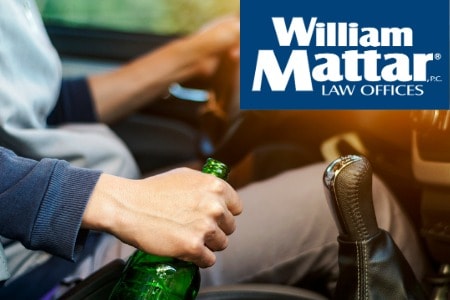
Not all drunk driving accidents are created equal. The location of the crash, specifically the speed and design of the road, plays a major role in the severity of injuries. A Long Island drunk driving accident lawyer can evaluate how these factors affect liability, damages, and the overall value of a claim.
Speed Amplifies Everything
Impaired drivers on Long Island's expressways and parkways are often traveling at or above the speed limit because alcohol reduces the ability to judge speed and distance. The physics of a collision at 65 mph are fundamentally different from those of a collision at 30 mph. Impact force increases exponentially with speed, meaning a highway-speed crash produces injuries far more severe than a surface-street collision at the same point of impact.
Parkway Design Can Offer No Forgiveness
Long Island's older parkways, including the Southern State, Northern State, and Meadowbrook, were built with narrow shoulders, tight curves, raised curbs, and trees close to the travel lanes. When an impaired driver drifts out of a lane or loses control, there is often no recovery zone. The vehicle strikes a tree, overpass wall, or guardrail within feet of leaving the roadway. These fixed-object crashes at highway speed are among the most deadly collision types.
Wrong-Way Crashes Are Disproportionately Linked to Impairment
Wrong-way crashes on divided highways produce head-on collisions at combined speeds that frequently exceed 100 mph. These crashes are among the most lethal on any roadway, and impaired driving is a leading contributing factor. The Southern State Parkway has experienced wrong-way incidents, and older ramp designs on Long Island's parkways may contribute to confused or impaired drivers entering the wrong direction.
How a Long Island DWI Arrest or Conviction Can Affect Your Injury Claim
When the driver who hit you is arrested for DWI, two separate legal proceedings unfold: the criminal case prosecuted by the state, and the civil injury claim you may pursue for compensation. These cases operate independently, but the criminal case may produce evidence that strengthens your civil claim.
The Criminal Conviction as Evidence
If the impaired driver is convicted of DWI in criminal court, that conviction may be used as evidence of negligence in your civil case. A criminal conviction establishes that the driver violated the law, and that violation may support a finding of negligence per se, meaning the driver's conduct was negligent as a matter of law because it violated a safety statute.
You Do Not Need a Criminal Conviction to File a Civil Claim
The standard of proof in a civil case (preponderance of the evidence) is lower than in a criminal case (beyond a reasonable doubt). Even if the driver avoids conviction due to a plea deal, procedural issues, or acquittal, you may still pursue a civil injury claim using BAC test results, police reports, field sobriety test observations, and witness testimony.
Evidence From the Criminal Case May Be Available
Blood alcohol test results, officer observations, dashcam or bodycam footage, toxicology reports, and the driver's statements to police may all become available through the criminal case and may be used to support your civil claim. A Long Island personal injury lawyer may monitor the criminal proceedings and obtain relevant evidence as it becomes part of the public record.
How New York's No-Fault System Applies After a DWI Crash

Regardless of who caused the accident, New York's no-fault system requires you to file for PIP benefits through your own auto insurance policy. These benefits provide up to $50,000 for medical expenses, 80% of lost wages (capped at $2,000 per month for up to three years), and certain other reasonable costs. This coverage applies even when drunk driving causes accidents, ensuring injured victims can access benefits without first proving fault.
Why PIP Is Often Insufficient in DWI Crash Cases
Drunk driving crashes on expressways and parkways tend to produce the kind of injuries that exhaust a $50,000 PIP limit quickly. A drunk driving car accident on a high-speed roadway can result in catastrophic injuries, and a single emergency surgery, ICU stay, or air ambulance transport may consume most or all of the available no-fault benefits before rehabilitation even begins.
When PIP runs out, remaining medical expenses shift to your private health insurance, and the third-party liability claim against the impaired driver becomes the primary path to recovering costs that no-fault does not cover.
The Third-Party Claim Is Where the Real Recovery Happens
PIP covers economic losses only. It does not include pain and suffering, emotional distress, or loss of enjoyment of life. To pursue those damages, your injuries must meet the serious injury threshold under Insurance Law § 5102(d). DWI crash injuries frequently meet this threshold because high-speed impaired driving collisions tend to produce fractures, traumatic brain injuries, spinal injuries, and other conditions that qualify under multiple statutory categories.
The third-party claim against the drunk driver, combined with any available UM/UIM coverage on your own policy, is where compensation for the full scope of your injuries is pursued.
Can You Recover Punitive Damages After a Long Island Drunk Driving Crash?
In standard car accident cases, compensation covers actual losses: medical bills, lost wages, and pain and suffering. Drunk driving cases may add another category of damages entirely.
What Punitive Damages Are
Punitive damages are not compensation for your losses. They are additional damages awarded by a jury to punish the defendant for conduct that rises to the level of willful and wanton negligence. Drunk driving, where the driver knowingly breaks the law and creates extreme danger, is the type of conduct New York courts have recognized as potentially justifying punitive damages.
Can I Sue a Bar or Restaurant After a Long Island Drunk Driving Accident?
New York's Dram Shop Law under General Obligations Law § 11-101 provides a right of action against any person who caused or contributed to the intoxication of another person by unlawfully selling them alcohol, when that intoxication leads to injury. This means the bar, restaurant, or liquor store that served the impaired driver may share liability for your injuries.
When a Dram Shop Claim May Apply
A dram shop claim may exist when the establishment served alcohol to someone who was visibly intoxicated, or when the establishment served alcohol to a minor. Proving dram shop liability requires evidence that the establishment knew or should have known the customer was intoxicated and continued serving them. Surveillance footage from the establishment, server testimony, receipts, and witness statements may all support this type of claim.
Why This Matters for Recovery
Many impaired drivers carry only minimum insurance coverage. New York's minimum bodily injury liability limits of $25,000 per person may be insufficient to cover catastrophic injuries from a high-speed DWI crash. A dram shop claim opens an additional source of recovery through the establishment's commercial liability insurance, which may carry significantly higher policy limits.
What Compensation May Be Available After a Long Island Drunk Driving Accident
DWI crash claims tend to involve more severe injuries and more complex damages than standard car accident cases. A complete claim accounts for the full scope of losses.
- Medical expenses, past and future. High-speed crashes frequently produce traumatic brain injuries, spinal cord injuries, multiple fractures, and internal organ damage that require emergency surgery, extended hospitalization, rehabilitation, and long-term care.
- Lost income and reduced earning capacity. Catastrophic injuries may prevent a return to work entirely or may limit the injured person to a lower-paying occupation. Future earning capacity calculations may become a significant component of the claim.
- Pain and suffering. Injuries meeting New York's serious injury threshold under Insurance Law § 5102(d) allow claims for physical pain, emotional distress, loss of enjoyment of life, and other non-economic damages. DWI crash injuries frequently meet this threshold.
- Wrongful death damages. When a drunk driving crash is fatal, surviving family members may pursue a wrongful death claim for lost financial support, loss of parental guidance, funeral expenses, and the conscious pain and suffering the deceased experienced before death.
- Punitive damages. When the evidence supports it, punitive damages may significantly increase the total recovery beyond compensatory damages alone.
Each of these categories requires thorough documentation, and the more severe the injuries, the more important it is to build the evidentiary record carefully from the beginning.
What to Do After a Drunk Driving Accident on Long Island
The period after a drunk driving accident is chaotic, especially when injuries are severe. Several steps taken early may protect your ability to recover full compensation.
- Obtain the police report and confirm DWI charges. The report documents the officer's observations, field sobriety test results, and whether the driver was arrested. This information becomes foundational evidence in both the criminal and civil cases.
- Preserve all medical records from the outset. Emergency room records, surgical reports, diagnostic imaging, and physician assessments of long-term prognosis all support the damages component of your claim.
- Notify your own insurer promptly. Your no-fault PIP benefits, UM/UIM coverage, and any supplemental coverages on your policy may all become relevant, particularly if the impaired driver carries minimal insurance.
FAQs About Drunk Driving Accident Claims on Long Island
Does a DWI arrest automatically mean the driver is liable for my injuries?
No. A DWI arrest establishes that the driver was impaired, but you must still prove that the driver's impairment caused the crash and your injuries. However, evidence of intoxication is powerful in establishing negligence, and a subsequent conviction may support a finding of negligence per se.
What if the drunk driver has no insurance or only minimum coverage?
Your own uninsured or underinsured motorist (UM/UIM) coverage may provide additional recovery when the at-fault driver's policy is insufficient. A dram shop claim against the establishment that served the driver may also open an additional source of compensation through the establishment's commercial insurance.
Can I file a civil claim while the criminal case is still pending?
Yes. The civil claim and the criminal case proceed independently. You do not need to wait for the criminal case to conclude before filing a personal injury lawsuit. However, evidence from the criminal case, including a conviction, may strengthen the civil claim if it becomes available before resolution.
Do drunk driving accident claims settle or go to trial?
Most settle, but the possibility of punitive damages gives DWI crash claims a different negotiation dynamic. Because punitive damages require a trial and insurers are not obligated to pay them, the threat of trial may push settlement values higher or require the tortfeasor to pay out of pocket. An attorney may evaluate whether your case benefits from pursuing trial or negotiating a resolution.
A Long Island Drunk Driving Accident Claim Requires More Than a Standard Car Accident Approach
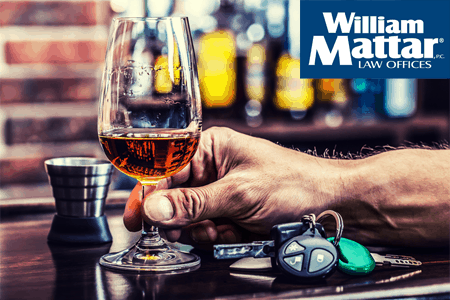
A drunk driving crash on a Long Island expressway or parkway is not a routine fender bender, and the claim that follows should not be treated like one. The injuries are more severe. The damages are larger. The evidence is more complex. And the legal options, including punitive damages and dram shop claims, extend beyond what a standard car accident case involves.
William Mattar can represent victims of drunk driving crashes across Long Island and throughout New York State. Contact William Mattar for a free consultation. We answer phones 24/7. No Fee Until We Win℠.