Drunk driving crashes on Long Island are preventable incidents that often lead to devastating injuries or loss of life. A drunk driving accident lawyer helps people who were injured, as well as families who lost loved ones, in crashes caused by intoxicated drivers in Nassau and Suffolk County.
These cases are not random accidents—impaired driving is a choice, and New York law provides civil remedies to hold drivers accountable for the harm they cause.
William Mattar can help drunk driving accident victims throughout Nassau and Suffolk County. Call (516) 444-4444 for a free case evaluation. Phones are answered 24/7 because accidents don’t follow business hours.
Table of contents
- Why Choose William Mattar if you were injured in a Drunk Driving Accident
- Drunk Driving Remains a Serious Threat on Long Island Roads
- Who Can Be Liable in a Long Island Drunk Driving Accident Case?
- How a Civil Injury Claim Differs From a Criminal DWI Case
- Key Evidence in a Long Island Drunk Driving Accident Case
- Compensation Available After a Long Island Drunk Driving Crash
- Types of Drunk Driving Accident Cases We Handle on Long Island
- Time-Sensitive Filing and Evidence Deadlines After a Drunk Driving Crash
- FAQs for Long Island Drunk Driving Accident Lawyers
- Speak With a Drunk Driving Accident Lawyer Today after a Long Island Crash
Why Choose William Mattar if you were injured in a Drunk Driving Accident
After a drunk driving crash, you're not just going up against the impaired driver. You're going up against their insurer and potentially the bar or restaurant that served them.
We know where the money is — and the steps to recover it.
The drunk driver's auto policy may not be enough to cover catastrophic injuries. Our attorneys identify every available source of recovery early: dram shop claims against establishments that overserved the driver under GOB § 11-101, employer liability when the driver was in a company vehicle, and your own UM/UIM coverage when the impaired driver is uninsured or underinsured. If one policy falls short, we know which door to open next.
We move on the evidence before it disappears.
Bar surveillance footage, credit card transaction records, server testimony, BAC results, and criminal case filings. This evidence has a short shelf life, and we act on it immediately. Our team sends preservation demands to establishments within days of the crash, not weeks.
We build cases that support punitive damages when the facts warrant them.
Not every drunk driving claim qualifies, but when the conduct is egregious — extremely high BAC, prior DWI history, conscious disregard for safety — we position the case for damages that go beyond compensation and hold the defendant accountable for the choice they made.
Drunk Driving Remains a Serious Threat on Long Island Roads
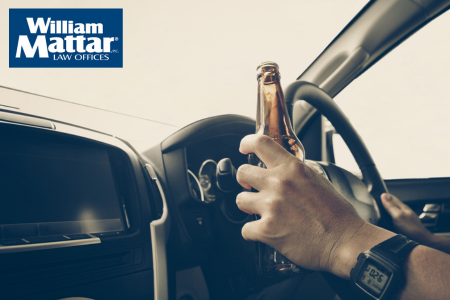
Impaired driving remains one of the most persistent and deadly problems on Long Island roads. According to the Governor's Traffic Safety Committee, 881 people on Long Island were injured in crashes involving alcohol- or drug-impaired drivers in 2023, and impaired driving crashes claimed 124 lives that same year.
The crashes happen on highways and local roads alike. The Long Island Expressway, Southern State Parkway, Sunrise Highway, and Montauk Highway all see impaired driving collisions, particularly on weekend nights and around holidays.
But drunk driving accidents also happen in residential neighborhoods, parking lots, and near bars and restaurants throughout both counties.
Behind every one of these crashes is a driver who chose to drink and drive, and a victim who had no say in the matter.
Who Can Be Liable in a Long Island Drunk Driving Accident Case?
Liability in a drunk driving car accident case may extend beyond the impaired driver. New York law recognizes claims against other parties whose conduct contributed to the crash.
The Drunk Driver
The driver who operated a vehicle while intoxicated is the primary defendant in most cases. Evidence of impairment, including blood alcohol concentration (BAC) results, field sobriety test results, officer observations, and witness statements, may establish negligence and support claims for both compensatory and, in some circumstances, punitive damages.
Bars, Restaurants, and Liquor Stores Under New York's Dram Shop Law
New York's Dram Shop Act, General Obligations Law § 11-101, creates a civil cause of action against any establishment that unlawfully sold alcohol to a visibly intoxicated person whose impairment then caused injury to someone else.
A separate provision under GOB § 11-100 imposes liability on anyone who knowingly furnished alcohol to a person under 21.
To pursue a dram shop claim, the evidence must show that the establishment sold alcohol to the driver when the driver was already visibly intoxicated, and that the unlawful sale caused or contributed to the intoxication that led to the crash.
Civil claims may also arise from drug-impaired driving, including prescription medications that affect a driver's ability to operate a vehicle safely. However, dram shop liability under New York law applies specifically to the unlawful sale of alcohol, not drug intoxication.
Employers and Vehicle Owners
If the drunk driver was operating a company vehicle or was acting within the scope of employment at the time of the crash, the employer may share liability. Vehicle owners may also face claims under New York’s permissive use doctrine when they allow the driver to use the vehicle.
Our attorneys identify every potentially liable party early in the case to pursue every available source of compensation.
How a Civil Injury Claim Differs From a Criminal DWI Case
One of the most common sources of confusion after a drunk driving accident is the relationship between the criminal DWI prosecution and your civil injury claim. They are two separate legal proceedings with different purposes, different standards of proof, and different outcomes.
The criminal case is brought by the district attorney and focuses on punishing the driver. A DWI conviction may result in fines, license suspension, and jail time, but it does not directly provide financial compensation to the victim.
Your civil claim is about recovering damages for your injuries, lost income, medical expenses, and pain and suffering. It proceeds independently from the criminal case, and you may pursue it regardless of whether the driver is convicted, acquitted, or accepts a plea deal.
A civil case does not need to wait for the criminal prosecution to conclude. Filing early preserves evidence and protects your right to compensation, and information that emerges during the criminal proceedings may strengthen your civil claim as it develops.
Key Evidence in a Long Island Drunk Driving Accident Case
Drunk driving cases often produce stronger evidence of negligence than a typical car accident claim. The key is preserving and obtaining that evidence before it disappears.
- BAC results and toxicology reports. Blood alcohol concentration at or above 0.08% establishes legal intoxication. Results well above the legal limit may support arguments for reckless conduct and punitive damages.
- Police reports and arrest records. The responding officer's observations about the driver's behavior, appearance, and performance on field sobriety tests create a contemporaneous record of impairment.
- Surveillance and dashcam footage. Video from the crash scene, nearby businesses, or the bar where the driver was drinking may document both the crash itself and the driver's level of intoxication before getting behind the wheel.
- Witness statements. Bartenders, fellow patrons, passengers, and bystanders may provide testimony about how much the driver consumed and how impaired the driver appeared before driving.
- Electronic data from the vehicle. Event data recorders may capture speed, braking, and throttle data in the moments before the crash, establishing whether the impaired driver was also speeding or failed to brake.
- Criminal case records. Arrest reports, grand jury proceedings, plea agreements, and trial testimony from the criminal DWI case may all be relevant to your civil claim.
Our attorneys act quickly to preserve this evidence, including sending preservation demands to bars and restaurants for surveillance footage and transaction records that might otherwise be overwritten. A Long Island personal injury lawyer can use this evidence to help establish liability and strengthen your claim.
Compensation Available After a Long Island Drunk Driving Crash
The damages available after a drunk driving crash depend on the severity of your injuries, the impact on your daily life and earning capacity, and whether your case meets the serious injury threshold under Insurance Law § 5102(d). Many victims meet this threshold.
Beyond PIP benefits, a drunk driving accident claim may pursue:
Medical expenses driven by high-impact injuries. Impaired drivers often cause crashes at high speed, with delayed or absent braking. The resulting injuries — TBI, spinal cord damage, internal organ trauma, multiple fractures — typically require emergency surgery, extended hospitalization, and long-term rehabilitation.
Lost income and permanent career disruption. Catastrophic injuries from drunk driving crashes frequently prevent victims from returning to their prior occupation. The claim captures both lost wages during recovery and the long-term earning capacity you may never recoup.
Pain and suffering, including the knowledge that the crash was entirely preventable. The physical toll of serious injuries is compounded by the emotional reality of knowing someone chose to drive drunk and that choice is why your life changed. Courts recognize that this preventability factor carries weight in assessing non-economic damages.
Loss of enjoyment of life. Physical limitations, chronic pain, psychological trauma, and the loss of activities and relationships that shaped your daily life before the crash.
Punitive damages in cases of egregious conduct. When the evidence shows willful or wanton disregard for safety — extremely high BAC, prior DWI history, conscious decision-making that put others at risk — New York courts may award damages designed not just to compensate you but to punish the defendant. Dram shop defendants who served a visibly intoxicated patron may also face punitive claims under GOB § 11-101.
We build each damages case with medical documentation, financial analysis, and, where applicable, evidence from the parallel criminal prosecution, so the claim accurately captures what this crash cost you.
Types of Drunk Driving Accident Cases We Handle on Long Island
Impaired drivers cause crashes in every setting and at every hour, though late-night and weekend incidents remain the most common. Our attorneys handle claims involving accidents caused by drunk driving, including:
- Car-on-car collisions. Head-on crashes, rear-end collisions, and intersection accidents caused by drivers who ran red lights, crossed center lines, or failed to stop are among the most frequent drunk driving scenarios on Long Island.
- Pedestrian accidents. Impaired drivers pose extreme danger to pedestrians, particularly near bars, restaurants, and entertainment districts in downtown areas like Huntington, Patchogue, and Long Beach.
- Motorcycle and bicycle accidents. Motorcyclists and cyclists struck by drunk drivers face catastrophic injuries with no vehicle frame to absorb the impact.
- Multi-vehicle pileups. A drunk driver traveling at high speed on the LIE, Southern State, or Sunrise Highway may trigger chain-reaction collisions involving multiple vehicles and numerous victims.
- Fatal accidents. When impaired driving causes death, surviving family members may pursue a wrongful death claim seeking compensation for lost financial support, funeral expenses, and other pecuniary damages. The filing deadline is two years from the date of death.
Regardless of the crash type, the impaired driver's choice to drink and drive establishes a foundation of negligence that strengthens the entire claim.
Time-Sensitive Filing and Evidence Deadlines After a Drunk Driving Crash
The statutory filing deadlines for drunk driving claims are the same as for any New York motor vehicle case: three years for a personal injury lawsuit, 30 days for your no-fault application, 90 days for a notice of claim against a government entity, and two years from the date of death for a wrongful death action.
Bar and restaurant surveillance systems routinely overwrite footage on short cycles. Credit card receipts and POS transaction records that document how much the driver consumed may be purged during routine data retention processes. Witness memories fade. Criminal case records become harder to access as proceedings conclude.
We send preservation demands to establishments immediately and coordinate evidence collection with the criminal case timeline so that proof of intoxication and, where applicable, proof of over-service is preserved before it becomes unavailable.
FAQs for Long Island Drunk Driving Accident Lawyers
Is a drunk driver automatically at fault in a civil injury case?
Not automatically, but evidence of intoxication is powerful proof of negligence. A driver operating a vehicle with a BAC at or above 0.08% violated New York law, and that violation may serve as strong evidence that the driver breached the duty of care owed to others on the road. The drunk driver's insurer may still argue comparative fault, but impairment evidence significantly strengthens your claim.
Can I pursue punitive damages after a drunk driving accident?
New York courts may award punitive damages when the defendant's conduct was willful, wanton, or showed a conscious disregard for the safety of others. Extremely high BAC levels, prior DWI history, excessive speed combined with intoxication, or a bar's knowing service to a visibly intoxicated patron may support a punitive damage claim. These damages are evaluated on a case-by-case basis and are not available in every drunk driving accident.
What if the drunk driver didn't have insurance?
Your own uninsured motorist (UM) coverage may provide compensation when the at-fault driver lacks insurance. If a bar or restaurant over-served the driver, a dram shop claim against that establishment's liquor liability policy may offer an additional path to recovery. Our attorneys identify every available source of coverage.
Does a DWI arrest help my civil injury case?
A DWI arrest creates valuable evidence for your civil claim, including BAC results, field sobriety test observations, officer body camera footage, and arrest reports that document the driver's impairment at the time of the crash. While the arrest itself doesn't automatically determine civil liability, it provides a strong evidentiary foundation for proving negligence.
Can I file a claim even if the driver wasn't convicted of DWI?
Yes. Your civil claim operates independently from the criminal case and uses a lower standard of proof. You do not need a criminal conviction to pursue compensation. Even if charges are reduced, dismissed, or result in acquittal, your right to file a civil claim for pain and suffering remains intact.
Can a passenger in the drunk driver's car file a claim?
Yes. Passengers in a vehicle operated by an intoxicated driver may pursue compensation for their injuries. The driver's auto insurance and, where applicable, dram shop coverage may both provide sources of recovery for injured passengers.
Speak With a Drunk Driving Accident Lawyer Today after a Long Island Crash
A drunk driving accident is not just a crash. It's the consequence of a choice someone made, and New York law provides tools to hold that person, and anyone who contributed to their intoxication, accountable. You shouldn't have to absorb the financial and physical cost of someone else's reckless decision.
William Mattar can handle Long Island drunk driving accident cases from the first phone call through resolution. Our Jericho office can serve Nassau and Suffolk County residents directly, and our phones are always answered.
Call (516) 444-4444. The consultation is free, available 24/7, and comes with no obligation. No Fee Until We Win℠.
Past performance does not guarantee future results, including financial results or client satisfaction.