Distracted driving accidents on Long Island are entirely preventable and often occur because a driver diverts attention away from the road. A distracted driving accident lawyer represents people injured by drivers who were texting, scrolling, talking on a handheld phone, or otherwise not watching the road in Nassau County and Suffolk County.
These crashes happen when a driver chooses to look at a screen, reach for something, or mentally check out instead of focusing on the road ahead.
William Mattar can represent distracted driving accident victims throughout Nassau and Suffolk County. Our attorneys focus on the central challenge these cases present: proving what the driver was doing in the seconds before impact.
We act quickly to preserve phone records, secure surveillance footage, and build the digital evidence trail that connects the driver’s distraction directly to your injuries.
Call (516) 444-4444 for a free case evaluation. We answer phones 24/7. You pay no fees unless we win.
Table of contents
- Why You Need a Distracted Driving Accident Lawyer after a Long Island Crash
- What Counts as Distracted Driving Under New York Law?
- Common Types of Distracted Driving Accidents on Long Island
- Compensation After a Distracted Driving Crash on Long Island
- How to Prove the Other Driver Was Distracted
- What Should You Do After a Distracted Driving Crash on Long Island?
- Filing Deadlines and Evidence Windows After a Distracted Driving Crash
- FAQs for Long Island Distracted Driving Accident Victims
- Contact a Distracted Driving Lawyer for a Free Consultation after a Long Island Crash
Why You Need a Distracted Driving Accident Lawyer after a Long Island Crash
Distracted driving crashes share something in common with drunk driving accidents: the driver made a conscious choice. Picking up a phone while traveling 45 mph on Hempstead Turnpike or scrolling through a text on the LIE is not an accident. It's a decision that puts everyone nearby at risk.
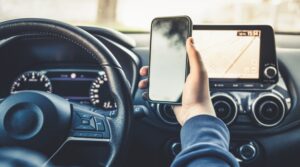
What makes these cases challenging is proving what the driver was doing in the seconds before the crash. Unlike a drunk driving case, where BAC results document impairment, distracted driving often leaves no visible evidence at the scene. Closing that evidence gap is where our experience matters most.
Our distracted driving accident attorneys can do the following after a Long Island crash:
- Move quickly to preserve phone records before carriers purge them. Detailed usage data, including texts, calls, and app activity at the time of the crash, has a limited retention window. We move quickly to lock it down.
- Preserve surveillance and dashcam footage. Traffic cameras and business security systems may capture the driver's behavior in the moments before impact. This footage is often overwritten within days.
- Secure device-level forensic data. Standard call logs don't always tell the full story. Forensic analysis of the phone itself may reveal screen-on times, notification interactions, and app activity that proves distraction.
- Coordinate witness testimony. Passengers, nearby drivers, and bystanders who saw the driver looking down or holding a phone provide real-time evidence that records alone may not capture.
- Handle insurance communication. Adjusters move quickly to establish a narrative that protects the at-fault driver. We step in early to control that process and prevent recorded statements from undermining your claim.
Our Jericho office serves distracted driving accident victims throughout Nassau and Suffolk County, backed by decades of motor vehicle accident litigation experience and the investigative infrastructure to move fast on the evidence that matters most.
We work on a contingency fee basis: no upfront costs, no hidden fees, and no attorney's fees unless we recover compensation on your behalf. Call (516) 444-4444 for a free case evaluation.
What Counts as Distracted Driving Under New York Law?
Distracted driving covers any activity that diverts a driver's attention from the road. New York law specifically targets electronic device use with two statutes:
- VTL § 1225-c prohibits using a handheld mobile telephone to engage in a call while operating a motor vehicle in motion.
- VTL § 1225-d prohibits using any portable electronic device while driving, including texting, emailing, browsing the internet, using apps, viewing or transmitting images, and playing games. Under this statute, simply holding an electronic device in a conspicuous manner creates a legal presumption that the driver was using it.
Convictions under either statute add points to the driver's record. But the civil consequences extend far beyond traffic points. When a distracted driver causes a crash that injures or kills someone, the violation becomes evidence of negligence in a personal injury or wrongful death claim.
Three Types of Distraction That Cause Crashes
Safety researchers and courts recognize three categories of driver distraction. Many dangerous behaviors, particularly phone use, involve all three simultaneously and represent a common driving distraction that contributes to serious crashes:
- Visual Distraction: The driver's eyes leave the road. Looking at a text message, glancing at a GPS screen, checking on a child in the back seat, or rubbernecking at another crash all create windows where the driver cannot see what's happening ahead.
- Manual Distraction: The driver's hands leave the wheel. Reaching for a phone, eating, adjusting climate controls, or digging through a bag all reduce the driver's ability to steer or brake in response to a sudden hazard.
- Cognitive Distraction: The driver's mind leaves the task of driving. Cognitive distraction explains why drivers sometimes fail to react to hazards that were directly in their line of sight.
Texting is considered one of the most dangerous driving behaviors because it combines all three: eyes on the screen, hands on the phone, mind on the message. But a civil negligence claim is not limited to phone use. Any form of distraction that caused or contributed to the crash may support liability.
Common Types of Distracted Driving Accidents on Long Island
Distracted driving crashes happen in every setting on Long Island, from highway collisions on the LIE to low-speed crashes in parking lots and residential neighborhoods. Our attorneys represent victims across a range of scenarios:
- Rear-end collisions caused by texting drivers. A driver looking at a phone fails to notice stopped traffic ahead. These crashes are common on congested corridors and they produce injuries ranging from whiplash to traumatic brain injuries, depending on the speed of impact.
- Intersection crashes from drivers running red lights or stop signs. A distracted driver who misses a traffic signal may blow through an intersection at full speed, striking crossing vehicles, pedestrians, or cyclists with no time to react.
- Pedestrian and bicycle accidents. Pedestrians crossing at intersections and cyclists sharing the road are particularly vulnerable to distracted drivers. Downtown areas in Hempstead, Mineola, Huntington, and Patchogue see regular pedestrian and cycling traffic near retail, transit, and dining areas where the consequences of a distracted driver are severe.
- Head-on and crossover crashes. A driver looking at a phone may drift across the center line or into oncoming traffic. These collisions often produce catastrophic injuries or fatalities because of the combined speed of both vehicles.
- Fatal distracted driving accidents. When distraction causes death, surviving family members may pursue a wrongful death claim seeking compensation for lost financial support, funeral expenses, and other pecuniary damages. The filing deadline is two years from the date of death.
Regardless of the crash type, proving that the driver was distracted at the moment of impact is the central challenge, and it's where our experience matters most.
Compensation After a Distracted Driving Crash on Long Island
New York's no-fault system provides baseline coverage after any motor vehicle crash — including one caused by a driver staring at a phone. PIP benefits cover initial medical expenses, a portion of lost wages, and basic economic losses up to $50,000, regardless of fault. To pursue damages beyond that, your injuries must meet the serious injury threshold under New York law.
Beyond PIP benefits, a distracted driving accident claim may pursue:
Medical expenses beyond the $50,000 PIP cap. Emergency treatment, surgical intervention, extended rehab, and ongoing care for injuries that resulted from a completely preventable collision.
Lost wages and diminished earning capacity. Time away from work, reduced physical capacity, and the long-term career impact of injuries that never should have happened.
Pain and suffering — amplified by preventability. Courts and juries weigh the circumstances. Injuries caused by a driver who was scrolling Instagram at 50 mph carry a different character than injuries from an unavoidable mechanical failure. Your claim should reflect that.
Loss of enjoyment of life. Activities, routines, and physical capabilities that the crash took away — all because someone decided a notification was more important than watching the road.
We work with treating physicians and financial professionals as needed to project the future costs of your injuries so the claim reflects your actual recovery path, not a quick-settlement estimate.
How to Prove the Other Driver Was Distracted
The at-fault driver will rarely admit to texting or using a phone at the time of the crash. Building a distraction case means assembling proof from multiple sources that together establish what the driver was doing in the seconds before impact.
This might include:
- Phone records and device forensics may reveal texts, calls, and app activity timestamped to the moment of the crash
- Witness testimony from passengers, nearby drivers, and bystanders places the distraction in real time
- Surveillance and dashcam footage may capture the driver's behavior visually
- Physical evidence at the scene, including a lack of braking, lane drift, or failure to react to a stopped vehicle or red light.
The police report ties these threads together. If the responding officer noted that the driver was holding a phone, cited a VTL § 1225-c or § 1225-d violation, or documented witness statements about phone use, that record becomes a foundational piece of the claim.
What Should You Do After a Distracted Driving Crash on Long Island?
The steps you take in the first days after a crash may directly affect whether distraction can be proven and how strong your claim becomes.
- Submit your no-fault application within the 30-day window. This deadline applies even though the crash was entirely the other driver's fault. PIP benefits cover your initial treatment costs while the liability claim develops
- Let your attorney handle communication with the at-fault driver's insurer. The adjuster's job is to establish a version of events that minimizes liability. In a distracted driving case, that means shifting the narrative away from the phone and toward something you did: your speed, your lane position, your reaction time.
- Contact a distracted driving accident lawyer quickly. Phone records, surveillance footage, and device data all have limited retention windows. The sooner your attorney sends subpoenas and preservation demands, the stronger your evidentiary foundation.
Contact William Mattar P.C.’s texting and driving accident attorneys for a free consultation.
Filing Deadlines and Evidence Windows After a Distracted Driving Crash
The statutory deadlines are standard: three years for a personal injury lawsuit, 30 days for your no-fault application, 90 days if a government entity is involved, and two years for wrongful death.
The evidence timeline is what makes distracted driving cases different. Phone carriers retain detailed call and text logs for limited periods. App-level usage data may have even shorter retention windows. Surveillance footage from businesses near the crash site overwrites itself in cycles that can be as short as 48 to 72 hours.
Device-level forensic data (screen-on time, notification interactions, active app at the moment of impact) requires a subpoena to the device holder, and its value degrades if the phone is factory-reset or replaced.
This is why making a call to an personal injury attorney is one of the most important steps in a distracted driving case. The evidence that proves what the driver was doing in the seconds before impact has a shelf life, and once it's gone, the strongest arguments go with it.
FAQs for Long Island Distracted Driving Accident Victims
Can I sue if the other driver denies using their phone?
Yes. Drivers rarely admit to texting or phone use at the scene. Your claim does not depend on the driver's admission. Phone records, device forensics, app usage data, witness testimony, and surveillance footage may all establish distraction independently of what the driver says happened.
Does a texting violation automatically prove the driver was at fault?
A citation under VTL § 1225-c or § 1225-d is strong evidence of negligence, but it doesn't automatically resolve the civil claim. The insurer may still argue comparative fault or dispute the severity of your injuries. However, a documented traffic violation for phone use at the time of the crash significantly strengthens your position.
What if I was partly at fault for the crash?
Partial fault reduces your recovery by your percentage of responsibility, but does not eliminate your right to pursue compensation. Even if the insurer argues you share some blame, the distracted driver's negligence remains a central factor in the claim.
Can pedestrians or cyclists file claims against distracted drivers?
Yes. Pedestrians and cyclists struck by distracted drivers may pursue compensation through both no-fault benefits and a liability claim against the driver. Given the severity of injuries when a vehicle strikes an unprotected person, these cases often meet the serious injury threshold and support substantial claims for pain and suffering.
What if the distracted driver was on the phone for work?
If the driver was texting, emailing, or talking on a handheld phone for work purposes at the time of the crash, the employer may share liability for the resulting injuries. New York law specifically prohibits motor carriers from allowing or requiring drivers to use handheld phones while driving, and employer policies that encourage phone use on the road may support a negligence claim against the company.
Contact a Distracted Driving Lawyer for a Free Consultation after a Long Island Crash
When a driver makes a different choice, and you're the one who pays for it, the legal system gives you a way to hold them accountable.

William Mattar can represent distracted driving accident victims across Nassau and Suffolk County. We handle the investigation, the insurance process, and the claim, including the time-sensitive evidence work that distracted driving cases depend on.
Call (516) 444-4444 for a free case evaluation, any time. No Fee Until We Win℠.
Past performance does not guarantee future results, including financial results or client satisfaction.