The term "self-driving" is, for the most part, a marketing misnomer. According to the internationally recognized SAE International Standard J3016, there are six distinct levels of driving automation, from Level 0 (no automation) to Level 5 (full automation).
Currently, no vehicle available for public purchase is fully autonomous. Most new vehicles equipped with advanced features operate at Level 2, which always requires the driver's full attention.
This gap between a car's perceived ability and its actual technical capability is a dangerous gray area where serious accidents may happen. Drivers commonly mistake "driver support" systems for a true autopilot, leading to inattention and delayed reactions. When a vehicle using these features crashes on a New York road, determining who is at fault becomes a complicated legal question that a Self-Driving Car Accident Lawyer is often called on to evaluate. Is it a case of driver negligence, or is it a product defect for which the manufacturer is responsible?
If you have questions about a crash involving a vehicle with automated driving technology, call William Mattar Accident Lawyers We offer a free consultation to help you understand your options, and there is no obligation to hire us.
Key Takeaways for Accidents Involving Automated Driving Technology
- Most self-driving cars require constant driver supervision. Most vehicles on the road with these features are Level 2, which means the driver is always legally responsible for monitoring the road and being ready to take immediate control.
- Liability might shift from the driver to the manufacturer. In crashes involving true Level 3 or higher automation, or if a system defect is proven, the vehicle or software maker could be held responsible instead of the driver.
- Crash data is vital evidence for proving your case. Vehicles with automated systems record large amounts of data that can show what the car was doing and whether the driver was attentive, making it essential for a lawsuit.
Marketing Hype vs. Engineering Reality
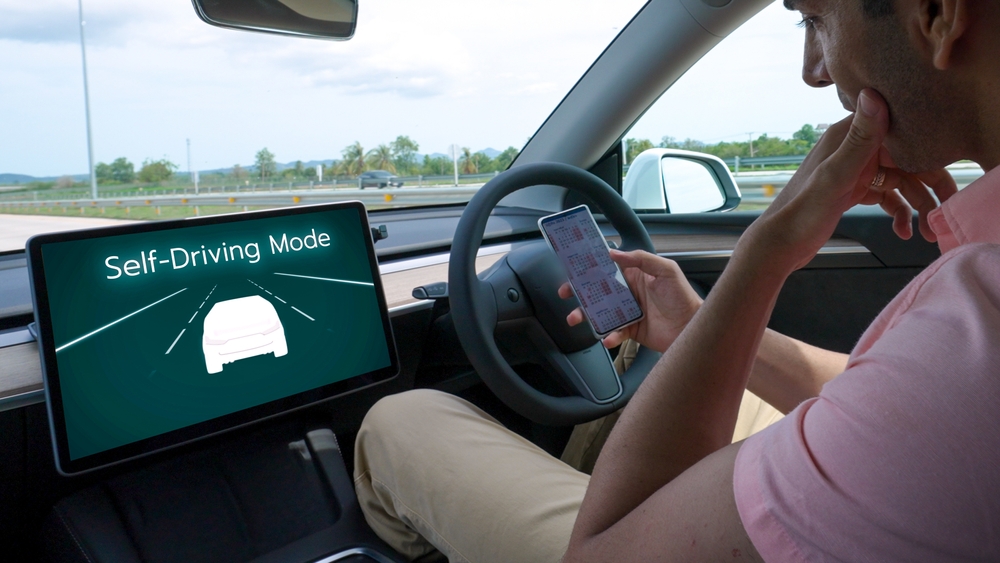
The automotive industry frequently uses exciting but misleading terms which strongly imply that the vehicle can think, react, and make driving decisions on its own, freeing the driver from responsibility. This branding can potentially foster a dangerous false sense of security.
A driver on the Long Island Expressway or commuting in Buffalo might see this marketing and mentally disengage, trusting the car to handle the complexities of traffic. However, these systems have limitations. When the technology encounters a situation it was not designed for, such as faded lane lines in a construction zone, a sudden snow squall, or the unpredictable movements of a pedestrian, it might disengage, often with little warning. The seconds it takes for a distracted human to re-engage and react could be the difference between a near-miss and a tragedy, and those same seconds can become central evidence in a car accident lawsuit when determining fault and responsibility.
To protect yourself and understand your legal standing after a collision, you must look past the brochure and understand the official SAE Levels of Driving Automation. This engineering classification system, not the marketing campaign, is what truly dictates where legal responsibility lies when one of these advanced vehicles is involved in a crash.
Breaking Down the Six Levels of Driving Automation (SAE J3016)
The SAE levels are a way to measure the division of labor between the human driver and the vehicle's automated systems.
A key concept to understand is the Dynamic Driving Task (DDT), which refers to all the real-time operational and tactical functions required to operate a vehicle, such as steering, braking, accelerating, and monitoring the roadway. The levels are defined by how much of the DDT the machine performs.
Level 0: No Automation
At this level, the human driver performs 100% of the driving tasks at all times. The vehicle provides no automated assistance with steering, acceleration, or braking. Level 0 does, however, include systems that provide warnings, such as a blind-spot warning or forward-collision alert, but these systems do not actively intervene in the vehicle's operation, which can directly affect your car accident claim if questions arise about driver responsibility and available safety features.
Level 1: Driver Assistance
This is the first step into automation, but it is very limited. A Level 1 system may assist the driver with either steering or speed control, but not both at the same time.
- Example: Adaptive Cruise Control, which maintains a set distance from the vehicle ahead by automatically adjusting speed.
- Example: Lane Keep Assist, which provides gentle steering inputs to keep the vehicle centered in its lane.
In both cases, the human is still performing the majority of the DDT and is considered to be driving the car.
Level 2: Partial Automation (The Danger Zone)
This level is where most of today's so-called self-driving cars actually operate. At Level 2, the vehicle's systems can control both steering and acceleration/deceleration simultaneously under certain conditions.
The most important nuance of Level 2 is this: the human driver must constantly supervise the technology and be prepared to take full control at a moment's notice. Your hands may be off the wheel, but your eyes and mind must remain on the road.
Because the human driver is designated as the ultimate fallback system, if a crash occurs while a Level 2 system is engaged, liability almost always falls on the driver for failing to properly monitor the vehicle and its environment.
Level 3: Conditional Automation
Level 3 is the first significant step toward true autonomous driving. Here, the vehicle performs the entire DDT, but only within a specific, limited set of conditions known as its Operational Design Domain (ODD). For example, an ODD might be limited to highway driving in clear weather at speeds below 40 mph.
Within that ODD, the driver may legally take their eyes off the road and engage in other activities. However, they must remain "fallback-ready," meaning they must be able to take control back when the system requests it. This handoff is a major legal and technical challenge, and a car accident lawyer can help evaluate whether the driver or manufacturer may be responsible if the transition fails. While manufacturers have received approval for Level 3 systems in some states, their presence in New York is still extremely rare at the time of this article.
Level 4: High Automation
At Level 4, the vehicle is able to perform all driving functions and even handle system failures within its ODD without any human intervention. If the vehicle encounters a situation outside its ODD (like a closed road or severe weather), it is capable of safely pulling over and stopping on its own. A human driver is not required to be fallback-ready.
These vehicles might be designed without a steering wheel or pedals for use within their specific domain, such as a robo-taxi service operating in a geofenced area of a city.
Level 5: Full Automation
This is the ultimate goal of autonomous technology. A Level 5 vehicle would be able to operate on any road, anywhere, under any conditions that a human driver could. It would require no steering wheel, no pedals, and no human occupants. This technology does not currently exist for commercial sale, and its widespread availability is likely many years, if not decades, away.
New York’s Legal Landscape for Autonomous Vehicles
As automated technology advances, New York's laws are struggling to keep pace. The current regulatory framework defaults to human responsibility, creating a complicated environment for both testing and deployment of these vehicles.
Current State Regulations (NYS)
At present, New York State law generally requires a licensed human operator to be seated in the driver's seat of any autonomous vehicle being tested on public roads, ready to take immediate control.
Lawmakers are also focused on the unique challenges posed by heavy commercial vehicles. For instance, NYS Senate Bill S7956 proposes a requirement that any vehicle weighing over 10,000 pounds that uses autonomous technology must have a licensed human safety operator physically present in the cab.
New York City Specifics (The Permit Barrier)
The challenges of autonomous operation are magnified in the five boroughs. New York City’s dense traffic, aggressive driving culture, and constant pedestrian and cyclist activity make it one of the most difficult driving environments in the world. Recognizing this, the city has enacted its own stringent rules.
Under NYC Rules, Title 34, Chapter 4, § 4-17, any company wishing to test an autonomous vehicle on city streets must first obtain the state permit and then apply for a separate city permit. This process involves a $5,000 annual fee and a requirement to carry a staggering $5 million in liability insurance. This high bar shows that city regulators are proceeding with extreme caution, making it far more difficult to test self-driving features here than in more open environments.
Potential Future Legislation
The law is in a state of flux. Proposed bills like Assembly Bill A3650 and A4901 have aimed to create a legal framework for operating fully autonomous vehicles without human drivers, provided specific insurance and registration conditions are met. The fact that these bills are being debated and, in some cases, amended, shows that the legislature is grappling with the safety and liability questions involved.
Until new laws are passed, the legal system defaults to its long-standing principle: the person behind the wheel is responsible.
Who is Liable When an Automated Vehicle Crashes?
In a standard car accident, the central question is, "Which driver was negligent?" When an automated vehicle is involved, the question pivots: "Was the crash caused by the driver or by the code?" Understanding the causes of car accidents in these cases requires a deeper investigation into both human behavior and software performance. The answer determines the entire legal strategy for seeking compensation.
Negligence vs. Product Liability
The legal approach to your case will depend heavily on the specifics of the technology involved.
- Scenario A (Level 2 Crash): If a driver using a Level 2 system like Autopilot looks away from the road to check a text and the car crashes, New York law will almost certainly view this as straightforward driver negligence. The driver failed in their legal duty to monitor the vehicle and the road. The claim would proceed much like a typical car accident case.
- Scenario B (A System Defect): Imagine a scenario where a vehicle's advanced driver-assist system experiences a phantom braking event (slamming on the brakes for no reason), causing a multi-car pile-up. In this situation, there may be grounds for a product liability claim against the car or software manufacturer. This legal concept holds companies responsible for putting defective and dangerous products on the market.
- Scenario C (Level 3+ Crash): If a true Level 3 vehicle was operating correctly within its ODD and failed to handle a foreseeable traffic situation, or failed to give the driver adequate warning to take over, liability could shift entirely to the manufacturer. This is a new and evolving area of law where the car company, not the driver, may be held responsible.
FAQ for Automated Vehicle Accidents
Can I legally sleep behind the wheel of a Tesla in New York?
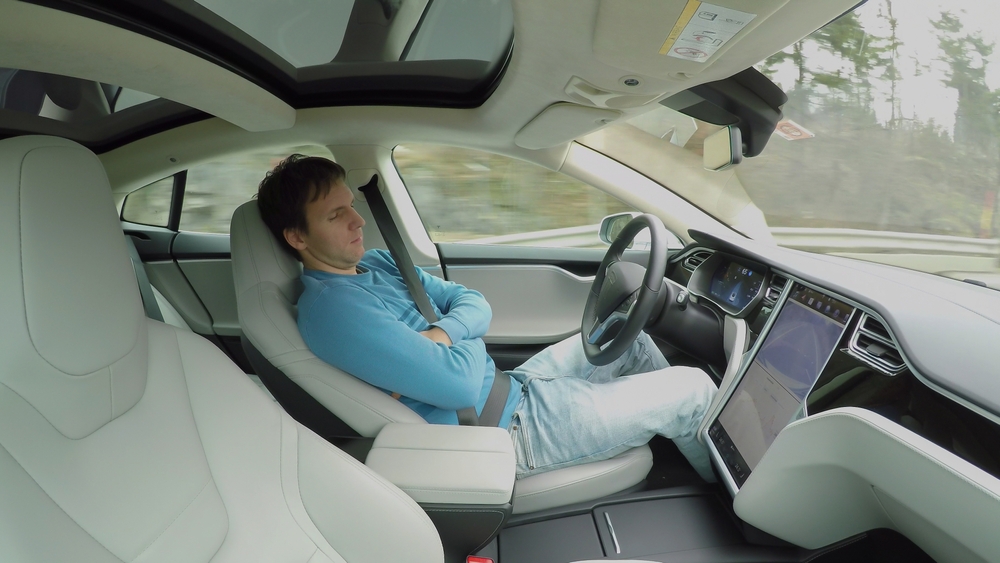
No. It is illegal and extremely dangerous. New York's vehicle and traffic laws require a driver to be in control of their vehicle at all times. Since current systems are Level 2 at best, the driver is always legally responsible for the vehicle's operation. Falling asleep would constitute negligence and could lead to reckless driving charges.
What is an Operational Design Domain (ODD)?
An ODD defines the specific conditions under which an automated driving system is designed to function safely. This includes limitations related to roadway type (e.g., divided highways only), weather (e.g., no snow or heavy rain), speed, time of day, and geographic location. Outside of its ODD, the human driver must be in control.
If I get hit by a driverless test car, whose insurance pays?
In New York City, any entity testing autonomous vehicles must carry a $5 million liability insurance policy. You would file a claim against the insurance policy of the company that owns and operates the test vehicle.
How does No-Fault insurance work with autonomous cars?
New York's No-Fault insurance laws still apply in the same way. Your own Personal Injury Protection (PIP) coverage is the primary source for paying initial medical expenses and lost wages, regardless of whether a human or an automated system was controlling the at-fault vehicle at the time of the crash.
Don't Let Technology Complicate Your Right to Justice
The promise of a safer, driverless future does not change the reality of today’s dangers. If you were injured in an accident caused by a so-called self-driving car, the confusion surrounding this new technology should not be a barrier to your recovery.
Whether the fault lies with a driver who was over-reliant on automation or with a manufacturer that released a flawed system, the result for you is the same: mounting medical bills, physical pain, and lost time from work.
If you have been injured in an accident involving a semi-autonomous vehicle, do not face the legal battle and insurance claims process by yourself. Contact William Mattar Accident Lawyers today to schedule a free, no-obligation consultation about your case. We are here to help you move forward.