Proving liability in a Long Island pedestrian accident case often comes down to evidence that may exist for only a few days.
Surveillance footage from nearby businesses may be overwritten within days. Witnesses who saw the crash may move on and become harder to locate. The driver's version of events, once locked into a police report and an insurance file, becomes the default narrative unless something contradicts it.
That something is usually video footage, an independent witness, or both. When a driver claims the pedestrian stepped out suddenly, or when an insurance adjuster argues the pedestrian was outside a crosswalk, surveillance footage and witness statements may tell a different story, one that instead shows the driver speeding, texting, or violating other traffic laws.
Speaking with a pedestrian accident lawyer after a Long Island crash may help preserve footage and identify witnesses before the evidence that proves your case disappears.
Key Takeaways About Proving Liability in a Pedestrian Accident
- Surveillance footage from businesses, traffic cameras, and residential doorbell cameras may capture the moments before, during, and after a pedestrian crash, providing objective evidence that contradicts a driver's version of events
- Independent witness statements carry significant weight because they come from people with no financial interest in the outcome
- Under Vehicle and Traffic Law § 1151, drivers must yield to pedestrians in crosswalks when traffic signals are not in place or not in operation, and this rule applies to both marked and unmarked crosswalks
- VTL § 1146 requires every driver to exercise due care to avoid colliding with any pedestrian on any roadway, regardless of where the pedestrian is crossing
- Video footage from private businesses is typically overwritten within days or weeks, making early preservation requests critical to building a pedestrian accident claim
Why Liability Is Often Disputed in Long Island Pedestrian Accident Cases
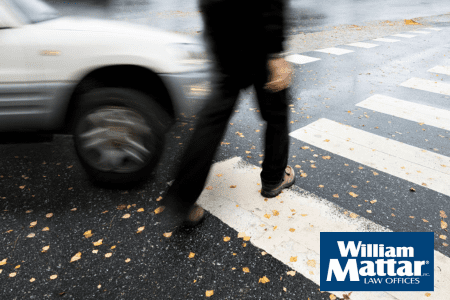
Pedestrian crashes happen fast. The driver may not see the pedestrian until impact. And unlike car-on-car collisions, where vehicle damage patterns help reconstruct what happened, a pedestrian crash leaves fewer physical clues about speed, direction, and timing.
The Driver Controls the Initial Narrative
In many Long Island pedestrian accidents, the driver is the first person to speak with the police. The pedestrian may be unconscious, in an ambulance, or too disoriented to give a coherent account. The driver's likely self-serving statement becomes the foundation of the police report. Without contradicting evidence, that statement may also become the foundation of the insurance company's liability determination.
Insurance Companies Exploit the Gaps
When there is no video and no independent witness, the insurer may frame the crash as a "word against word" dispute and use that ambiguity to deny or undervalue the claim. Common arguments include that the pedestrian was outside the crosswalk, crossed against a signal, or stepped into traffic suddenly. Each of these arguments may be rebutted with the right evidence, but only if that evidence is preserved in time.
Pedestrian Accident Scenarios Where Video Often Changes the Case
Certain types of pedestrian crashes produce conflicting accounts almost every time. In these scenarios, surveillance footage frequently resolves the dispute in the pedestrian's favor.
- Left-turning driver hits pedestrian in crosswalk. The driver focuses on oncoming traffic and turns without checking the crosswalk. Footage may show the pedestrian was already in the crosswalk before the driver began the turn, eliminating the "stepped out suddenly" defense.
- Driver backs out of a driveway or parking lot into a pedestrian. Under VTL § 1151-a, drivers exiting driveways must yield to pedestrians on the sidewalk. Security cameras on the building or neighboring properties frequently capture these crashes.
- Pedestrian struck in a parking lot. Parking lot crashes often lack police investigation because they occur on private property. Store surveillance footage may be the only record of what happened, showing vehicle speed, pedestrian position, and whether the driver was paying attention.
- Driver turns right on red without checking the crosswalk. The driver watches for a gap in cross traffic and turns without looking right for pedestrians who have the walk signal. Traffic cameras or storefront footage may capture the signal timing and the pedestrian's lawful entry into the crosswalk.
- Driver claims the pedestrian crossed outside the intersection. Footage from a nearby business or residential camera may show the pedestrian was within the unmarked crosswalk area at the intersection, directly rebutting the driver's claim and establishing right of way under VTL § 1151.
In each of these scenarios, the driver's account and the pedestrian's account tell different stories. Video footage breaks the tie.
How Surveillance Footage Helps Prove Fault in a Pedestrian Accident Case
Video evidence is the most powerful tool in a pedestrian accident case because it provides an objective, time-stamped record of what happened. It does not forget details, change its story, or have a financial interest in the outcome.
What Footage Can Show
Surveillance footage from businesses, traffic cameras, and residential security systems may capture critical details that directly affect liability.
- Vehicle speed before impact. Footage showing the vehicle's rate of travel in the seconds before the crash may establish that the driver was exceeding the speed limit or traveling too fast for conditions.
- Signal timing and pedestrian position. Cameras that capture the intersection may show whether the pedestrian entered the crosswalk on a walk signal, whether the driver ran a red light, or whether the pedestrian had the right of way at an unsignalized crosswalk.
- Driver behavior and distraction. Footage may reveal the driver looking down at a phone, failing to brake, or turning without checking the crosswalk.
- The pedestrian's path and conduct. Video may confirm that the pedestrian was crossing within a marked or unmarked crosswalk, walking on a sidewalk, or lawfully crossing at an intersection, directly rebutting the driver's claim that the pedestrian appeared suddenly.
A single camera angle may not capture everything, but footage from multiple nearby sources, when pieced together, may reconstruct the entire sequence of events.
Where Surveillance Footage May Be Found After a Long Island Pedestrian Accident
Potential footage sources near a pedestrian crash scene include storefront security cameras, ATM cameras, gas station surveillance systems, residential doorbell and security cameras, traffic monitoring cameras operated by NYSDOT, municipal red-light or speed cameras, and dashcam footage from vehicles stopped at the intersection.
Not all of these sources will be available in every case, but identifying and requesting footage from nearby cameras quickly is essential because many systems overwrite recordings on short cycles.
How Witness Statements Help Prove Liability in a Pedestrian Accident Claim
Witnesses provide context that footage alone may not capture. A camera shows what happened. A witness may explain what they heard, how fast the vehicle appeared to be traveling, whether the driver seemed distracted, and what happened immediately after impact.
Why Independent Witnesses Matter Most
An independent witness, someone with no connection to either the pedestrian or the driver, carries the most credibility. Their account is not influenced by a financial interest in the outcome. When an independent bystander tells police or later confirms in a written statement that the driver failed to stop, ran a light, or was looking at a phone, that testimony may directly contradict the driver's version and shift the liability analysis.
Witness Statements in the Police Report Are a Starting Point
Police officers responding to a pedestrian crash may include witness statements in their report. However, the report may summarize those statements rather than quoting them in full, and officers sometimes speak with only some of the witnesses present. Identifying additional witnesses who were not interviewed at the scene, or obtaining more detailed accounts from those who were, may strengthen the claim beyond what the police report alone provides.
Witnesses Become Harder to Find Over Time
People who witnessed a crash in a parking lot, at an intersection, or on a sidewalk may not leave their contact information with police. They may live in the area, work nearby, or have been passing through. The longer you wait to identify and contact potential witnesses, the harder they become to locate and the less reliable their memories become.
How New York Pedestrian Right-of-Way Laws Help Prove Driver Fault
The legal framework governing pedestrian right of way in New York directly affects how liability is analyzed and how evidence like footage and witness statements is used to prove fault.
Crosswalk Right of Way Under VTL § 1151
When traffic-control signals are not in place or not in operation, the driver of a vehicle must yield the right of way, slowing down or stopping if need be, to a pedestrian crossing the roadway within a crosswalk. This rule applies to both marked crosswalks with painted lines and unmarked crosswalks at intersections. Many Long Island intersections, particularly in residential neighborhoods, have unmarked crosswalks where drivers are still legally required to yield.
Surveillance footage showing a pedestrian crossing within a crosswalk area at an unsignalized intersection, combined with footage or witness testimony showing the driver failed to slow or stop, may establish that the driver violated § 1151.
The Due Care Standard Under VTL § 1146
Even when a pedestrian crosses outside a crosswalk, New York law still requires drivers to exercise due care. Every driver of a vehicle must exercise due care to avoid colliding with any bicyclist, pedestrian, or domestic animal upon any roadway. By remaining alert and following this legal duty, drivers can potentially avoid pedestrian accidents and reduce the risk of serious injuries. If a driver causes physical injury while failing to exercise due care, there is a rebuttable presumption that the driver operated the motor vehicle in a manner that caused the injury.
This means that even when the insurance company argues the pedestrian was outside a crosswalk, the driver is not automatically free from fault. Footage or witness testimony showing the driver was distracted, speeding, or made no effort to avoid the collision may establish liability under § 1146 regardless of where the pedestrian was crossing.
Comparative Negligence Does Not Eliminate Your Claim
New York applies comparative fault. If both the driver and the pedestrian share fault, the pedestrian's recovery is reduced by their percentage of responsibility but not eliminated. Surveillance footage and witness statements help establish the actual division of fault rather than allowing the insurance company to assign blame without evidence. This evidence is often critical in proving pedestrian accident negligence and ensuring fault is allocated fairly.
How to Preserve Surveillance Footage Before It Is Overwritten
Most surveillance systems overwrite footage on short cycles, sometimes as frequently as every 24 to 72 hours. Business owners are not required to preserve footage just because a crash occurred nearby, and many do not realize their cameras captured anything relevant. Taking action quickly is critical.
- Identify nearby cameras immediately. You or a friend can walk or drive the area around the crash scene and note every visible camera, including storefront security systems, ATMs, gas stations, residential doorbells, and traffic cameras.
- Request footage directly from business owners. A polite, prompt request to a business manager or property owner may result in voluntary preservation of footage. Ask them to save the recording rather than simply viewing it.
- Contact an attorney who may send formal preservation requests. A Long Island pedestrian accident attorney may send written preservation letters to businesses, property owners, and government agencies requesting that footage be retained. If voluntary preservation fails, a formal legal demand or subpoena may be necessary.
- Request traffic camera footage from NYSDOT or the local municipality. Traffic monitoring cameras operated by state or local agencies may have captured the crash. These requests may take time to process, making early submission important.
- Every case is unique. It is not possible to generalize. You should have an experienced Long Island personal injury attorney examine your case immediately.
Every day that passes without a preservation request increases the risk that the footage your claim depends on is gone.
FAQs About Proving Liability in a Long Island Pedestrian Accident
Can a witness statement in a police report be used as evidence?
Yes. Witness statements documented in a police report may be used to support a claim, though they are typically summaries rather than verbatim accounts. Obtaining a more detailed written or recorded statement directly from the witness may strengthen the evidence beyond what the police report alone provides.
What if there is no surveillance footage and no witnesses?
A claim may still proceed based on other evidence, including the police report, physical evidence at the scene, vehicle damage patterns, the pedestrian's injury pattern, and the driver's own statements. However, the absence of footage and witnesses makes the claim harder to prove, which is why preserving every available piece of evidence early is critical.
How long do businesses keep surveillance footage?
Retention periods vary widely. Some systems overwrite every 24 to 72 hours. Others retain footage for 7 to 30 days. Larger businesses and chains may keep recordings longer. There is no standard retention period, which is why requesting preservation within the first few days after a crash is essential.
What if the driver says I stepped out suddenly?
VTL § 1151(b) does state that a pedestrian may not suddenly leave a curb and walk into the path of a vehicle so close that it is impractical for the driver to yield. However, this defense requires the driver to prove the pedestrian's movement was truly sudden and that the driver could not have stopped. Footage, witness testimony, and physical evidence may challenge this claim by showing the driver had time and distance to react.
What if the police report blames the pedestrian?
A police report is an important piece of evidence, but it is not a final determination of fault. Officers arrive after the crash, and their conclusions are based on the information available at the scene, which often relies heavily on the driver's account when the pedestrian is unable to speak. Surveillance footage, independent witness statements, signal timing data, and physical evidence gathered after the report is filed may contradict the officer's initial narrative and shift the liability analysis.
Does it matter whether the crosswalk was marked or unmarked?
Under New York law, a crosswalk may exist at an intersection even if it is not marked with painted lines. Drivers must yield to pedestrians crossing within a crosswalk at intersections where traffic signals are not in place or not in operation. The absence of painted markings does not eliminate the driver's obligation to yield.
The Evidence That Proves Your Case May Not Last Long
Pedestrian accident claims are built on evidence that has a short shelf life. Surveillance footage is overwritten. Witnesses forget details or become unreachable. Physical evidence at the scene is cleared. The driver's narrative, once established in the police report and insurance file, becomes harder to challenge with every day that passes without contradicting proof.
William Mattar represents pedestrians injured in crashes across Long Island and throughout New York State. Our attorneys move quickly to identify and preserve surveillance footage, locate and interview witnesses, and build the evidentiary record that proves how the crash happened before the evidence disappears.
Contact William Mattar for a free consultation. We answer phones 24/7. No Fee Until We Win℠.