Stop, exchange license and insurance information, and report the crash, because Vehicle and Traffic Law Section 600 makes each of those a legal duty before you leave the scene. After that, the two numbers that may matter most are 30 days to file your no fault application and three years under CPLR 214 to file most injury lawsuits, though every case is unique - sometimes the time limitation is much shorter. The steps below cover the first hours and days after a Syracuse crash, on a city street or in the I-81 and I-690 corridors, in order.
At William Mattar Accident Lawyers our team has focused on motor vehicle accidents for more than 30 years, with attorneys and offices and intake locations across New York State.
Key facts about what to do after a car accident in Syracuse
- Vehicle and Traffic Law Section 600 requires every driver involved in a crash causing injury or property damage to stop, exchange license and insurance information, and report the incident, and leaving the scene of an injury crash is at least a misdemeanor.
- No fault benefits defined in Insurance Law Section 5102 pay up to $50,000 per person in basic economic loss, including medical bills and a share of lost earnings, regardless of who caused the crash.
- The no fault application, called the NF-2 form, generally must reach the responsible no fault insurer within 30 days of the crash.
- CPLR 214 gives most New York car accident injury lawsuits a three year filing period, and a lawsuit over a Syracuse crash is usually filed in the Supreme Court in Onondaga County. The time limitation is sometimes much shorter, depending on the circumstances. An experienced attorney can review and provide insight on your specific situation.
Of course, every situation is unique so the below are not specific instructions of steps to take. You should use your own discretion in view of the circumstances.
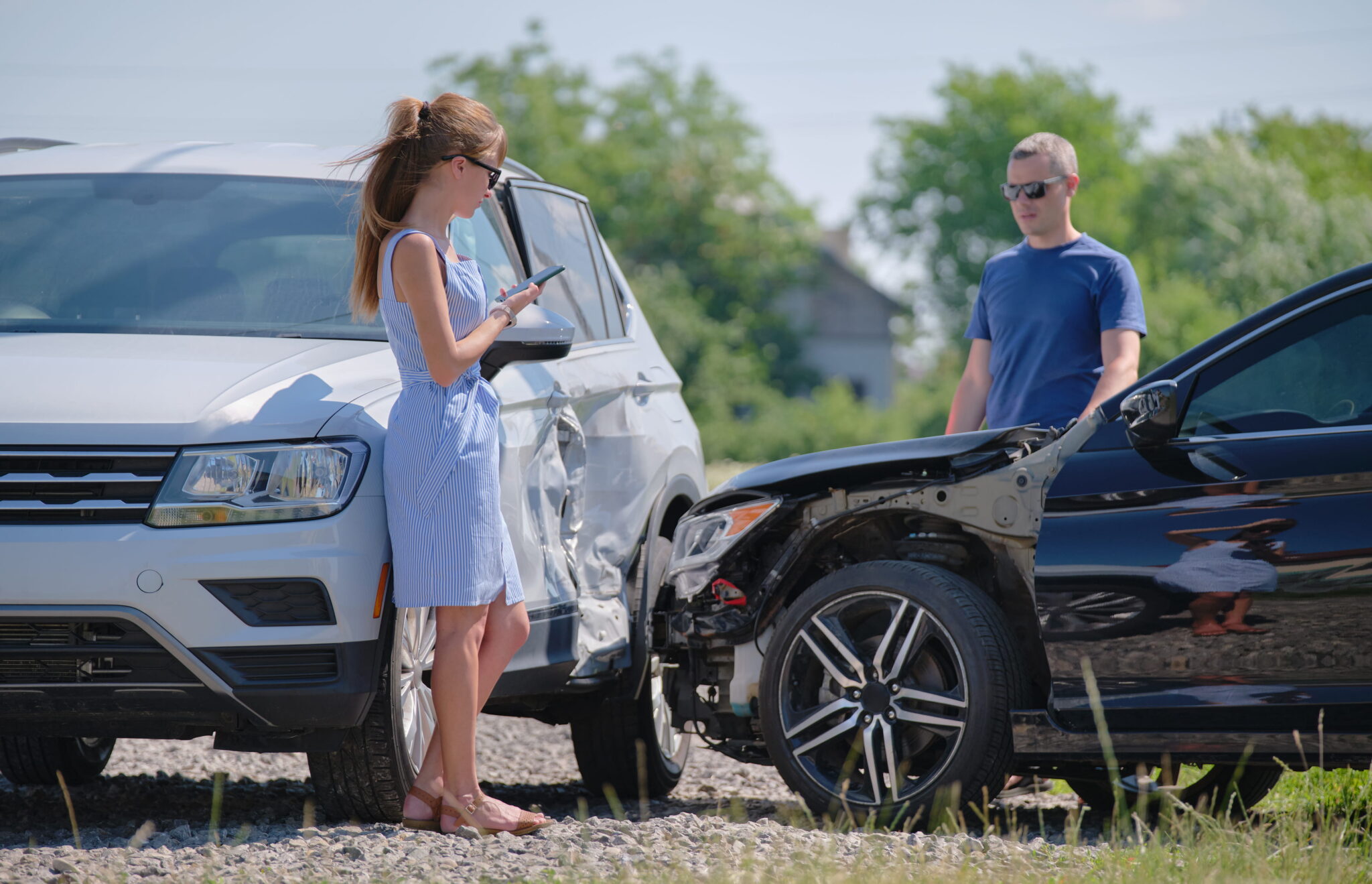
Stop, move to safety, and exchange information
New York law does not let you sort things out later. Under Vehicle and Traffic Law Section 600, a driver involved in a crash causing property damage or personal injury must stop, show a license and insurance identification card, and give name, address, insurance carrier, and policy information to the other party. If anyone is hurt, the crash must also be reported to a police officer or the nearest police station.
Call 911 and ask for the crash report
The responding agency may be the Syracuse Police Department on city streets, the Onondaga County Sheriff's Office in the surrounding towns, or the New York State Police on the interstates. The officer's crash report will record the date, location, vehicles, insurance details, and often a first account of how the collision happened, and insurers ask for it early in almost every claim. Before the officer leaves, ask which agency will hold the report and how to request a copy. If police cannot respond, you are still required to report an injury crash yourself, and should write down what happened while it is fresh.
Get medical care the same day
See a doctor on the day of the crash, at an emergency room, urgent care, or your own physician. Concussions and internal injuries can take hours or days to produce obvious symptoms, and adrenaline masks pain at the scene. Same day records also connect your injuries to the collision. A long gap between the crash and the first visit can give the insurance company an argument that something else caused the injury or that it was not serious. Whether an injury meets the serious injury definition in Insurance Law Section 5102 often decides whether you can recover pain and suffering damages at all, and that question is answered with medical records.
Photograph the scene and preserve evidence
Use your phone before the vehicles are moved if it is safe to do so. Photograph the position of each vehicle, all visible damage, license plates, skid marks, debris, traffic signals and signs, and the road surface and weather. Get the names and phone numbers of witnesses before they drive away, because police reports do not always capture them. Save your dashcam footage the same day. Nearby businesses may have cameras that caught the crash, and that footage is often deleted within days, so note which buildings face the scene. Do not authorize repairs or let a totaled vehicle go to salvage until the insurers have documented it.
File the no fault application within 30 days
New York is a no fault state. The insurer of the vehicle you occupied, or that struck you if you were a pedestrian or cyclist, pays your medical bills and a share of your lost earnings up to the $50,000 basic economic loss defined in Insurance Law Section 5102, no matter who caused the crash. There may be other insurance companies responsible for paying no-fault benefits. Those benefits are not automatic. You must submit a written application, the NF-2 form, and the standard deadline is 30 days from the crash. Miss it without a reasonable excuse and the insurer can deny benefits you were otherwise entitled to receive. Identify the correct insurer, send the form by a method you can prove, and keep a copy.
Step 6. Do not give the other insurer a recorded statement
Expect a phone call from the other driver's insurance company within days, sometimes within hours. The adjuster may sound helpful and ask for a recorded statement. You have no obligation to provide one, and you should decline until you have legal advice. Early statements are taken while you are shaken, medicated, or unaware of the full extent of your injuries, and a casual answer about how you feel can be quoted back months later to argue your injuries were minor. The same caution applies to quick settlement offers made before your treatment is finished. Your own policy does require cooperation with your own insurer, so report the crash to your carrier promptly.
Step 7. Know your deadlines and when to call a lawyer
Two dates matter most. The no fault application is generally due within 30 days, and under CPLR 214 most lawsuits for crash injuries must be filed within three years of the collision, with shorter periods for some claims, including claims against government entities. A lawsuit over a Syracuse crash is usually filed in the Supreme Court in Onondaga County. Call a lawyer promptly if anyone was injured, if fault is disputed, if a driver was uninsured or fled, or if an insurer is pressing you for statements or offering a fast settlement.
A timeline of things to consider the days after a Syracuse crash
| When | What to do | Why it matters |
| At the scene | Stop, exchange license and insurance information, and report an injury crash, as required by Vehicle and Traffic Law Section 600 | Leaving without exchanging information is a crime, and the exchange identifies the insurer that will pay |
| At the scene | Call 911, photograph vehicles and the roadway, and collect witness contacts | The crash report and photos become the core evidence in any claim |
| Same day | If medically necessary, get examined at an emergency room, urgent care, or your doctor | Same day records tie the injuries to the crash and protect a later serious injury argument |
| Within days | Report the crash to your own insurer and save camera and dashcam footage | Your policy requires prompt notice, and nearby camera footage is often erased quickly |
| Within 30 days | File the NF-2 no fault application with the correct insurer | A late application can potentially forfeit up to $50,000 in no fault benefits |
| Within three years, but sometimes in an even shorter period of time, especially where there is a notice of claim requirement | File any injury lawsuit, per CPLR 214, or in compliance with any shorter timeframes that are case dependent | Most claims filed after the deadline are dismissed regardless of merit |
Frequently asked questions
Do I have to call the police after a car accident in Syracuse?
If anyone is injured, New York law requires the crash to be reported to a police officer or the nearest police station. Calling 911 is the safer course, because the officer's report documents the collision and both insurance policies.
How long do I have to file a no fault claim in New York?
The no fault application, called the NF-2, generally must be submitted to the responsible insurer within 30 days of the crash. That deadline applies regardless of who was at fault. A late filing can be excused in limited circumstances, but insurers routinely deny late applications, so treat 30 days as firm.
Should I see a doctor after a car accident in Syracuse?
Yes, and on the same day if possible if you suspect injury. Concussions, whiplash, and internal injuries often produce delayed symptoms, and a same day exam creates the medical record that connects any injury to the crash. Waiting weeks gives the insurance company room to argue the injury came from something else.
What should I say if the other driver's insurance company calls me?
Confirm basic facts like the date and location, and decline to give a recorded statement or discuss your injuries until you have spoken with a lawyer. You have no legal obligation to give the other driver's insurer a statement. Anything you say early, while injuries are still developing, can be used to minimize your claim later.
Were you hurt in a car accident in Syracuse or anywhere in Onondaga County? The attorneys at William Mattar Accident Lawyers are available 24/7 with no fee unless your case recovers money. Call (844) 444-4444
About William Mattar Accident Lawyers
William Mattar Accident Lawyers is a New York law firm that handles motor vehicle accident cases and has represented injured people for over 30 years. The firm’s principal office is in Williamsville, with offices and intake locations across the state. It represents motorcycle, car, truck, bus, pedestrian, and rideshare accident victims throughout New York State, with free case reviews available 24/7 at (844) 444-4444.
Related reading from William Mattar
- What Happens in a Car Accident Lawsuit
- The Three-Year Clock. A Guide to New York’s Car Accident Statute of Limitations
- What Legally Qualifies as Distracted Driving in New York
- How Much Does a Lawyer Cost for a Car Accident in New York?
Each of the above is part of William Mattar’s New York State accident resource library.
Sources
- New York Vehicle and Traffic Law Section 600, Leaving scene of an incident without reporting, nysenate.gov
- New York Insurance Law Section 5102, definitions of basic economic loss and serious injury, nysenate.gov
- New York CPLR 214, actions to be commenced within three years, nysenate.gov
- William Mattar Accident Lawyers, Syracuse Car Accident Lawyer page and No Fault Claim Form resource, williammattar.com, reviewed July 2026
Attorney Advertising. This article provides general information about New York law and is not legal advice for any specific situation. Prior results do not guarantee a similar outcome. Last updated July 2026.