In New York, what qualifies as distracted driving is defined in two ways:
- There is the clear-cut version that labels certain actions behind the wheel as illegal and results in a traffic ticket, like texting.
- Then there is the version that includes almost any action that pulls their focus from the road, like eating, drinking, or just being lost in thought. There are no laws that make these actions illegal, but under the right circumstances, they may constitute negligence if they lead to a crash.
This distinction is built on a legal concept called negligence. When a driver violates a specific safety law, like the New York Vehicle and Traffic Law's ban on cell phone use, the law may presume they were negligent. This is called negligence per se.
However, for non-ticketable distractions, such as eating, grooming, or even being lost in thought, proving a case requires a different strategy, which is where a Distracted driving accident lawyer in New York becomes essential. We must demonstrate how the driver failed to uphold their basic duty to operate their vehicle with reasonable care.
The at-fault driver's insurance carrier will likely argue that if the police report does not cite a specific phone violation, then distracted driving did not occur. This is frequently not the case, however.
If you suspect the other driver was distracted when they caused your accident, even if the police report is inconclusive, call us for a free consultation. We help preserve the digital evidence necessary to build a strong case. Contact William Mattar Accident Lawyers to learn more.
Key Takeaways for Distracted Driving in New York
- New York law has two definitions for distracted driving. Ticketable offenses like texting are clear violations, but general inattention, such as eating, can also establish negligence in a lawsuit.
- A traffic ticket is not required to prove fault. We use evidence like phone records, vehicle black box data, and witness testimony to show the other driver was not paying attention.
- Many actions that are not explicitly illegal can still be negligent. Staring at a GPS, personal grooming, or reaching for an object can all be a breach of a driver's duty of reasonable care if it leads to a crash.
The Black-and-White Law: New York’s Electronic Device Statutes
The Two Core Statutes
Two key sections of the New York Vehicle and Traffic Law (VTL) form the bedrock of the state’s distracted driving rules:
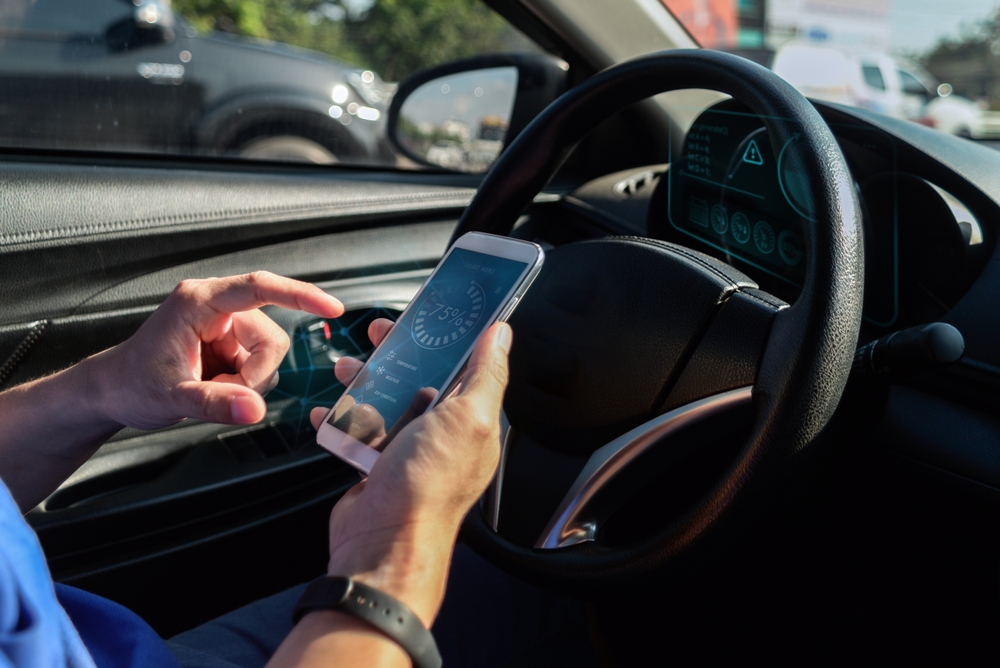
- VTL § 1225-c (Mobile Telephones): This statute bans drivers from using a hand-held mobile phone to engage in a call. The law defines using as simply holding the phone in the immediate proximity of your ear.
- VTL § 1225-d (Portable Electronic Devices): This is the state's broader texting law. It prohibits composing, sending, reading, browsing, or retrieving electronic data. This covers everything from texting and emailing to using social media apps.
The Presumption of Use
A powerful tool in these statutes is the legal concept of a rebuttable presumption, particularly in cases involving distracted driving. Under VTL § 1225-d, if a police officer observes a driver holding an electronic device in a conspicuous manner, the law presumes the driver was using it. This means the burden of proof shifts. Instead of the prosecution having to prove you were texting, the driver has to prove they were not.
Civil vs. Administrative Consequences
A violation of these statutes comes with penalties from the Department of Motor Vehicles, including fines and points on a driver's license. But for someone injured by that driver, the consequences are even more direct.
A conviction for using an electronic device while driving serves as strong evidence of negligence per se. In simple terms, because the driver broke a safety law, they are presumed to have breached their duty of care to others on the road. This can make proving liability in a personal injury claim much more straightforward.
Beyond The Ticket: Distractions That Are Legal but Negligent
A common misconception is that if an action is not specifically illegal, it cannot be used to establish fault in an accident. Many drivers believe that as long as their phone is down, they are shielded from liability. This is incorrect. The law’s definition of negligence is far broader than the list of ticketable offenses.
While activities like eating, drinking, personal grooming, turning to speak with a passenger, or reaching for an item on the floor may not violate a specific statute, they could all constitute negligence. In police reports and traffic safety data, these actions fall under the catch-all category of Driver Inattention/Distraction.
The Duty of Reasonable Care
Every driver on a New York road has a fundamental duty of care to operate their vehicle as a reasonably prudent person would under the same circumstances, especially given the well-documented risks of distracted driving. A reasonably prudent person does not attempt to eat a bowl of cereal while merging onto the Thruway or apply makeup while navigating city traffic. When a driver engages in a secondary task that compromises their ability to react to changing road conditions, they have likely breached this duty.
The Gray Areas: Common Scenarios Where Legality Isn’t Clear
The line between a lawful action and a negligent one is not always obvious. Many scenarios fall into a legal gray area where drivers may be confused about their obligations. Here are some of the most common questions that arise.
dify that being stopped in traffic is the same as being in motion for the purpose of these laws.
Can I Use a GPS on a Mounted Phone?
Following a map on a properly mounted GPS is permitted, as long as the device does not obstruct the driver's view. Even if glancing at a map is legal, staring at the screen for too long could still be presented as evidence of general negligence if it causes an accident.
Is It Legal to Wear Headphones or Earbuds?
Vehicle and Traffic Law § 375(24-a) makes it illegal to operate a vehicle while wearing more than one earphone. This allows for the use of a single earpiece for navigation or calls but prohibits the use of two, which prevents a driver from hearing sirens, horns, or other important sounds. Wearing two headphones is strong evidence of auditory distraction and a failure to maintain awareness of one's surroundings.
What About Smartwatches and Other Wearables?
Technology evolves faster than legislation. While smartwatches are not explicitly named as hand-held devices, the act of using one for texting or reading notifications falls squarely under the broad definition of using a portable electronic device in VTL § 1225-d.
Checking a message on your wrist requires you to take your eyes off the road and your mind off of driving, which satisfies the core elements of both a statutory violation and general negligence and underscores the need to prevent distracted driving. An emerging proposal (S1054) also seeks to specifically address head-mounted devices like smart glasses.
Proving Distraction When The Driver Denies It
At the scene of an accident, it is rare for an at-fault driver to admit they were distracted. The typical response is denial, leaving the injured party in a he-said-she-said situation.
Fortunately, a lack of admission is not the end of the story. A thorough investigation can uncover a digital trail that speaks for itself.
Following the Electronic Evidence
In the modern world, our devices are constantly creating data. This data may become crucial evidence in a car accident claim:
- Phone Records: A subpoena to the driver's cell phone carrier produces logs showing the exact time calls were made or texts were sent and received. If these timestamps align with the moment of the crash, it creates a powerful inference of distraction.
- Device Metadata: Carrier logs do not show activity within apps, such as scrolling through social media, playing a game, or using a web browser. We may perform a forensic analysis of the physical device to see when the screen was active or when data was consumed.
Using Vehicle Telematics (The Black Box)
Most modern cars are equipped with an Event Data Recorder (EDR), similar to an airplane's black box. This device records data in the seconds just before a collision. An EDR may capture information about infotainment system interactions.
For instance, if the driver was trying to pair a Bluetooth device or was distracted by the touchscreen navigation system at the moment of impact, the car’s own data might prove it.
Gathering Visual Evidence
Beyond digital forensics, traditional investigative methods are still effective in establishing blame for distracted driving. Footage from traffic cameras, security cameras on nearby businesses, or even a witness's dashcam provides a clear view of the driver's behavior. Witness testimony describing the driver's head position, such as looking down into their lap where a phone would be, is also persuasive evidence.
Establishing Proximate Cause
Proving the driver was distracted is only the first step. We must then prove that the distraction was the proximate cause of the collision. This means connecting the act of distraction to the driving error.
Professional Drivers and Employer Liability
When the distracted driver is on the job, the case becomes more complicated. Commercial truck drivers, delivery drivers, and others who drive for a living are held to a higher standard and may expose their employers to liability.
Federal vs. State Rules
Commercial Motor Vehicle (CMV) drivers are subject to strict federal rules from the Federal Motor Carrier Safety Administration (FMCSA). These regulations ban all hand-held cell phone use and texting.
Respondeat Superior
The legal doctrine of respondeat superior, a Latin term meaning "let the master answer," holds that an employer may be held liable for the negligent acts of an employee committed within the scope of their employment. If a delivery driver causes a crash while texting a customer, their employer may be held responsible for the resulting damages.
Negligent Supervision
In some cases, a company may be independently negligent. For example, if a business has a policy that requires drivers to respond to dispatch messages immediately, even while driving, that company could be found negligent for encouraging or creating an unsafe practice.
Frequently Asked Questions for Distracted Driving in New York
Can I sue if the other driver was eating, even if they didn't get a ticket?
Yes. A traffic ticket is not a requirement to file a civil claim for personal injuries. Proving the driver was negligent by eating, or engaging in any other distracting activity that caused them to drive unsafely, is sufficient to establish liability.
Does New York’s no-fault law apply if the other driver was distracted?
Yes. New York's no-fault insurance system provides initial coverage for medical expenses and lost wages regardless of who was at fault for the accident. However, proving the other driver was distracted is essential for pursuing a bodily injury lawsuit for pain and suffering. This type of lawsuit is permitted once your injuries meet the serious injury threshold as defined by New York law.
Can a passenger be held liable for distracting the driver?
The primary duty to operate the vehicle safely always rests with the driver. However, in very rare and extreme circumstances where a passenger actively interferes with the driver's ability to control the vehicle, such as by grabbing the steering wheel, they could potentially share a portion of the liability under the principle of comparative negligence.
Is it legal to talk on the phone if I put it on speaker but hold it in my hand?
No. VTL § 1225-c defines "using" a mobile telephone as holding it "to, or in the immediate proximity of, the user's ear." Holding the phone in your hand, even if the sound is coming from the speaker, still creates a presumption of use under the law and is an unsafe practice.
What if the distracted driver was an Uber or Lyft driver?
Rideshare drivers must follow the same traffic laws as all other motorists. An accident involving a distracted rideshare driver brings complicated insurance issues into play, as these drivers are typically covered by much higher commercial insurance policy limits. Evidence that the driver was interacting with the rideshare app at the time of the crash is a crucial piece of proving your claim.
We Can Uncover the Evidence Needed to Prove Fault
Distracted driving cases depend on details that may vanish quickly. Data logs may be overwritten, surveillance footage is sometimes deleted on a regular cycle, and witness memories fade over time.
You should not simply accept the other driver's denial or a police report that lists the cause of the crash as unknown. The truth about liability is often hidden in the digital footprint created in the moments leading up to the collision.
If you were injured by a driver you suspect was not paying attention, we advise acting quickly. Our car accident lawyers issue legal preservation letters to stop at-fault parties and their employers from destroying crucial phone and vehicle data. We build cases rooted in facts, not just your word against theirs. Call William Mattar PC today to start the investigation.