
In a multi-car pile-up on the Long Island Expressway, determining fault begins with the driver who caused the first impact. However, the analysis rarely ends there.
Under New York’s comparative fault rule, multiple drivers may share the blame for the resulting chaos, and a Long Island car accident lawyer can help investigate each driver’s role and how fault should be divided. A driver who was following too closely, speeding, or distracted by their phone could be held partially liable, even if they weren't the one who started the chain reaction.
Determining who is responsible in a chaotic, multi-vehicle crash on a congested highway like the L.I.E. requires a deep investigation into the actions of every driver involved. The truth is found in the details: the position of the cars, the roadway evidence, and the sequence of impacts.
The evidence from the scene, combined with witness accounts and a methodical analysis, pieces together the sequence of events to protect your rights and help you pursue the maximum compensation available under the law.
If you have a question about your L.I.E. pile-up case, we’re here to help. The team at William Mattar, P.C. is available at (516) 444-4444.
Key Takeaways for L.I.E. Pile-Up Fault
- Fault starts with the first impact but can be shared under New York's comparative fault rule. This means multiple drivers may be held responsible, and your own compensation could be reduced if you are found partially at fault.
- You must have a "serious injury" to sue for pain and suffering. Otherwise, New York's No-Fault system limits you to recovering economic losses, such as medical bills and lost wages, from your own insurance.
- Act quickly, as strict deadlines apply to your claim. You typically have only 30 days to file for No-Fault benefits and a much shorter window to file a notice of claim if a government entity is involved.
Why Is the L.I.E. So Prone to Pile-Ups?
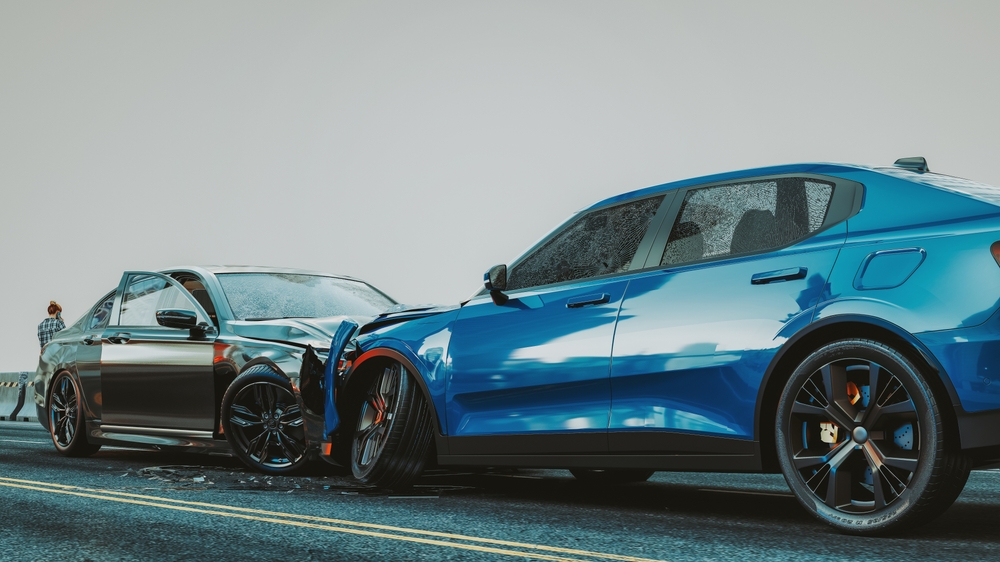
The Long Island Expressway’s distinct combination of high volume, aging design, and an intense driving culture creates a perfect storm for multi-car collisions. The road itself demands a higher level of awareness, and when drivers fail to provide it, the consequences are severe, which is how a car accident lawyer can help by investigating the crash, preserving evidence, and building a clear case for liability and damages.
Several specific factors contribute to the frequency of L.I.E. pile-ups:
- Constant Congestion: During rush hour (typically 7-9 AM and 4-7 PM), the L.I.E. can become a figurative parking lot. This stop-and-go traffic drastically reduces the time and distance drivers have to react to a sudden stop, making rear-end collisions common.
- Short Entrance and Exit Ramps: Many of the Expressway's ramps are notoriously short, forcing drivers to merge into dense, high-speed traffic with little room to accelerate. This can lead to abrupt braking and unpredictable movements from both merging vehicles and those already on the highway.
- Aggressive Driving Culture: In the years following the pandemic, police and local officials have noted a rise in aggressive driving behaviors. On the L.I.E., this translates to unsafe lane changes, excessive speeding, and tailgating that leaves little margin for error.
- Heavy Commercial Traffic: The Expressway is a primary route for semi-trucks and other large commercial vehicles. The mix of these heavy trucks with smaller passenger cars creates a dangerous dynamic, where a mistake by any driver results in a much more destructive accident.
The First Question: Untangling the Chain Reaction
There is a general presumption that a driver who rear-ends another vehicle is at fault. This is based on New York Vehicle and Traffic Law § 1129, which requires every driver to maintain a "reasonable and prudent" following distance.
But how does this presumption work when more than two cars are involved? Let's look at a few common L.I.E. pile-up scenarios.
Scenario 1: The Three-Car, Straight-Line Pile-Up
Imagine three cars—Car 1, Car 2, and Car 3—are traveling in the same lane. Traffic stops. Car 3 fails to stop in time and crashes into the back of Car 2, pushing Car 2 into the back of Car 1.
Who is at fault? In this classic chain-reaction, the driver of Car 3 is typically considered 100% at fault for both impacts. The entire sequence started because they failed to maintain a safe following distance, setting off the chain reaction. The driver of Car 2 is generally not held responsible for hitting Car 1, because the force of the initial impact was what caused their vehicle to move forward.
Scenario 2: The Multi-Car Pile-Up with Separate Impacts
Now, consider a slightly different situation. Car 2 stops short in traffic, and Car 3, following too closely, hits it. A moment later, Car 4, whose driver was also not paying attention, crashes into the back of Car 3.
Who is at fault? This is more complicated because there were two separate impacts. The driver of Car 3 is likely at fault for hitting Car 2. The driver of Car 4 is likely at fault for hitting Car 3. Each driver had an independent duty of care to stop safely, and each failed. Fault is assessed for each individual collision.
Scenario 3: A Driver is "Pushed" into You
If you were stopped safely behind another car and were suddenly hit from behind, causing your car to lurch forward and hit the vehicle in front of you, the fault usually lies with the driver who started the chain reaction behind you, not with you, and this scenario is one of the common causes of car accidents in stop-and-go traffic.
One legal concept that sometimes changes this analysis is the "Sudden Emergency Doctrine." This doctrine argues that a driver should not be held liable if they were confronted with a sudden and unforeseen hazard that was not of their own making. An example might be a large piece of debris falling from a truck, forcing a driver to slam on their brakes. However, the everyday, predictable stop-and-go traffic on the Long Island Expressway typically does not count as a "sudden emergency."
Beyond the First Hit: How New York Law Really Assigns Blame
It may be helpful to think of fault as a pie. After an accident, the insurance companies and, if necessary, a court will investigate to determine the size of each driver's slice of the pie. This means that even if another driver was clearly the main cause of the pile-up, you could be found partially responsible for your role in the accident. Your ability to recover compensation is then reduced by your percentage of fault.
For instance, say another car rear-ended you, but one of your taillights was broken. The other driver is still overwhelmingly at fault for following too closely. However, their insurance company might argue that your broken taillight contributed to the collision, which often leads people to ask, car accident can you claim injury, when shared fault is alleged. If this argument succeeds, any compensation you receive is reduced accordingly.
In a major pile-up on the L.I.E., several different actions give a driver a "slice of the pie":
- Unsafe Lane Changes: A driver who cuts someone off without signaling or checking their blind spot, causing that person to brake suddenly, can be held partially at fault for the pile-up that follows—even if their own car is never touched.
- Speeding: Traveling too fast for the dense traffic conditions on the Expressway can reduce a driver's ability to stop in time to avoid a collision.
- Distracted Driving: When a driver is looking at a text message, they have virtually no chance to react to a sudden slowdown. Their inattention makes them partially or fully liable.
- Driving a Commercial Truck: Truck drivers are held to a higher standard of care due to the size and weight of their vehicles. Trucking companies are also held responsible for the actions of their drivers through a legal concept known as vicarious liability.
Does New York’s “No-Fault” Law Apply in a Multi-Car Pile-Up?
You have likely heard that New York is a "No-Fault" state, a system that creates confusion after a complicated multi-car pile-up.
The No-Fault law, also called Personal Injury Protection (PIP), is designed for one primary purpose: to get your initial medical bills and a portion of your lost wages paid quickly, without waiting for a lengthy investigation into who was at fault. Under this system, the no-fault automobile insurance policy is the first line of coverage for your economic losses up to $50,000.
But there is a very important limitation. No-Fault insurance does not cover damages for your pain and suffering. To pursue compensation for the physical pain, emotional distress, and loss of enjoyment of life caused by your injuries, you must step outside the No-Fault system.
To do this, you must prove you sustained a "serious injury" as defined by New York law. Examples of what qualifies as a "serious injury" under the statute include:
- A fracture
- Significant disfigurement
- Significant limitation
- Permanent limitation of the use of a body organ or member
- A medically determined injury that prevents you from performing substantially all of your daily activities for at least 90 out of the 180 days following the accident.
If your injuries meet this threshold, you may file a personal injury lawsuit against the at-fault driver or drivers. This is the moment when proving exactly who was at fault in the pile-up becomes absolutely necessary to your recovery, and it’s a key part of what car accident lawyers do when building a strong liability case.
The Evidence That Matters: How We Build Your Case from Home
After the immediate shock of the accident has subsided and you are back at home, you may begin to take steps to protect your rights. While you focus on your recovery, we focus on the investigation.
Your Role: Organizing What You Know
The information you have from the scene is the starting point for the entire case.
- The Police Report: We will obtain the official police accident report, which contains the officer’s initial observations, diagrams of the scene, and information about all involved drivers.
- Photos and Videos: If you were able to take pictures or videos at the scene showing the final resting positions of the cars, the damage to each vehicle, and the general conditions, this visual evidence is incredibly powerful.
- Witness Information: If you spoke with other drivers or bystanders who saw what happened, their contact information is a key piece of the puzzle.
Our Role: Building the Case
Our team takes the information you provide and builds upon it with a thorough, independent investigation.
- Accident Reconstruction: In complicated pile-ups, we can work with accident reconstructionists. These professionals use physics, engineering, and evidence from the scene to determine vehicle speeds, impact angles, and the precise sequence of events.
- Investigating All Parties: We will identify every potential defendant. This could be the distracted driver who started the chain reaction, the trucking company whose driver was fatigued, or even a municipality if a hazardous road condition contributed to the crash.
- Handling the Insurance Companies: Insurance adjusters for the other drivers will conduct their own investigations. They will look for any piece of evidence—a statement you made, a detail in the police report—to argue that you were partially at fault. Our role is to present strong evidence to counter those arguments and ensure liability is assigned fairly.
Frequently Asked Questions About L.I.E. Pile-Ups
What if the driver who caused the pile-up fled the scene?
If you were injured by a hit-and-run driver, you may still get compensation through your own insurance policy’s Uninsured Motorist (UM) coverage
I feel fine now, but what if pain flares up later?
Some serious injuries, like those affecting the neck or back, do not show serious symptoms immediately. Always get a medical evaluation even if you feel okay. If you settle your claim too quickly and injuries appear later, you generally cannot reopen the case. Speaking with a car accident attorney helps you understand your options.
Can I be blamed if I was in the middle of the chain reaction?
It is possible, but typically only if you did something negligent yourself, such as stopping abruptly for no reason or having non-working brake lights. If you were stopped appropriately in traffic and were pushed into the car ahead of you, the fault typically lies with the driver who started the impact from behind.
How long do I have to file a car accident claim in New York?
In New York, you generally have three years from the date of the accident to file a personal injury lawsuit. However, the deadline to file a No-Fault application for benefits is much shorter, typically just 30 days. If a government entity is involved, you may have only 90 days to file a notice of claim.
You Don’t Have to Untangle This Mess Alone

After a pile-up on the Long Island Expressway, it’s easy to feel like just another car in a long line of wreckage. You might be thinking that figuring out who is truly at fault is an impossible task.
It’s not. It just requires a methodical approach and an understanding of New York traffic laws.
We manage the investigation so you focus on your recovery. Our team can work to piece together what happened on the L.I.E. and identify every party who bears responsibility for your injuries.
Your next step is to get clarity on your situation. Contact the car accident attorneys at William Mattar, P.C. for a free case review. Our number is (516) 444-4444.