Truck accidents in New York rarely involve just one responsible party. The driver may have caused the crash, but the trucking company that hired, trained, and supervised that driver may share responsibility. So might the company that loaded the cargo, the shop that serviced the brakes, or the manufacturer that produced a defective tire.
When multiple parties are liable in a truck accident in New York, the claim becomes more complex, but the potential recovery may also increase. Each additional liable party may carry its own insurance policy, creating a wider pool of available coverage. Each also brings its own legal team, its own defense strategy, and its own incentive to shift blame elsewhere.
A New York truck accident attorney experienced in multi-party claims may help identify the responsible parties and the coverage each one carries.
Key Takeaways for Multiple Liable Parties in New York Truck Accidents
- Truck accidents frequently involve liability beyond the driver, extending to the trucking company, cargo loaders, maintenance providers, parts manufacturers, and, in some cases, government entities responsible for road conditions
- More liable parties may mean more available insurance coverage, which can increase the total compensation pool for serious injuries
- New York's joint and several liability rules under CPLR Article 16 govern how damages are divided among multiple defendants, with important distinctions between economic and non-economic losses
- CPLR § 1602 specifically excludes owners and operators of motor vehicles from Article 16 protections, which may affect how liability is allocated in truck accident cases
- Identifying all liable parties early in the claims process matters because evidence of third-party fault may be harder to obtain as time passes
The Chain of Liability in a New York Truck Accident
A single truck crash may involve a chain of parties whose decisions, actions, or failures each contributed to the collision. The table below outlines the most common categories of potentially liable parties in a New York truck accident claim.
| Potentially Liable Party | Basis for Liability | Where Coverage Typically Comes From |
| The truck driver | Negligent driving, fatigue, distraction, impairment | Driver's personal policy (if owner-operator) or carrier's commercial policy, among others |
| The trucking company (motor carrier) | Vicarious liability, negligent hiring/training/supervision, hours-of-service pressure | Carrier's commercial auto liability and umbrella/excess policies |
| Vehicle or trailer owner (if different from the carrier) | Statutory owner liability under VTL § 388, subject to federal preemption under the Graves Amendment for entities in the business of renting or leasing vehicles | Owner's commercial liability policy |
| Cargo loading company | Improper loading, overloading, and unsecured freight | Loader's commercial general liability policy |
| Freight broker | Negligent carrier selection (fact-intensive, limited circumstances) | Broker's liability policy |
| Maintenance or repair provider | Faulty repairs, missed defects, substandard parts | Provider's commercial general liability policy |
| Vehicle or parts manufacturer | Defective design or manufacturing (brake systems, tires, steering components, coupling devices) | Manufacturer's product liability policy |
| Government entity | Dangerous road design, inadequate signage, failure to maintain roadway | Government self-insurance or risk pool (subject to special notice requirements) |
Not every crash involves all of these parties. But failing to investigate the full chain of liability may leave available coverage untapped.
Trucking Company vs. Driver Liability in New York
The most common multi-party question in a truck accident claim is whether the trucking company is liable alongside the driver. In New York, two legal doctrines typically bring the company into the case.
Respondeat Superior
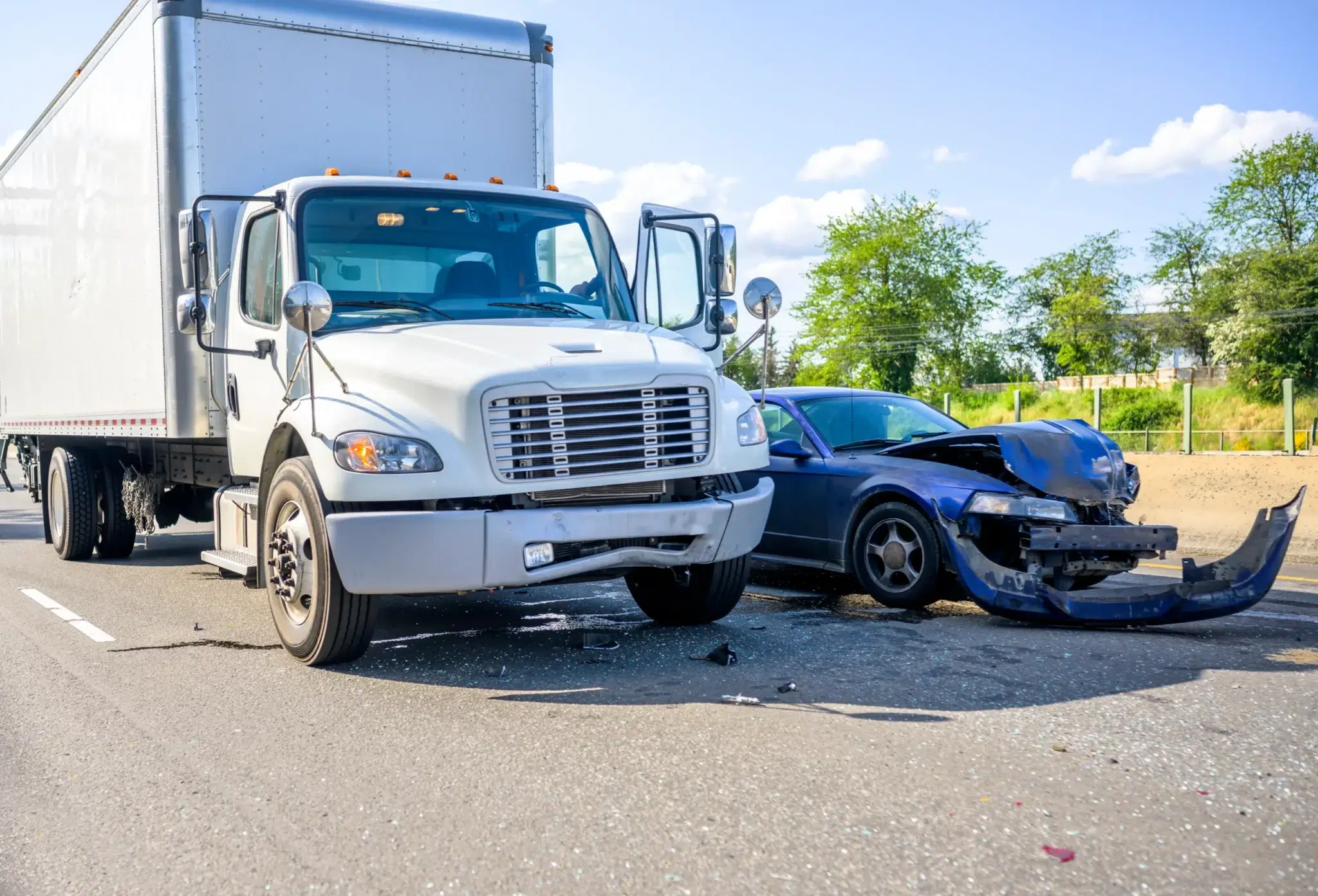
If the driver was working at the time of the crash, the trucking company may also be legally responsible. This is based on a rule called “respondeat superior,” which means employers can be held accountable for what their employees do while doing their jobs.
For example, if the driver was delivering goods, hauling freight, or working for the company when the accident happened, the company will usually share responsibility for the driver’s actions.
Statutory Owner Liability
VTL § 388 imposes liability on vehicle owners for truck accident injuries caused by anyone operating the vehicle with their permission. This statute applies regardless of the formal employment relationship between the driver and the company.
When the trucking company owns the tractor, the trailer, or both, VTL § 388 may provide an independent basis for holding the company liable even if the driver is classified as an independent contractor.
Third-Party Liability in a Truck Accident in NY: Beyond the Driver and Carrier
The parties beyond the driver and trucking company are where multi-party truck accident claims become most complex and most valuable.
Cargo Loading Companies
Federal regulations under 49 CFR Part 393 set standards for cargo securement. When improperly loaded, overloaded, or unsecured freight shifts during transit and contributes to a crash, the party responsible for loading the cargo may bear independent liability.
Determining who loaded the freight, and under whose supervision, requires early investigation because cargo handling records may not be preserved indefinitely.
Maintenance and Repair Providers
Trucking companies sometimes outsource vehicle maintenance to third-party repair shops. If a shop performed faulty brake work, failed to identify a defective tire during an inspection, or used substandard replacement parts, that provider may carry its own liability for the crash.
Maintenance records, repair invoices, and parts sourcing documentation become critical evidence in these claims.
Vehicle and Parts Manufacturers
When a mechanical failure causes or contributes to a truck crash, and that failure traces back to a defect in design or manufacturing, a product liability claim may reach the truck manufacturer, trailer manufacturer, or component parts supplier.
Common product liability targets in truck accident cases include:
- Brake system manufacturers
- Tire manufacturers
- Coupling and hitching device makers
- Steering and suspension component suppliers
- Electronic stability control system designers
Government Entities
When dangerous road conditions contribute to a truck crash, such as inadequate signage, missing guardrails, poorly designed merge lanes, or unaddressed drainage issues, the government entity responsible for that roadway may share liability.
Claims against counties or municipalities and other entities carry special procedural requirements, including a Notice of Claim that must be filed within 90 days of the accident. Claims against New York State generally follow the Court of Claims Act, which has its own strict filing and service rules. Missing that deadline may bar the claim entirely, regardless of the strength of the evidence.
Why Identifying Liable Parties Early Matters for Your Claim
The number of liable parties directly affects the total insurance coverage available to compensate for injuries. A claim against only the driver and carrier may be limited to the carrier's commercial auto policy. A claim that also includes the cargo loader, the maintenance shop, and a parts manufacturer may access three additional insurance policies, each with its own coverage limits.
But the window for identifying and preserving evidence of third-party liability is narrow. Records that may be lost, discarded, or overwritten if not preserved early include:
- Cargo handling and loading documentation
- Maintenance invoices and repair work orders
- Parts sourcing and replacement records
- Repair shop internal communications
- Freight broker carrier-vetting files
- Government road maintenance and inspection logs
Formal preservation demands sent to all potentially liable parties shortly after the truck crash help protect this evidence before it disappears.
FAQs About Multiple Party Liability Truck Accidents
How do I know if someone other than the driver is liable for my truck accident?
Determining third-party liability requires investigating the cause of the crash beyond the driver's conduct. If the crash involved a mechanical failure, a cargo shift, a road hazard, or a driver who should not have been behind the wheel, additional parties may bear responsibility. An attorney experienced in multi-party truck claims may identify these parties through early evidence review, regulatory records, and formal discovery.
Does having more defendants mean my case takes longer to resolve?
It may. Each additional defendant introduces another insurer, another set of discovery obligations, and another defense strategy. Multi-party cases tend to involve more complex negotiations and may require litigation to resolve. However, the additional coverage and accountability that come with identifying all liable parties may result in a stronger overall outcome.
What if one of the liable parties has no insurance?
Identifying an uninsured party does not eliminate their liability, but it may limit the practical ability to collect from them. In multi-party cases, joint and several liability rules may allow the injured person to recover economic damages from other insured defendants. The overall claim strategy should account for each party's ability to pay, not just their share of fault.
What is the Notice of Claim requirement for government entities in New York?
A Notice of Claim is a formal written document that must be served on a government entity before a lawsuit may be filed against it. The notice must identify the claimant, describe the nature of the claim, state when and where the incident occurred, and outline the injuries and damages being alleged.
The requirement exists separately from the statute of limitations and applies to claims against counties, cities, towns, and other municipal entities. Claims against New York State generally follow the Court of Claims Act.
Does comparative negligence apply to multi-party truck accident claims?
Yes. New York's pure comparative negligence rule under CPLR § 1411 applies to all parties, including the injured person. If the claimant bears partial fault for the crash, damages are reduced proportionally. The fault allocated to each defendant is determined independently, and the claimant's total recovery reflects the combined liability of all responsible parties minus the claimant's own share.
More Responsible Parties Means More Complexity, but Also More Accountability

A truck accident claim involving multiple liable parties is not simple. The legal theories are layered, the evidence requirements are heavier, and the defense strategies multiply. But the alternative, pursuing a claim against only the driver while the company, the maintenance shop, or the parts manufacturer walks away, may leave significant compensation on the table.
William Mattar handles multi-party truck accident claims throughout New York State. We offer free consultations and take calls around the clock. Call (844) 444-4444 to talk through who may be responsible for your crash and what coverage may be available.