Filing a truck accident claim against a company in New York means going up against Corporate counsel, federal compliance consultants, and experienced defense adjusters. Every person on the other side is part of an effort to reduce their financial obligations.
A New York truck accident claim against a company is not the same as a claim against an individual driver. The legal theories are different. The evidence is different. The defense resources are different. And the timeline for preserving critical records is shorter than most people realize.
Key Takeaways: Truck Accident Claim Against Company in New York
- Trucking companies in New York may face liability for a driver's negligence under the common-law doctrine of respondeat superior when the driver was acting within the scope of employment
- VTL § 388 generally holds vehicle owners liable for injuries caused by anyone using the vehicle with the owner's permission, even without a formal employment relationship
- Direct negligence claims against a trucking company target the company's own failures in hiring, training, supervision, and maintenance
- Federal regulations require carriers to maintain driver qualification files, hours-of-service logs, and vehicle inspection records that may become key evidence
- Commercial insurance policies in truck accident cases carry higher limits than standard auto coverage, which affects both recovery potential and the insurer's willingness to fight
How Does a Truck Accident Claim Against a Company Differ from a Claim Against a Driver?
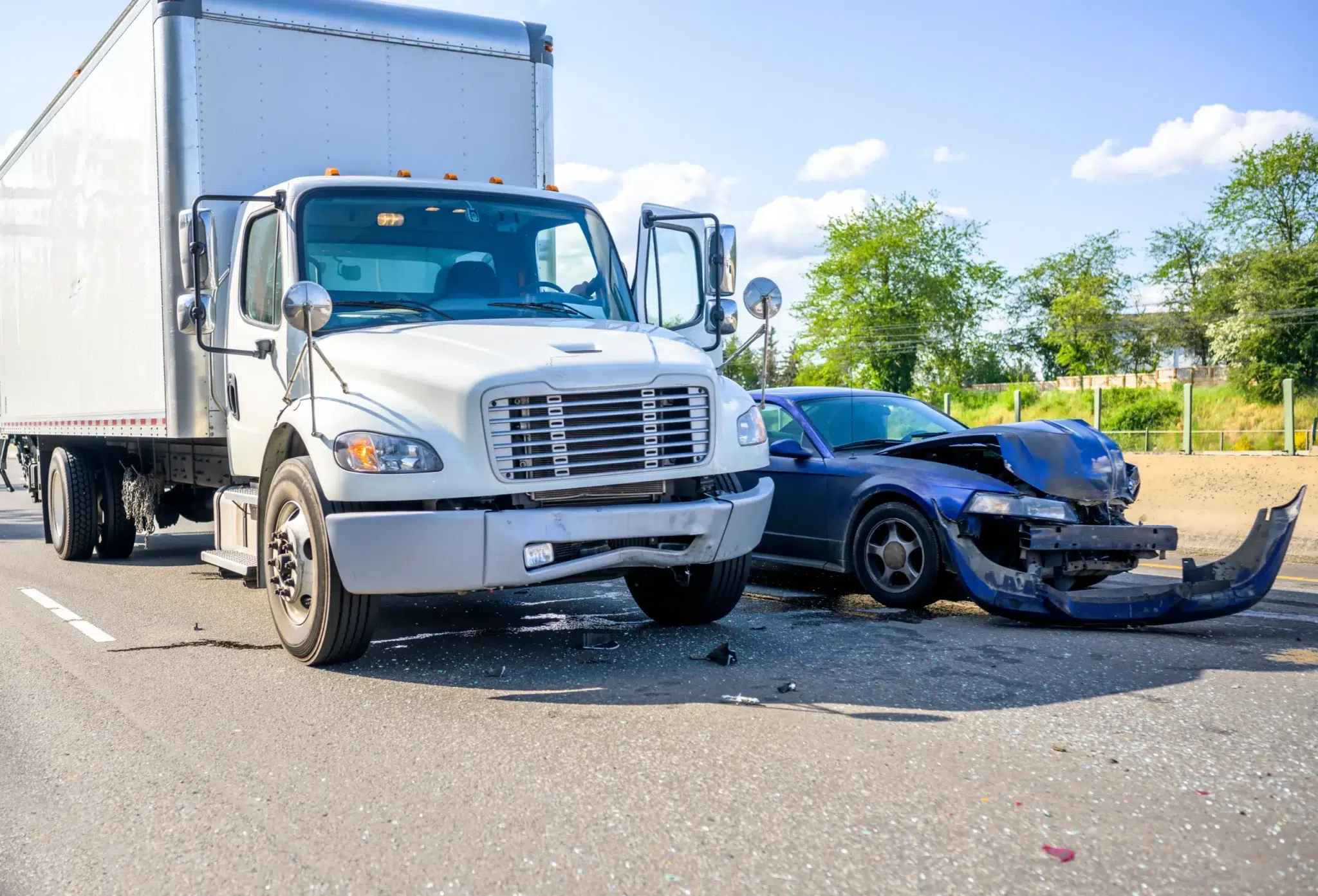
Most car accident claims in New York involve one driver, one insurance policy, and a straightforward fault dispute. A truck accident claim against a company can introduce corporate legal theories, federal regulatory records, and defense resources that a standard auto claim does not involve.
New York law provides two primary routes for holding a trucking company responsible when its driver causes a crash: respondeat superior and owner liability. Determining liability often requires examining the specific causes of truck accidents incidents, including driver negligence, fatigue, improper maintenance, or cargo-related failures.
What Is Respondeat Superior in a New York Truck Accident Case?
Respondeat superior is a common-law doctrine that holds employers liable for negligent acts their employees commit within the scope of employment. If the truck driver was hauling freight, making a delivery, or performing other job duties at the time of the crash, the company may be liable in a truck accident alongside the driver for the resulting damages.
This theory connects the driver's actions directly to the company. It does not require proof that the company itself did anything wrong. The driver's negligence, committed during work, is attributed to the employer.
How Does New York's Owner-Liability Statute Apply to Trucking Companies?
New York Vehicle and Traffic Law § 388 holds vehicle owners liable for injuries caused by the negligent operation of their vehicle by anyone using it with the owner's permission. This statute applies broadly. It does not require a formal employer-employee relationship.
VTL § 388 matters in truck accident cases because it may reach companies that try to distance themselves from liability through contractor designations or leasing arrangements. Permission to use the vehicle, not the employment label, is the key factor. A New York truck accident lawyer can analyze ownership, leasing, and permission issues to identify all potentially liable parties.
When Is the Trucking Company Liable for Its Own Negligence?
Vicarious liability holds the company responsible for the driver's actions. Direct negligence holds the company responsible for its own failures. Both theories may apply in the same case, and direct negligence claims often carry significant weight in settlement negotiations.
Direct negligence claims against trucking companies commonly involve failures that created the conditions for the crash to occur. The following categories appear frequently in these cases:
- Negligent hiring, such as employing a driver with a disqualifying safety record or failing to conduct adequate background checks under 49 CFR § 391.23
- Inadequate training on cargo securement, vehicle handling, or hours-of-service compliance
- Poor maintenance practices that left a mechanical defect unaddressed
- Negligent supervision, including failure to monitor driver performance or enforce safety protocols
These claims go beyond whether the driver made a mistake. They ask whether the company created the environment that made the mistake predictable.
Why Do Direct Negligence Claims Strengthen a Truck Accident Case?
Claims backed by evidence of corporate negligence tend to carry more leverage than claims based solely on the driver's conduct. When hiring shortcuts, maintenance gaps, or compliance failures contributed to the crash, the company's exposure increases beyond what vicarious liability alone would produce.
This distinction matters during settlement negotiations. A claim that proves only that the driver ran a red light looks different from a claim that also proves the company hired that driver despite a disqualifying safety record.
Ask William Mattar
Q: How much does it cost to hire a truck accident lawyer for a claim against a trucking company?
A: William Mattar, like most personal injury attorneys, handles truck accident cases on a contingency fee basis.
Q: How long does a truck accident claim against a company take to resolve in New York?
A: Truck accident claims against companies generally take longer than standard auto accident claims because of corporate discovery, federal regulatory research, and multi-party insurance analysis. Each case moves on its own timeline depending on injury severity, the strength of corporate negligence evidence, and the insurer's willingness to negotiate.
Q: What evidence matters most in a truck accident claim against a trucking company?
A: Evidence of the company's own failures often carries the most weight. Driver qualification files, maintenance records, hours-of-service logs, ELD data, and internal communications about safety compliance may reveal patterns of negligence that go beyond the driver's actions on the day of the crash.
What Does the Truck Accident Claim Process Look Like in New York?
The timeline and complexity of a truck accident claim against a company differ from a standard injury claim in several important ways. Federal record-keeping requirements, corporate discovery, and multi-layered insurance coverage all factor into how these cases move forward. These issues can arise across many types of truck accident cases, from jackknife collisions and underride crashes to cargo-related incidents.
Why Is Early Evidence Preservation Critical in Truck Accident Cases?
Trucking companies are required to maintain extensive records under federal law. Under 49 CFR § 391.51, each motor carrier must keep a driver qualification file that includes the employment application, motor vehicle records, medical certification, and road test results.
Carriers must also retain hours-of-service logs, inspection reports, and maintenance records.
A formal preservation demand sent to the trucking company and its insurer early in the process puts the company on notice that specific evidence must be retained. Time-sensitive records that may be lost without early action include:
- Electronic logging device (ELD) data
- Dashcam and forward-facing camera footage
- Dispatch and route communications
- Post-accident drug and alcohol test results
- Vehicle inspection and maintenance logs
Delays in sending that demand may allow critical evidence to be overwritten or to fall outside required retention windows. Our team at William Mattar begins evidence preservation efforts immediately after initial contact.
What Happens During Discovery in a Truck Accident Case Against a Company?
Once litigation begins, discovery tools open access to records the company would not voluntarily share. This may include internal safety audits, maintenance logs, and driver qualification files.
Depositions, sworn interviews conducted under oath, may be taken from company personnel, such as safety directors, maintenance supervisors, and dispatchers. Their testimony may reveal that the company knew about safety problems, received prior driver complaints, or tolerated patterns of regulatory noncompliance.
The driver qualification file is often a focal point. A file showing that the company hired a driver with a history of violations, failed to verify medical fitness, or skipped required background checks may support a direct negligence claim. That type of evidence targets the company's own conduct, independent of what the driver did on the day of the crash.
How Do Commercial Insurance Policies Affect Truck Accident Settlements?
Trucking companies carry commercial insurance policies with limits far above standard auto coverage. Higher policy limits mean greater potential recovery for serious injuries. They also mean the insurer has a stronger financial incentive to fight the claim rather than settle early.
Initial settlement offers in these cases often undervalue the claim. The gap between what the insurer offers before litigation and the actual available coverage may be significant. Umbrella and excess policies may not surface until formal discovery forces disclosure.
How Do Trucking Companies Defend Against Injury Claims in New York?
Corporate defendants in truck accident cases deploy defense resources that individual defendants typically lack. The defense strategy is coordinated, well-funded, and designed to reduce the company's exposure at every stage.
How Does Comparative Fault Affect a Truck Accident Claim in New York?
New York follows a comparative negligence rule under CPLR § 1411. Any fault assigned to the injured person reduces the company's liability proportionally. Defense teams look for every available argument that the claimant contributed to the crash through speed, lane positioning, distraction, or failure to react.
Shifting even a small percentage of fault to the claimant on a high-value claim reduces the payout significantly. This is one of the most common defense strategies in trucking company cases.
How Do Trucking Companies Challenge Injury Claims?
Trucking defense teams may retain medical examiners to argue that injuries predated the crash, that treatment was excessive, or that the claimant's injuries do not meet New York's serious injury threshold. Under Insurance Law § 5102(d), clearing the serious injury threshold is a prerequisite for pursuing pain and suffering damages in motor vehicle cases. Defense challenges to this threshold are a standard part of a trucking company's defense strategy.
What Happens When the Driver Is an Independent Contractor?
Trucking companies may argue that respondeat superior does not apply when the driver is classified as an owner-operator or independent contractor. This defense attempts to sever the link between the driver's negligence and the company's liability.
However, VTL § 388 may still reach the company based on permissive use of the vehicle, regardless of the formal employment classification. Moreover, federal leasing regulations under 49 CFR Part 376 may also factor into the analysis by defining which entity held operating authority and control at the time of the crash.
What Factors Influence the Value of a Truck Accident Settlement in New York?
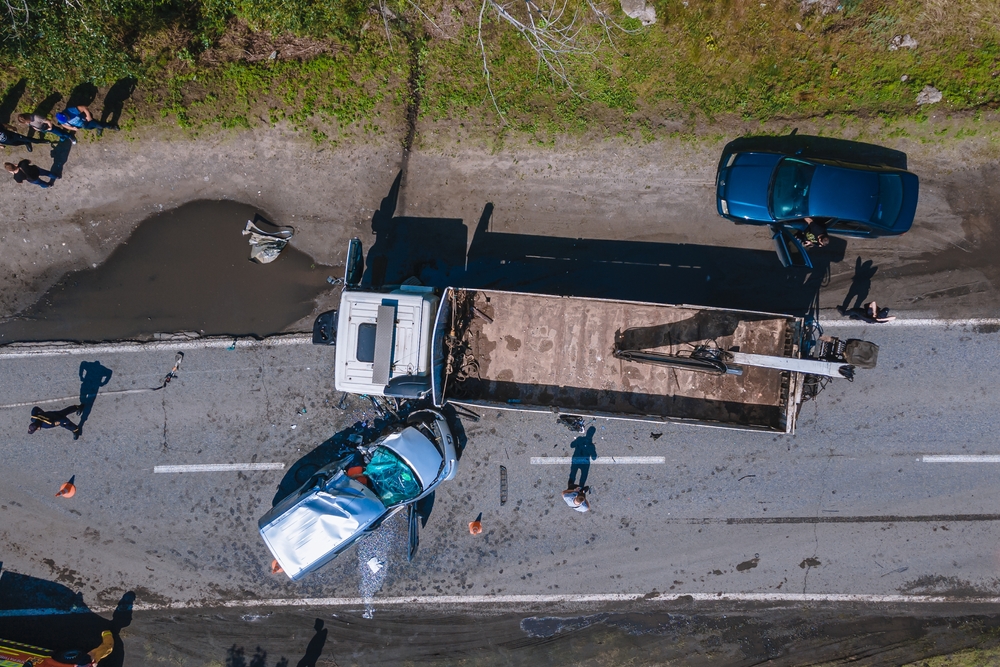
Several factors shape how a truck accident settlement against a company in New York ultimately resolves: corporate negligence evidence, available insurance coverage, and the severity and long-term impact of injuries all play a role.
How Does Corporate Negligence Evidence Affect Settlement Value?
Claims supported by evidence of direct corporate negligence, such as hiring failures, maintenance gaps, or hours-of-service violations, tend to produce stronger settlement positions than claims based solely on the driver's conduct. When the company's own behavior contributed to the crash conditions, its financial exposure increases.
How Do Multiple Insurance Layers Affect a Truck Accident Claim?
Many trucking companies carry coverage well above federal minimums. That information does not always surface until litigation. The gap between an initial settlement offer and actual available coverage may be significant, particularly when umbrella and excess policies have not been disclosed.
Why Does Injury Severity Drive the Damages Calculation?
Truck accidents frequently cause injuries that require ongoing care for months or years. The long-term impact on earning capacity, independence, and daily function drives the damages calculation.
Documenting future medical needs and vocational limitations strengthens a claim's position against a corporate defendant with resources to challenge every cost.
Truck Accident Claims Against Companies in New York: Questions Answered by Our Attorneys
What is the deadline for filing a truck accident claim against a company in New York?
New York's statute of limitations for personal injury claims is three years from the date of the accident. However, the complexity of claims against corporate defendants makes early action important, and evidence preservation demands need to go out well before the filing deadline to preserve evidence. The time deadline can be much shorter as well. Every case is unique.
What if the truck involved in my accident was leased from another company?
Leasing arrangements are common in the trucking industry and may complicate the question of which company bears liability. Federal regulations under 49 CFR Part 376 govern lease agreements between motor carriers and equipment owners. Depending on which entity held operating authority at the time of the crash, liability may fall on the lessee, the lessor, or both. Every case is unique.
Does the trucking company's federal safety record affect my claim?
Yes, a carrier's compliance history may be relevant to claims alleging corporate negligence. Prior violations, out-of-service orders, and data from the Federal Motor Carrier Safety Administration’s (FMCSA) Safety Measurement System may support an argument that the company knew about safety problems and failed to correct them.
What is the difference between suing the truck driver and suing the trucking company?
Suing the driver targets the person who operated the vehicle. Suing the company targets the business entity that employed, supervised, and insured the driver. In practice, the company's commercial insurance policy is the primary source of recovery in most truck accident claims because individual drivers rarely carry sufficient coverage to compensate for serious injuries.
The Company Has a Legal Team Ready. You Need One Too.
A trucking company facing a serious injury claim does not handle it casually. Corporate counsel, regulatory consultants, and defense adjusters are all part of the process from the start. The gap between that level of preparation and a single injured person trying to recover is real.
William Mattar has extensive experience representing truck accident victims across New York State. We can handle federal regulatory research, corporate discovery, and insurance analysis so that injured clients have the legal resources to match what the other side brings to the table. Call (844) 444-4444 for a free consultation. We answer phones 24/7. No Fee Until We Win℠.
Past results do not guarantee future outcomes.