After a Long Island truck accident, it is easy to focus on the person behind the wheel. That is the driver you saw. That is the name on the police report. That is the person the insurance company wants you to blame, because keeping the case focused on one individual keeps the claim smaller.
But truck accident liability is rarely that simple.
A commercial truck does not end up on the road by accident or by the driver’s decisions alone. The trucking company may have hired an unsafe driver or pushed impossible delivery schedules. A maintenance contractor may have ignored worn brakes or tire problems. A cargo company may have overloaded the trailer or failed to secure the freight.
In many Long Island truck accident cases, the driver is only the first link in a much larger chain of negligence.
Following the chain to identify each liable party is not just a technical legal exercise. It may determine how much insurance coverage is available, how the crash happened, and whether you recover compensation that actually reflects the full extent of your injuries.
A Long Island truck accident lawyer may be able to identify responsible parties that do not appear on the police report and pursue every source of recovery available.
Key Takeaways About Multiple Liable Parties in Truck Accidents
- Trucking companies can face direct liability for negligent hiring, inadequate driver supervision, failure to maintain vehicles, and creating conditions that cause or encourage federal safety violations
- Under 49 CFR § 390.11, carriers must require their drivers to comply with all imposed duties and prohibitions in the Federal Motor Carrier Safety Regulations
- Maintenance contractors, cargo loaders, vehicle owners, and freight brokers (in rare cases) may each carry independent liability depending on their role in the events leading to the crash
- Each liable party typically carries its own insurance policy, meaning identifying additional defendants may significantly increase the total available coverage
- New York's three-year statute of limitations under CPLR § 214 applies to personal injury claims, but evidence critical to proving corporate liability, such as maintenance records, driver logs, and electronic data, may be destroyed if not preserved quickly. In addition, the time deadline can be much shorter depending on the unique circumstances.
Why the Truck Driver Is Often Only One Defendant
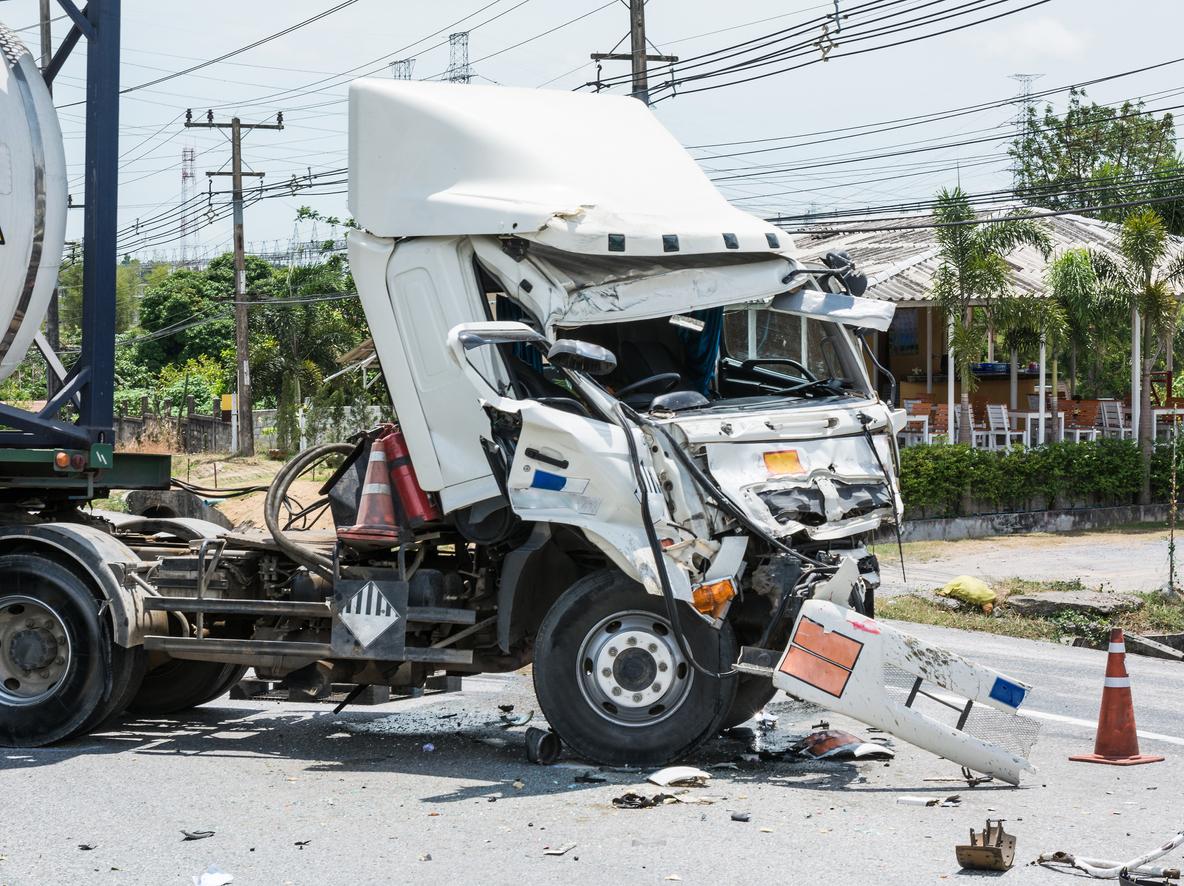
In a standard car accident, fault usually rests with one or two drivers. Truck accidents are different. Commercial trucking involves a network of companies and contractors, each with specific legal obligations under federal and state law. When those obligations are not met, and a crash occurs, multiple parties may share fault.
Why Truck Accident Liability Extends Beyond the Driver
The Federal Motor Carrier Safety Regulations impose duties on drivers, motor carriers, and intermodal equipment providers, and maintenance failures by third parties may also create liability. Every motor carrier and its officers, drivers, agents, representatives, and employees directly concerned with the inspection or maintenance of commercial motor vehicles must be knowledgeable of and comply with the rules.
This regulatory structure means that when a safety failure causes a crash, the investigation traces backward through every entity that had a duty to prevent it.
Why Identifying More Liable Parties Can Increase Available Insurance
Each liable party in a truck accident typically carries its own insurance policy. The driver may have a personal policy. The motor carrier is required to maintain minimum levels of financial responsibility under 49 CFR Part 387. A maintenance contractor or vehicle owner may each carry commercial general liability coverage.
Identifying additional defendants expands the pool of available insurance, which matters most in catastrophic injury cases where a single policy may be insufficient.
How Common Truck Crash Scenarios Point to Multiple Defendants
Different types of truck accidents tend to implicate different combinations of liable parties. Recognizing the pattern behind your crash may help identify defendants that are not obvious from the police report.
Common crash types and who may be responsible:
- Rear-end crash caused by brake failure. The motor carrier that deferred maintenance, the third-party shop that last inspected or serviced the brakes, and the component manufacturer if the brake system was defective.
- Rollover caused by overloaded or unbalanced cargo. The shipper or loading company that loaded the trailer, the carrier that accepted an overweight load, and the driver if a pre-trip weight check was skipped.
- Fatigue crash tied to unrealistic dispatch schedules. The carrier that created the schedule, dispatch personnel who pressured the driver to keep driving, and the carrier's safety department if ELD violations were ignored.
- Tire blowout at highway speed. The maintenance contractor that last inspected the tires, the carrier if tire replacement was deferred despite known wear, and the tire manufacturer or retreader if the product was defective.
- Lane departure or loss of control from a steering or suspension defect. The maintenance provider that last serviced the steering or suspension system and the parts manufacturer if the component failed due to a design or manufacturing defect.
Each scenario involves a different mix of negligence, regulatory violations, and product failures, which is why truck accident investigations trace the chain of responsibility rather than stopping at the driver.
Owner-Operators and Leased Truck Arrangements
In many Long Island truck accidents, the driver, the truck, and the trailer are controlled by different entities. An owner-operator may own the tractor but lease it to a motor carrier under that carrier's operating authority. The trailer may be owned by a separate leasing company or by the shipper. A refrigeration unit on the trailer may be maintained by yet another contractor.
These split-ownership arrangements can give each entity control over a piece of the operation, which may carry independent liability and separate insurance coverage. When a crash involves a leased truck operating under a carrier's authority, both the owner-operator and the carrier may be liable, and both policies may be available to compensate for your injuries.
When the Trucking Company Can Be Held Liable for a Long Island Truck Accident
The motor carrier that employs or contracts with the driver is often the most important defendant in a truck accident case. Trucking companies face both vicarious liability for the driver's negligence and direct liability for their own corporate failures.
Negligent Hiring and Retention
Federal regulations require carriers to maintain a driver qualification file for each driver, including employment applications, driving record checks, medical certifications, and road test results. Carriers must require their drivers to comply with imposed duties and prohibitions, as described in 49 CFR 390.11.
When a carrier hires a driver with a history of safety violations, suspended licenses, or failed drug tests, the company's own negligence in hiring or retaining that driver becomes an independent basis for liability.
Failure to Monitor Hours of Service
Fatigue-related crashes often trace back to carriers that pressure drivers to exceed legal driving limits or fail to monitor electronic logging device (ELD) records for compliance. Motor carriers have a duty to require drivers to observe the FMCSRs, and a carrier is liable both for the actions of its drivers in submitting false documents and for its own actions in accepting false documents.
Inadequate Vehicle Maintenance
Under 49 CFR § 396.3, motor carriers are required to systematically inspect, repair, and maintain all motor vehicles subject to their control in order to ensure parts and accessories are in safe and proper operating condition at all times. When a carrier dispatches a truck with known brake deficiencies, worn tires, or faulty lighting, the company faces direct liability for the resulting crash.
Why a Trucking Company Cannot Always Avoid Liability by Calling the Driver an Independent Contractor
Some trucking companies attempt to avoid liability by classifying their drivers as independent contractors rather than employees. However, the federal regulations do not draw the same line.
Under 49 CFR Part 390, the term “motor carrier” includes a motor carrier's agents, officers, and representatives, as well as employees responsible for hiring, supervising, training, assigning, or dispatching drivers and employees concerned with the installation, inspection, and maintenance of motor vehicles. The FMCSA's definition of "employee" is broad enough to encompass independent contractors operating under a carrier's authority, meaning the independent contractor label alone does not shield the carrier from regulatory obligations or the liability that flows from violating them.
Courts evaluating this defense also look past the label and examine the actual relationship between the carrier and the driver. Factors that may demonstrate that the carrier exercised the level of control that creates liability regardless of how the driver was classified on paper include:
- Who controls dispatch
- Who assigns routes
- Who owns or leases the equipment
- Who sets delivery schedules
- Who dictates how the work is performed
When a carrier controls the conditions that led to the crash, calling the driver an independent contractor does not eliminate the carrier's responsibility.
When a Maintenance Company or Repair Contractor May Be Liable
Many trucking companies outsource vehicle maintenance and repair to third-party contractors. When a maintenance provider performs negligent work that causes or contributes to a crash, that contractor may be independently liable.
Motor carriers and intermodal equipment providers must ensure that all inspections, maintenance, repairs, or service to the brakes of commercial motor vehicles are performed in compliance with federal requirements. When a third-party brake inspector certifies brakes as compliant when they are not, or when a repair shop returns a vehicle to service with unresolved deficiencies, the contractor can share responsibility for any crash caused by the failure. Brake defects and negligent maintenance are among the common causes of truck accident claims involving commercial vehicles.
Federal regulations require carriers to maintain records of all inspections, repairs, and maintenance. These records, along with maintenance invoices, parts receipts, and inspection logs, may reveal whether a third-party contractor performed substandard work.
When the Cargo Loader or Shipper May Share Liability
Improperly loaded or unsecured cargo may cause a truck to roll over, jackknife, or shed its load onto the roadway. The company responsible for loading and securing the cargo may be liable when its negligence causes or contributes to a crash.
The FMCSA establishes detailed cargo securement standards under 49 CFR Part 393. These rules specify how different types of cargo must be restrained, including the number and type of tiedowns, blocking and bracing requirements, and weight distribution standards. When cargo shifts during transit because the loader failed to comply with these standards, the loading company faces liability for resulting truck accident injuries and other damages..
An overloaded truck requires longer stopping distances, places greater stress on brakes and tires, and changes the vehicle's center of gravity. If the shipper or loader placed more weight on the truck than federal or state limits allow, that overloading may be a contributing cause of the crash.
Critical Evidence in a Long Island Truck Accident Must Be Preserved Early
Truck accident claims involving multiple defendants depend on evidence that may be destroyed, overwritten, or lost if not preserved quickly. Several categories of evidence are critical:
- Electronic logging device (ELD) data. ELD records show the driver's hours of service, duty status changes, and driving time. Carriers are required to retain these records, but requesting preservation early prevents overwriting.
- Driver qualification files. Employment applications, driving record checks, medical certifications, drug and alcohol testing results, and training records may reveal negligent hiring or retention.
- Maintenance and inspection records. Federal regulations require carriers to maintain vehicle inspection reports for three months and periodic inspection records for 14 months. These records may show whether maintenance was performed, deferred, or falsified.
- Event data recorder (EDR) and telematics data. Many commercial trucks are equipped with electronic systems that record speed, braking, steering inputs, and other data in the moments before a crash.
- Dispatch and communication records. Emails, text messages, and dispatch logs between the carrier and driver may reveal pressure to violate hours-of-service limits or deliver loads on unrealistic schedules.
- Cargo documentation. Bills of lading, weight tickets, and load securement inspection records may establish whether the cargo was properly loaded, secured, and within legal weight limits.
An attorney may send spoliation letters to the trucking company, maintenance contractors, and other parties demanding preservation of all relevant records before the evidence is lost. A Long Island personal injury lawyer can take these steps early to help protect critical evidence and strengthen your claim.
FAQs About Liable Parties in Long Island Truck Accidents
Is the truck driver always at fault in a truck accident?
Not necessarily. While the driver's actions, such as speeding, distraction, or fatigue, are often a contributing cause, the trucking company, maintenance contractor, or cargo loader may share fault or even bear primary responsibility depending on what caused the crash.
What if the trucking company says the driver was an independent contractor?
Some carriers attempt to avoid liability by classifying drivers as independent contractors rather than employees. However, courts examine the actual level of control the carrier exercises over the driver's work, including dispatch authority, route assignments, and equipment requirements. The company may also be liable if FMCSA violations caused or contributed to the accident.
How do you prove a maintenance company was negligent?
Maintenance liability is established through inspection and repair records, parts invoices, brake inspection certifications, and expert analysis of the failed component. Federal regulations require detailed documentation of all maintenance performed on commercial vehicles, and gaps or inconsistencies in that documentation may support a negligence claim.
Does identifying more liable parties increase the value of my claim?
It may. Each liable party typically carries its own insurance coverage. In catastrophic injury or wrongful death cases, a single policy may be insufficient to cover all damages. Identifying additional liable parties expands the total insurance available to compensate for your injuries, lost income, and pain and suffering.
How long do I have to file a truck accident lawsuit in New York?
New York's statute of limitations for personal injury claims is three years under CPLR § 214. However, critical evidence in truck accident cases, including ELD data, maintenance records, and driver qualification files, may be destroyed or overwritten well before that deadline. Early legal involvement helps preserve evidence that may not exist months from now. Every case is unique. The relevant deadline can be extremely short.
Looking Beyond the Driver Can Change the Value of a Truck Accident Claim

The driver is the starting point, not the finish line. Behind every truck crash is a chain of companies and contractors that each had a legal duty to prevent it. When those duties are violated, every link in that chain may share responsibility, and every additional defendant may bring additional insurance coverage to the table.
William Mattar represents truck accident victims across Long Island and throughout New York State. Contact us for a free consultation. We answer phones 24/7. No Fee Until We Win℠.