In New York, being partially at fault for an accident does not prevent you from recovering compensation for your injuries, and a New York car accident lawyer can help ensure fault is assessed fairly and your damages are properly calculated. The state follows a legal standard known as pure comparative negligence. This rule allows you to seek damages even if you were partly responsible for the incident.
While you are still able to file a claim, your final compensation is reduced by your percentage of fault. For example, if you are found 20% at fault, your total award is reduced by 20%. This contrasts with the ancient doctrine of contributory fault, where any culpable conduct on the part of the injured person will prevent recovery. Call William Mattar Accident Lawyers today for a free consultation.
Key Takeaways for New York's Comparative Negligence Law
- New York's pure comparative negligence rule allows you to recover damages even if you are mostly at fault. Your final award is simply reduced by your percentage of fault.
- The defendant has the burden of proving your percentage of fault. An insurance adjuster's initial assessment is a negotiating tactic, not a final decision, and must be proven with evidence if the case proceeds.
- Shared fault is a factor in almost all personal injury cases, from car accidents to slip-and-falls. Common scenarios, such as speeding while having the right-of-way or failing to see an icy patch, are used to argue for a reduction in your compensation.
Defining Pure Comparative Negligence
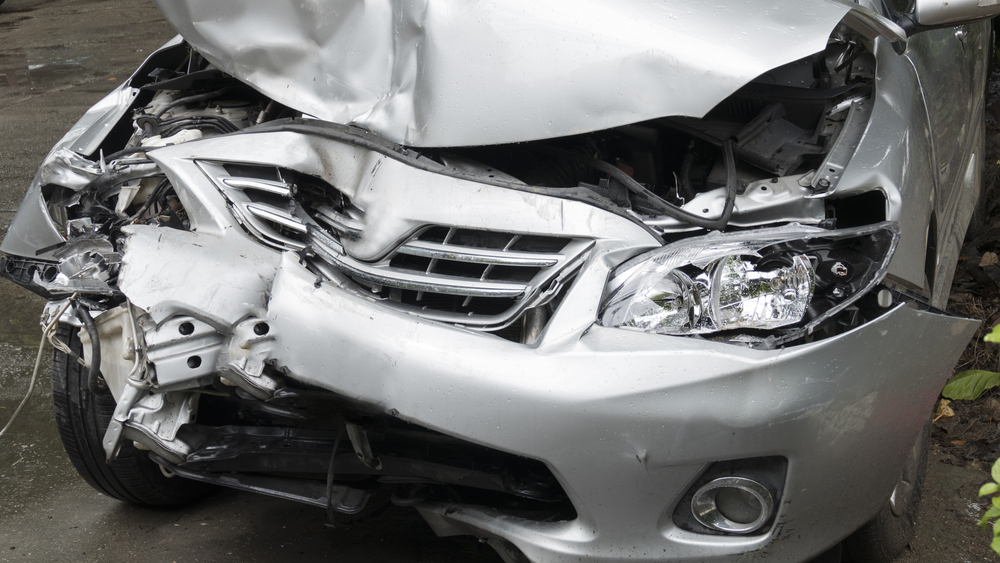
New York follows a pure comparative negligence system, which means you are not barred from recovering compensation even if you share some responsibility for the crash, and after a car accident in NYC this rule can make a major difference in how damages are calculated. Under CPLR § 1411, any recovery you receive is reduced only by your percentage of fault, nothing more. This rule ensures that your own mistakes do not erase your right to pursue damages.
Who Decides the Percentage of Fault?
Ultimately, the allocation of fault is a question for a jury to decide if a lawsuit goes to trial. But the vast majority of personal injury cases never see a courtroom.
Most personal injury cases settle before trial. That means the percentage of fault assigned to you will most likely be hammered out during negotiations between your attorney and the defendant's insurance company, which is where a car accident lawyer can help protect you from being unfairly blamed and push for a settlement that reflects the facts.
The Players Involved
Several parties may weigh in on fault allocation at different stages:
- Insurance adjusters begin their assessment almost immediately after a claim is filed. They review police reports, medical records, photos, and witness statements, looking for any reason to assign fault to you.
- Attorneys on both sides present competing versions of events during negotiations. This back-and-forth often determines where the fault percentage lands in a settlement.
- Judges may become involved if pre-trial motions address liability issues, or if the case is resolved through a bench trial rather than a jury trial. In some instances, a judge may rule on summary judgment motions that establish certain facts about fault before trial.
- Juries serve as the final arbiters if the case proceeds to trial. They hear testimony, review evidence, and assign a specific percentage of fault to each party.
- legal professional witnesses frequently shape fault determinations in complex cases. Accident reconstructionists, engineers, medical professionals, and other specialists provide testimony that can shift the percentage in either direction. A biomechanical legal professional , for example, might testify about whether your injuries are consistent with the mechanism of the accident or whether pre-existing conditions played a role.
When Fault Determination Begins
Comparative negligence takes shape long before a case reaches a courtroom. Insurance companies start building their argument the moment a claim is filed, and they rely heavily on early statements and documentation.
This process often begins within hours of an accident. An adjuster may call while you're still in the hospital, framing their questions as routine or administrative. Be careful—anything you say can become ammunition for arguing that you bear partial responsibility.
Common Scenarios Where Comparative Negligence Arises
Auto Accidents
Disputes over fault are incredibly common in motor vehicle collisions, where multiple factors contribute to a crash.
- Intersection Crashes: Consider a scenario where one driver fails to yield at a flashing yellow light while the other driver, who has the green light, is speeding. The first driver’s failure to yield is a clear violation, but the second driver’s speeding, a violation of the Vehicle and Traffic Law, may also be considered a contributing factor. A jury would have to weigh both actions to assign percentages of fault.
- Rear-End Collisions: While there is a strong presumption that the rear-most driver is at fault in a rear-end collision, this is not absolute. If the lead driver had non-functioning brake lights or stopped suddenly and without reason on a high-speed road like the I-90 Thruway, they may be assigned a portion of the blame.
Pedestrian Accidents
When a vehicle strikes a pedestrian, the driver's insurance company typically looks for ways to argue the pedestrian was at fault, which often leads people to ask, car accident can you claim injury, when blame is disputed.
- Jaywalking: Crossing the street outside of a designated crosswalk is a common tactic used by defendants. They will point to VTL § 1152, which governs a pedestrian's duty to yield the right-of-way. However, this does not give drivers a free pass. New York law also states that drivers have a duty to exercise due care to avoid colliding with pedestrians under VTL § 1146. An injured pedestrian who was jaywalking frequently recovers substantial damages due to the severity of injuries.
The Seat Belt Defense and Mitigation of Damages
New York has a specific rule related to seat belt usage that fits within the framework of comparative negligence. Failing to wear a seat belt, a violation of VTL § 1229-c, does not cause the accident itself. For this reason, it is not used to argue that you were at fault for the crash.
However, it is used to argue about the severity of your injuries. This is known as the seat belt defense, and it relates to the concept of mitigation of damages. Simply put, the law expects individuals to take reasonable steps to minimize their own harm.
A defendant could argue that your injuries would have been less severe had you been wearing a seat belt. If they successfully prove this, a jury reduces the amount of damages you receive for your injuries. The defendant has the burden of proof and typically must present testimony from a medical or biomechanical professional to show exactly how a seat belt would have made a difference in your specific case.
Burden of Pleading and Proof: Why the Defendant Must Prove Your Fault
It is common for an insurance adjuster to call an injured person and state with authority, "Our investigation shows you were 25% at fault, so our offer reflects that." They present their allocation of fault as a final, objective conclusion.
Without knowing their rights, many people simply accept this assessment, believing they have no choice. This causes them to lose out on thousands of dollars they are legally entitled to receive.
However, under CPLR § 1412, comparative negligence is an affirmative defense. This is a legal concept that simply means the burden of proof is on the defendant, not you. It is not enough for them to accuse you of negligence, they must include that allegation in their official answer and then prove it with reliable evidence.
Our practice focuses on conducting a thorough investigation to gather evidence that counters these claims, which is a core part of what car accident lawyers do. Dash cam footage, witness statements, black box data from vehicles, and accident reconstruction typically shift the allocation of fault significantly.
Joint and Several Liability: When Multiple Defendants Are Involved
The concept of pure comparative negligence becomes more complicated when an accident involves multiple at-fault parties, such as in a multi-car pileup on the Thruway. In these situations, New York's rules on joint and several liability come into play, specifically CPLR Article 16.
But here’s a vital strategic nuance: if a defendant is found to be 50% or less at fault in a case involving multiple defendants, they are generally only responsible for paying their share of non-economic damages. Non-economic damages are things like pain and suffering. For economic damages, like medical bills and lost wages, each defendant may be held responsible for the full amount regardless of their percentage of fault.
This rule comes with important exceptions, especially in cases involving multiple drivers or vehicle owners, and it highlights how different factors cause the most car accidents and how fault can be spread across parties. It also shows why the way fault is divided matters so much. If one defendant is mostly responsible for the crash but has very little insurance, while another has only a small share of fault but a much larger policy, the jury’s allocation of responsibility will directly affect how much of your award you can realistically collect.
FAQ for New York Comparative Negligence
Does my insurance rate go up if I am found partially at fault in an accident I didn't cause?
This depends on your insurance carrier, your policy, and the specifics of the incident. However, New York law provides some protection.
Under New York Insurance Regulation 64, insurers cannot increase your premiums or refuse to renew your policy based solely on an accident where you were not "principally at fault." The regulation defines this as situations where you bear 50% or less of the responsibility for the collision. If the other driver was primarily to blame, your carrier generally cannot penalize you for filing a claim.
Can a passenger be found partially at fault?
It is rare, but possible. For instance, if a passenger interfered with the driver (e.g., grabbed the steering wheel) or knowingly got into a car with a visibly intoxicated driver, a defendant could argue the passenger bears some comparative fault for their own injuries.
What if I was injured at work? Does comparative negligence apply?
This is a complicated area. While comparative negligence applies to many workplace injury claims, New York has special protections for certain workers. For example, under the Scaffold Law (Labor Law § 240(1)), comparative negligence is generally not a defense in cases involving elevation-related risks for construction workers.
Do I still have to pay my deductible if the other driver was mostly at fault?
Typically, yes. You will likely have to pay your collision deductible to your own insurance company upfront to get your vehicle repaired. Your insurer will then seek reimbursement from the at-fault driver's insurance company (a process called subrogation). If they successfully recover the full amount, you should be reimbursed for your deductible.
You Focus on Your Health. We’ll Hold the Insurance Companies Accountable.
Do not think that you have no claim just because you were partially at fault. That’s exactly what the insurance adjusters want you to think.
William Mattar Accident Lawyers has years of experience handling cases where liability is disputed. We know how to gather the evidence needed to challenge unfair allocations of blame and pursue the maximum compensation available under the law.
If you have questions about a recent accident or want to know if you have a claim despite shared blame, contact us today.