
The black box or, more technically, an Event Data Recorder (EDR), captures objective data like speed, braking, and steering in the moments before impact. This information could be the difference between a successful injury claim and walking away with nothing.
However, this data is incredibly fragile, and a New York truck accident lawyer can act quickly to preserve it before it disappears. It can potentially be overwritten just by starting the car a few times or destroyed entirely when a vehicle is repaired or sent to salvage. This reality creates an urgent timeline, a true race for the black box to preserve the digital truth of what happened.
If you are worried that this evidence is disappearing, we will help you take the steps to preserve it. Call us today to discuss your case.
Key Takeaways for Preserving Black Box Evidence
- Act immediately to preserve black box data. This evidence is fragile and could be overwritten by routine actions like starting the car or destroyed when a vehicle is repaired.
- A formal spoliation letter is the first legal step. This document officially notifies the at-fault party and their insurer of their duty to preserve the vehicle and its electronic data.
- EDR data provides objective facts about a crash. Information like speed, braking, and steering input cuts through conflicting witness accounts to establish what truly happened.
Defining the Black Box: What Data Actually Exists?
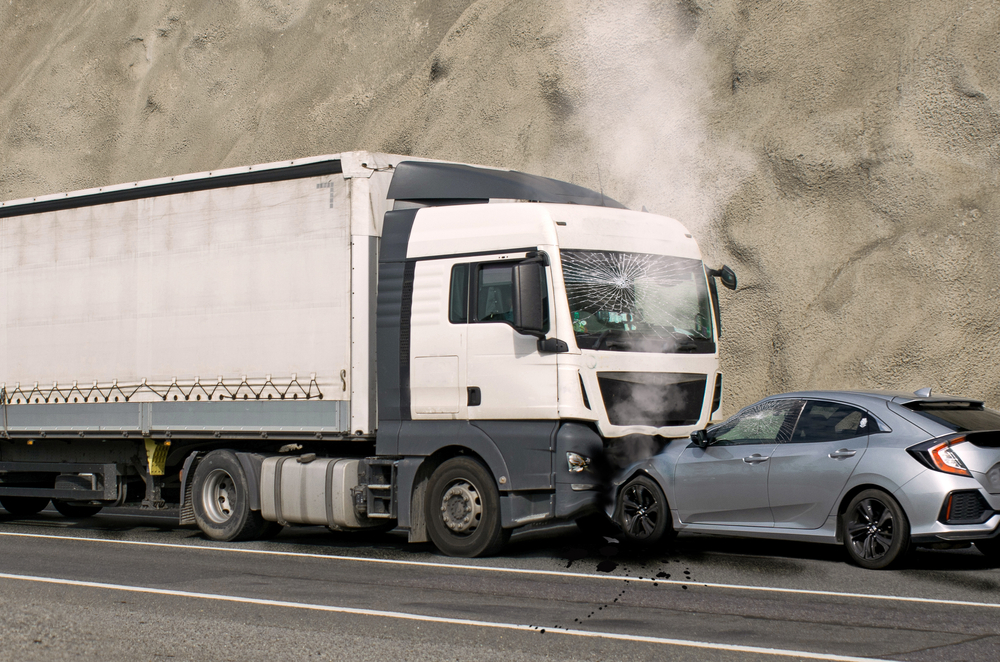
The term black box is a catch-all for two similar, yet distinct, devices. Most passenger cars have an Event Data Recorder (EDR), while commercial trucks use a more sophisticated system called an Engine Control Module (ECM). Both serve as silent, objective witnesses, recording data in the seconds surrounding a crash.
Key Data Points Recorded
Federal regulations have standardized much of the data that EDRs must collect if a manufacturer chooses to install one. This information provides a second-by-second account of a vehicle's operation:
- Vehicle Speed: The device records speed in the five seconds leading up to the crash, which confirms or denies claims of speeding.
- Brake Application: The EDR logs whether and when the brakes were applied. This shows if a driver reacted in time or failed to brake at all.
- Throttle Percentage: This data point indicates if the driver was accelerating into the collision, a key indicator of aggressive or inattentive driving.
- Seatbelt Status: The system records if seatbelts were fastened, which is relevant to injury claims.
- Steering Input: The angle of the steering wheel is recorded, showing if a driver attempted an evasive maneuver.
The Race Against the Clock: How Data Disappears
The biggest challenge with black box data is its volatility. The moments after a crash begin a countdown in which the evidence could vanish long before anyone thinks to look for it.
Ignition Cycles and Overwriting
Many EDR systems are designed to store data from a collision for a limited number of ignition cycles, which is why preserving evidence quickly after an NYC truck wreck matters. An ignition cycle is simply the act of starting the vehicle. When a wrecked car is moved from the crash scene to a tow yard, and then perhaps to an assessment lot or body shop, each start of the engine counts. After a certain number of cycles, the system may automatically overwrite the crash data with new information.
The Rapid Response Reality
In cases involving commercial trucks, the trucking company and its insurer deploy a rapid response team to the scene. Their job is to manage the situation, control the narrative, and collect evidence, including the ECM data.
Once they have their download, the truck may be repaired and put back into service, potentially erasing the data forever. While this is a standard business practice, it puts an injured person at a disadvantage if they do not act just as quickly.
Power Loss and Physical Damage
The black box is a physical electronic device. If the vehicle's battery is disconnected improperly, or if the module itself was damaged in the collision, the data may become corrupted, which can be especially damaging when the crash involves an uninsured truck driver in New York and proof of fault is critical. Preserving this data requires a trained forensic technician who safely accesses the module and downloads the information using established chain-of-custody protocols to ensure it is admissible in court.
The Danger of Authorizing Repairs
Even if the other driver was clearly at fault, be cautious about authorizing repairs on your own vehicle. Repairing the damage before data is downloaded could be seen as destroying evidence. An insurance company could argue that by fixing your car, you prevented them from seeing the full picture of the impact, which complicates efforts to establish liability.
Spoliation of Evidence: New York Legal Doctrine
When evidence is destroyed, whether intentionally or negligently, the law has something to say about it. In New York, this is covered by a legal doctrine known as spoliation of evidence. Spoliation occurs when a party destroys, alters, or fails to preserve evidence that it knew or should have known would be relevant to a potential lawsuit.
When Does the Duty to Preserve Begin?
A person or company has a legal duty to preserve evidence as soon as they reasonably anticipate litigation. After a serious Thruway crash where injuries are apparent, any party involved should know that a lawsuit is a real possibility.
However, this duty isn't always self-enforcing. A formal notice is often required to ensure the at-fault party and their insurer understand their obligation to preserve the vehicle and its electronic data recorder, especially when you plan to sue for in a truck accident and need that evidence to support your claim.
What Are the Consequences for Destroying Evidence?
New York courts have broad discretion in how they penalize a party for the spoliation of evidence. The remedies are designed to level the playing field and punish the party that destroyed the proof.
Sanctions may include:
- Adverse Inference Instruction: This is one of the most powerful sanctions. A judge will instruct the jury to assume that the destroyed evidence would have been unfavorable to the party that destroyed it.
- Striking Pleadings: In severe cases, a judge may strike the defendant's answer to the lawsuit, which leads to a default judgment in favor of the plaintiff.
- Monetary Sanctions: The court will order the spoliating party to pay fines or cover the legal fees the other side incurred in dealing with the missing evidence.
While these protections exist, the injured party must first prove that the evidence existed, that it was relevant, and that the other party had a culpable state of mind, which ranges from intentional destruction to simple negligence. This is why taking swift legal action is so important.
Winning the Race: The Legal Process of Preservation
The Spoliation Letter
The first and most immediate step is sending a formal spoliation letter or a letter of preservation.
This is a legally significant document sent to the at-fault driver, their insurance carrier, and, if applicable, the trucking company. This letter identifies the specific vehicle by its VIN and explicitly demands that the vehicle and its EDR or ECM be preserved in their post-accident condition for inspection.
Temporary Restraining Orders (TROs)
In some situations, a preservation letter may not be enough, and truck accident lawyer help can be critical when evidence is at risk of being destroyed. If there is a credible fear that a vehicle, especially a commercial truck, is about to be repaired, sold for salvage, or scrapped, we will petition a New York Supreme Court judge for an emergency court order that prohibits the owner from tampering with or disposing of the vehicle until a formal inspection occurs.
Forensic Imaging and Chain of Custody
Getting the data is only half the battle; it must be done correctly. To be admissible in court, the data must be extracted by a forensic specialist who follows a strict chain-of-custody protocol. This involves creating a forensic image of the data module (a perfect, bit-for-bit copy) that is verified as unaltered. This ensures the integrity of the evidence and prevents the other side from challenging its authenticity.
Commercial Trucks vs. Passenger Cars: Thruway Nuances
While the concept of a black box is similar for both cars and trucks, collisions involving tractor-trailers on the Thruway introduce another layer of difficulty. The data available is typically more extensive, and federal regulations create additional obligations for trucking companies.
Federal Regulations as a Corroborating Source
The Federal Motor Carrier Safety Administration (FMCSA) requires trucking companies to maintain extensive records. These include hours-of-service logs, vehicle inspection reports, and maintenance records. This documentation corroborates the data found on the truck's ECM.
For example, if the ECM data suggests brake failure, the maintenance records may show that the brakes had not been properly serviced.
Telematics, Cloud Data, and ELDs
Modern commercial trucking fleets rely on far more than just the ECM. Most are equipped with telematics systems (like satellite tracking) and Electronic Logging Devices (ELDs) that transmit data to the cloud in real-time. Even if a truck's ECM is physically destroyed in a catastrophic crash, a wealth of data about the truck's speed, location, and hours of operation may still exist on a server. Demanding the preservation of this cloud data is a sophisticated but necessary part of the investigation.
Identifying Multiple Defendants
In a Thruway crash with a commercial truck, there are typically multiple potential defendants. The driver, the trucking company that owns the tractor, and the company that owns the trailer could all be separate entities. Each may have different insurance policies and different sets of data. A thorough investigation involves identifying every party and securing the unique data each one controls.
FAQ for Electronic Evidence in Auto Cases
How long do I have before the black box data is overwritten?
This varies by manufacturer and the specific circumstances, but the safe answer is to assume you have days, not weeks. Some systems overwrite data after just a handful of ignition cycles. The best approach is to act immediately to have the vehicle secured and the data preserved.
Does the New York State Police download the black box in every Thruway crash?
No. The State Police typically only perform forensic downloads of EDRs in cases involving criminal charges, such as vehicular manslaughter, or in fatal accidents. For most civil injury cases, it is up to the individuals involved and their legal representatives to take the initiative to preserve and download the data.
Can I get the black box data if the other car was a rental?
Yes, but it adds another layer of difficulty. The preservation letter must be sent to both the driver and the rental car company (like Hertz or Enterprise). Rental companies have their own protocols for handling wrecked vehicles, so moving quickly is important to prevent the car from being sold at auction before the data is retrieved.
What if the black box was destroyed in the crash fire?
Even if the physical EDR or ECM module is destroyed, all is not lost. As mentioned earlier, secondary sources of data like cloud-based telematics from trucking companies, dash cameras (from the vehicles involved or witnesses), and even traffic or toll plaza cameras help reconstruct the accident.
Does the black box record conversations inside the car?
No. This is a common misconception based on airplane black boxes. EDRs in vehicles do not record audio or video; they only record technical vehicleinformation.
Don't Let the Evidence Fade Away
After a serious Thruway crash, you cannot afford to rely on the police report alone. A police report is typically based on conflicting witness statements and may not capture the full story. The electronic data stored in a vehicle's black box is the objective truth, but it is a truth with an expiration date.
The race for the black box is real, and the other side is already running. You do not have to run it alone. William Mattar, P.C.’s practice focuses on mobilizing immediately to send legally-binding preservation letters and coordinate with forensic experts to secure this data before it is lost.
If you were injured in a crash, securing this data is the first and most powerful step toward a fair recovery. Contact William Mattar, P.C. today.