If you were involved in a motorcycle accident in New York, you may wonder, Do motorcycles have the right of way? The simple, direct answer is this: In New York State, motorcycles are subject to the same traffic laws as all other motor vehicles. They do not have a special, superior right of way, but—and this is the part that is so often ignored—they are also not required to yield their right of way to larger vehicles. A motorcyclist has the same rights and responsibilities as the driver of a car, a van, or a truck.
Understanding this principle is not just a matter of traffic law; it is the key to protecting your rights and your well-being after a crash. Let’s walk through what “right of way” truly means and why this concept is so vital for injured motorcyclists. A New York motorcycle accident lawyer can help you interpret these laws and pursue compensation if another driver’s failure to yield caused your injuries.
The Truth About "Right of Way": It’s Given, Not Taken
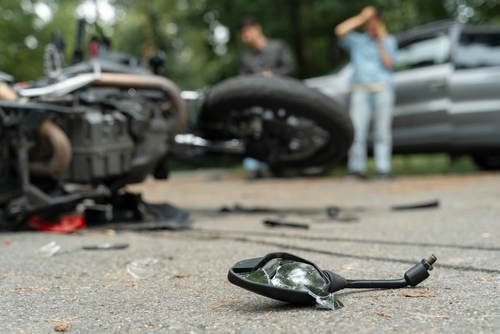
One of the biggest misconceptions about traffic laws is the idea that a driver or rider has the right of way. In reality, traffic laws never grant you the right of way; they only state when you are required to yield the right of way to someone else. It’s a subtle but crucial distinction — and for many riders questioning are motorcycles worth the risk, this legal nuance can mean the difference between safety and tragedy.
Think of it as a set of rules designed to create a safe, predictable flow of traffic. These rules dictate who should proceed and who should wait in any given situation to prevent collisions. When a driver fails to yield the right of way as required by law, they are acting negligently and can be held responsible for the harm that results.
The New York Vehicle and Traffic Laws define which motorist has the right of way in a given situation.
- At a yield sign: You must slow down and yield to all traffic on the intersecting road.
- Entering a roadway: A driver pulling out of a driveway, parking lot, or from a curb must yield to vehicles already on the road.
- Pedestrians in a crosswalk: All vehicles must yield to pedestrians in a crosswalk.
Notice that none of these rules mentions a different standard for motorcycles. A car turning left must yield to an oncoming motorcycle just as it would to an oncoming truck. A car at a stop sign must wait for a passing motorcycle with the right-of-way to clear the intersection. The law is clear and equal, and if another driver fails to follow it, you may need to get a lawyer for a motorcycle accident to protect your rights and pursue fair compensation.
Why Are Motorcyclists Often Blamed for Accidents?
If the law is so clear, why is there so much confusion? Why are motorcyclists so often unfairly blamed for accidents? The answer lies not in the law books, but in human perception and bias.
The "Invisibility" Factor
The most common excuse given by drivers who cause a motorcycle crash is, "I just didn't see him." While this may sound like a simple evasion of blame, there is a psychological phenomenon behind it called "inattentional blindness." Drivers are often conditioned to look for other cars and trucks, large objects that occupy significant space. A motorcycle is much slimmer and can be easily hidden by a car's roof pillars (the "A-pillars" on either side of the windshield), other vehicles, or even roadside fixtures.
Furthermore, a motorcycle's single headlight can make it difficult for other drivers to judge its speed and distance. They might perceive the motorcycle as being farther away or moving slower than it actually is, leading them to make a disastrous decision like pulling out or turning in front of it.
This doesn't excuse their behavior. The fact that a motorcycle is smaller and may be harder to see places a greater responsibility on other drivers to be vigilant, to check their blind spots, and to look twice before making a move. Their failure to see you is not your fault; it is a failure of their duty to operate their vehicle with reasonable care.
Negative Stereotypes and Bias
Unfortunately, motorcyclists are often painted with a broad, unfair brush. The stereotype of the reckless, speeding "biker" weaving through traffic persists, and this can create a powerful bias in the minds of other drivers, police officers, and even insurance adjusters.
When an accident happens, this bias can lead people to automatically assume the motorcyclist was at fault, regardless of the facts. They might look for any evidence to confirm their preconceived notion while ignoring evidence that the car driver was the one who broke the law. We know that the vast majority of motorcyclists are safe, responsible operators who simply enjoy the freedom of the road. You should not be penalized because of a stereotype — and understanding what a motorcycle accident lawsuit take can involve is often the first step toward clearing your name and pursuing justice.
Common Right-of-Way Accidents and Who Is Truly at Fault
The vulnerability of a rider means that when another driver violates your right of way, the consequences can be catastrophic. Here are some of the most common and devastating scenarios we see.
The Left-Turn Collision
This is, by far, the most frequent cause of serious motorcycle accidents. The scene is tragically familiar: You are riding straight through an intersection with a green light. A driver coming from the opposite direction decides to make a left turn, cutting directly into your path. They either didn't see you or, more likely, they misjudged your speed and thought they had enough time to make the turn.
In this situation, the law is overwhelmingly on your side. The vehicle turning left has a clear legal duty to yield to all oncoming traffic. Their failure to do so is a direct violation of your right-of-way.
The Unsafe Lane Change
You are riding in your lane, maintaining a steady speed. Suddenly, a car in the adjacent lane swerves into your path without signaling or checking its blind spot. There is no time to react, no space to maneuver. The driver simply did not look. Because motorcycles occupy a smaller space in a lane, drivers often become careless, assuming the space is empty. This "look but failed to see" error is a classic form of negligence.
The Intersection Violation
You are approaching an intersection where you have the right of way. A driver on the cross street has a stop sign or a red light. Instead of waiting for you to pass, they "roll through" the stop sign or try to "beat the light," pulling out directly in front of you. They gambled with your life, assuming you were far enough away or that you could stop in time. Their failure to obey the traffic control device is a clear breach of their duty to yield.
The "Dooring" Accident
Especially common in urban areas with street parking, "dooring" happens when a driver or passenger of a parked car opens their door into the path of an oncoming motorcyclist. New York law requires individuals to check for traffic before opening a vehicle door. When they fail to do so, they are creating an unexpected and extremely dangerous obstacle, and they can be held liable for the resulting injuries.
In all of these scenarios, the core issue is the same: a driver failed to respect your legal right to be on the road. They violated the rules, and you paid the price — a reminder that every guide to motorcycle safety should emphasize not just defensive riding, but also holding negligent drivers accountable when they ignore those rights.
The Unspoken Cost: More Than Just a Broken Bone
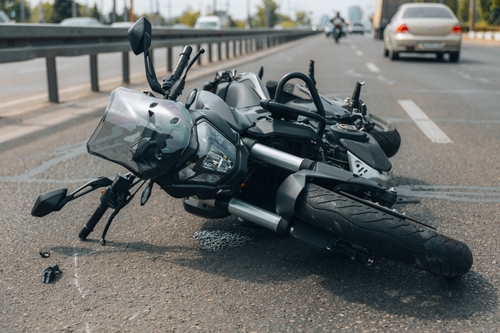
We need to be honest about what is at stake in a motorcycle accident. In motorcycle accident cases, the consequences are life-altering. You don’t have a steel cage, airbags, or a seatbelt to protect you. Your body bears the full force of the impact with the other vehicle and the unforgiving pavement.
The injuries are often severe and complex:
- Traumatic Brain Injuries (TBIs): Even with a helmet, the force of an impact can cause concussions or more severe brain injuries that can affect your memory, cognitive function, and personality forever.
- Spinal Cord Injuries: Damage to the spinal cord can result in partial or complete paralysis, changing every aspect of your life and requiring a lifetime of medical care.
- Severe Road Rash: This is not a simple scrape. It is a serious abrasion that can strip away layers of skin, muscle, and tissue, leading to permanent scarring, disfigurement, and a high risk of infection.
- Broken Bones and Crushing Injuries: The sheer force of a crash can shatter bones, leading to multiple surgeries, lengthy rehabilitation, and chronic pain.
- Internal Organ Damage: The blunt force trauma of a collision can cause life-threatening internal bleeding and organ damage.
Beyond the physical pain, there is an emotional and financial toll that can be just as debilitating. You may be unable to work, watching medical bills pile up while your income disappears. You may be struggling with anxiety, depression, or PTSD, haunted by the memory of the crash and fearful of ever riding again. Your family is also affected, as they become your caregivers and watch you suffer. This is the devastating reality that insurance companies often ignore when they try to downplay your injuries or shift the blame, which is why knowing what to do after a motorcycle accident can make a critical difference in protecting your recovery and your rights.
What to Consider After a Motorcycle Accident
If you are reading this after having been in a motorcycle accident, please know that the confusion, pain, and anger you are feeling are valid. In these critical hours and days, the steps you take can have a profound impact on your physical recovery and your ability to secure the compensation you need to rebuild your life. Understanding the motorcycle accident injury risk you face and acting quickly to document your injuries, gather evidence, and seek legal guidance can significantly improve your chances of a full recovery and fair compensation.
- Seek Medical Attention Immediately. Your health is the absolute priority. Even if you feel you can walk away from the scene, if you suspect injury you should consider getting a full medical evaluation. Adrenaline can mask serious internal injuries, and some symptoms of a TBI may not appear for hours or even days. A medical record from immediately after the crash is also crucial evidence for your claim.
- Report the Accident. Always call 911 from the scene. A police report creates an official record of the accident. While the officer’s initial determination of fault is not the final word, the report will contain vital information about the drivers, vehicles, witnesses, and conditions.
- Document Everything. If you are physically able, use your phone to take pictures and videos. Capture the positions of the vehicles, the damage to your motorcycle and the other car, any skid marks on the road, the traffic signs at the intersection, and your injuries. If there were witnesses, get their names and phone numbers. Their testimony could be invaluable.
- Understand the Insurance Company's Role. The other driver's insurance adjuster may call you very soon after the accident. They may sound friendly and concerned, but it is critical to remember that their job is not to help you. Their goal is to protect their company's bottom line by paying out as little as possible. They may try to get you to give a recorded statement or sign a quick settlement offer before you know the full extent of your injuries. Do not agree to either without first speaking to an attorney.
Contact a Trusted Motorcycle Accident Lawyer

At William Mattar, we understand the devastation a motorcycle accident can cause. For more than 30 years, our legal practice has been focused on helping people injured in motor vehicle accidents across New York State. We know the specific challenges that injured riders face, and we are committed to dismantling the unfair biases and proving the truth of what happened.
Your right-of-way was violated. Your life has been disrupted. You deserve a team with the experience and resources to fight for the maximum compensation you need to cover your medical bills, lost income, and pain and suffering.
Don't let valuable time slip away. Crucial evidence can disappear, and strict legal deadlines apply. Call William Mattar today at (716) 444-4444 or through our online form for a free and confidential consultation.