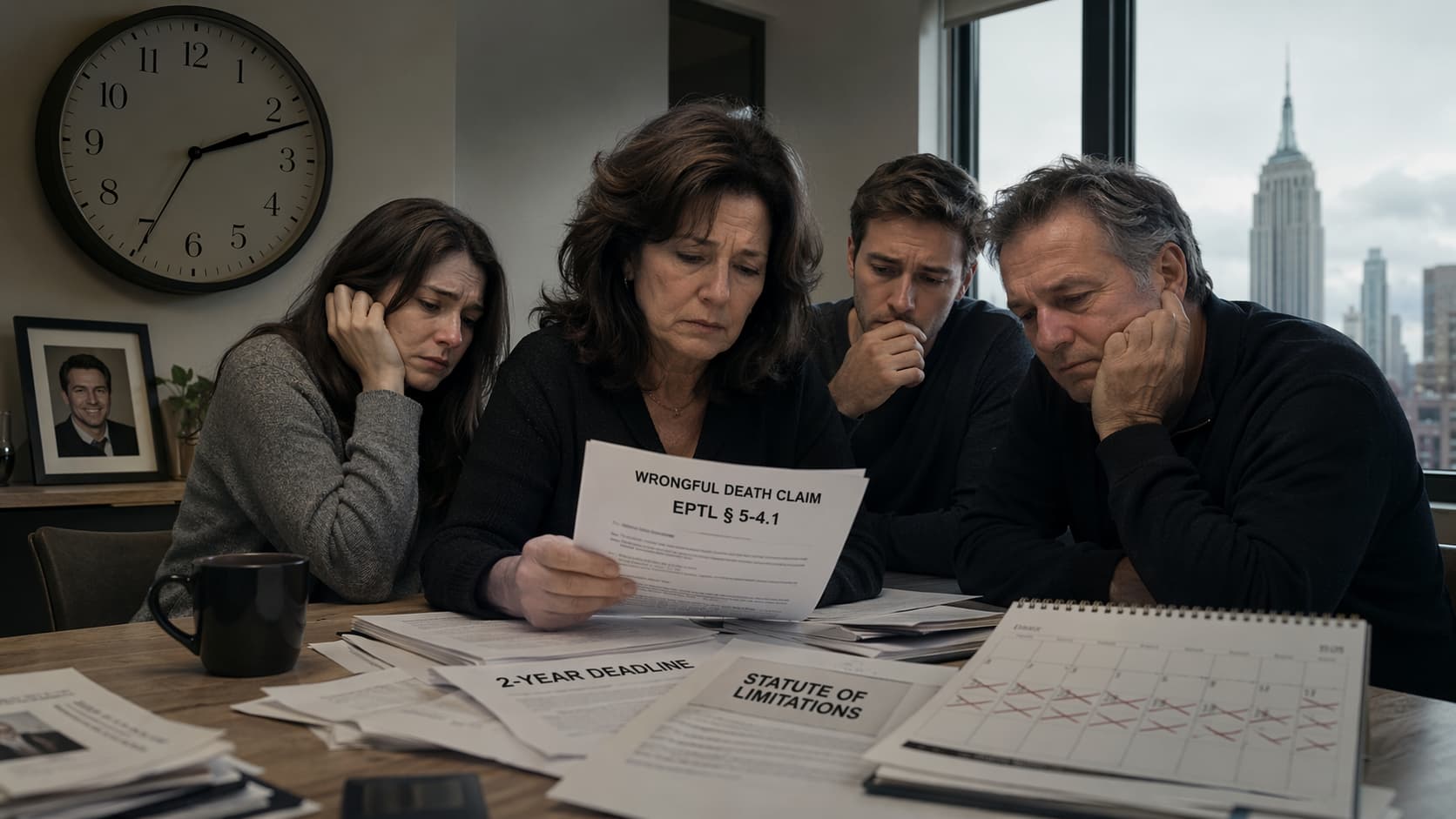
Many people assume all personal injury lawsuits in New York share the same three-year statute of limitations. That’s true for most negligence claims under New York’s CPLR § 214 — but it is not true for wrongful death cases.
In New York, a wrongful death claim must generally be filed within two years from the date of death under EPTL § 5-4.1. That shorter deadline often surprises families who believe they have the same three-year window that applies to other injury cases. Every case is unique, and the deadline can sometimes be far shorter.
Understanding this distinction is critical. Missing the two-year deadline can permanently bar a family’s right to pursue accountability and financial compensation, regardless of how strong the underlying case may be. Knowing which statute applies — and whether any limited exceptions could extend the deadline — can make all the difference.
Understanding this distinction, and the rare exceptions that might change this deadline, determines whether your family can pursue accountability and compensation.
Key Takeaways for New York Wrongful Death Statute of Limitations
- The wrongful death statute of limitations in New York is two years from the date of death, not the date of the accident or injury, making it shorter than the three-year deadline for standard personal injury claims.
- EPTL § 5-4.1 provides strict two-year filing requirements with limited exceptions—tolling provisions that pause the clock in personal injury cases rarely apply to wrongful death claims.
- Municipal wrongful death claims face even shorter deadlines, typically requiring a notice of claim within 90 days of appointing the estate representative, followed by additional limitations on when the lawsuit must be filed.
- Infant tolling may extend the deadline if the only beneficiary entitled to recover is a minor, but this exception is narrow and fact-specific, requiring careful legal analysis to determine if it applies.
Why New York's Wrongful Death Statute of Limitations Is Two Years, Not Three
Most New York personal injury claims follow CPLR § 214, which provides three years from the date of the accident to file a lawsuit. Car accident injuries, slip and falls, and assault cases typically allow three years. This timeline gives injured parties time to complete medical treatment and understand the full extent of their injuries. This timeline can change, however, depending on the circumstances - particularly where a municipal entity is involved.
Wrongful death cases operate under a completely different statute. EPTL § 5-4.1 establishes a two-year statute of limitations for wrongful death actions, measured from the date of death. This shorter deadline creates a dangerous trap for families who assume all accident-related lawsuits follow the same timeline.
Common Mistakes That Lead Families to Miss the Wrongful Death Deadline
Insurance adjusters know the statute of limitations rules. Defense attorneys track filing deadlines carefully. But grieving families often rely on general advice they've heard about injury claims, assuming wrongful death follows the same timeline.
Some dangerous assumptions that cause families to miss the two-year deadline include:
- Believing the three-year personal injury rule applies — Many New Yorkers know someone who filed a car accident case years after their injury, leading to the assumption that all accident claims allow three years.
- Confusing the date of injury with the date of death — Families sometimes calculate deadlines from the initial accident date rather than the death date, particularly when months or years separate the two events.
- Trusting early insurance assurances — Adjusters who tell families "you have plenty of time" aren't providing legal advice about whether delaying makes strategic sense.
A New York wrongful death lawyer can calculate the exact filing deadline for your case, identify any municipal notice requirements, and file the lawsuit before time runs out. Early consultation protects your family's legal right.
Two Claims, Two Deadlines: Wrongful Death vs. Survival Actions
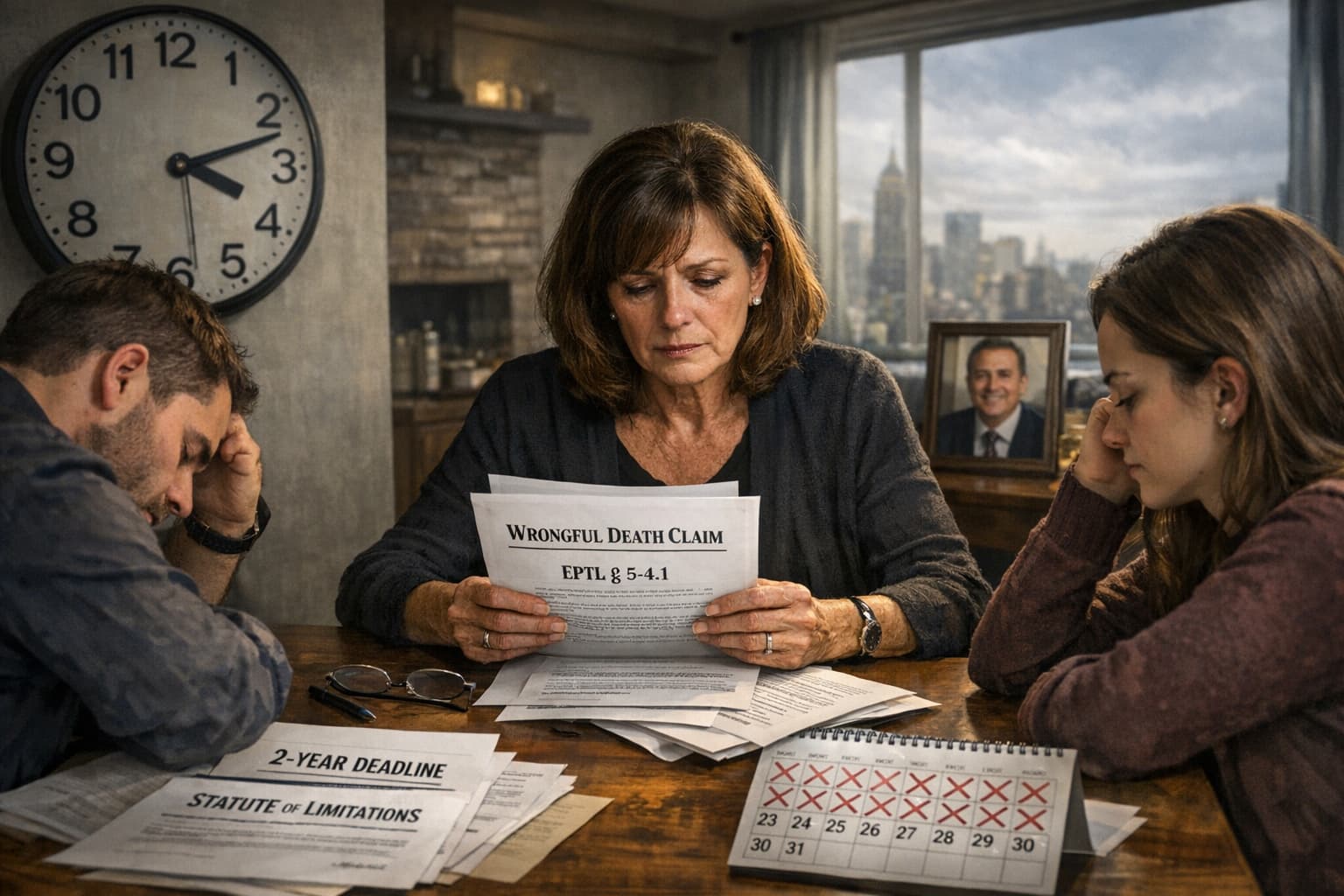
In addition to the wrongful death claim, New York law also allows families to pursue a survival action under EPTL § 11-3.2.
While the wrongful death action compensates family members for pecuniary losses they suffer because the person died: lost financial support, funeral expenses, and loss of parental guidance. The survival action compensates the estate for losses the deceased suffered before death: pain and suffering during the time between injury and death, medical expenses, and lost wages during that period.
Rare Exceptions That May Extend the Wrongful Death Deadline
New York courts strictly enforce the two-year wrongful death statute of limitations, and exceptions are narrow and fact-specific. It is typically best to speak with an experienced wrongful death attorney to determine the deadlines in your case and whether any exceptions apply.
Municipal Wrongful Death Claims Face Even Shorter Deadlines
Wrongful death claims against government entities, such as cities, counties, state agencies, or public hospitals, face additional procedural requirements that dramatically shorten the effective deadline.
General Municipal Law § 50-e requires serving a notice of claim on the municipal defendant before filing a lawsuit.
After serving the notice of claim, the family must file the lawsuit within additional time limits specified by statute. For many municipal defendants, the wrongful death lawsuit must still be commenced within two years of the death, but the notice of claim creates an additional earlier deadline that can bar the claim if missed.
What Happens If You Miss the Wrongful Death Filing Deadline
Missing the statute of limitations typically results in permanent dismissal of the claim. Once the two-year period expires, the defendant can move to dismiss the case based on the time bar, and courts grant these motions absent extraordinary circumstances. An attorney can seek to find an exception, but there is never any guarantee.
Insurance companies who might have negotiated settlement before the deadline have no reason to offer anything after the statute expires. The family loses all leverage. The negligent party faces no accountability. Years of lost financial support, funeral expenses, and other damages go uncompensated.
Courts strictly enforce limitation periods, so it is crucial to speak with an attorney as soon as possible to preserve your family’s right to compensation and get justice for your loved one.
FAQ for New York Wrongful Death Statute of Limitations
What if the estate representative isn't appointed right away?
Delays in appointing the estate representative don't automatically extend the wrongful death filing deadline. The personal representative must be appointed and must file the lawsuit within two years of the death. An experienced attorney can analyze whether an exception may apply.
If someone was injured and then died months later, which deadline applies?
Both deadlines may apply depending on what claims you're pursuing. The wrongful death claim must be filed within two years of the death date. The survival action for the deceased's pain and suffering before death follows the three-year statute of limitations from the injury date. Filing both claims together avoids missing either deadline. An experienced attorney can examine your unique situation and provide appropriate guidance.
What if we don't know the exact cause of death right away?
The two-year statute of limitations runs from the date of death, not from the date you receive autopsy results or determine the exact medical cause. Families waiting for toxicology reports, accident reconstruction findings, or medical examiner conclusions still face the same two-year deadline from when the person died. If you suspect negligence caused the death but don't have all the answers yet, consult a wrongful death attorney immediately.
Can the statute of limitations be extended if the defendant leaves New York?
CPLR § 207 may toll the statute of limitations if the defendant is continuously absent from New York State after the cause of action accrues, but this tolling is limited and fact-specific. The defendant must be actively avoiding service or residing outside New York in ways that prevent the lawsuit from proceeding. Simply being difficult to locate or spending time out of state doesn't automatically extend the wrongful death filing deadline. This is an extremely high bar and it is not a good idea to believe you can rely on it to extend the statute of limitations.
Contact William Mattar, P.C. About Your Wrongful Death Filing Deadline
The statute of limitations doesn't care that you're grieving. It doesn't pause while you're arranging funerals or figuring out how to pay bills. The clock starts, and it doesn't stop.
Our wrongful death attorneys identify each applicable deadline, wrongful death and survival actions, and municipal notice-of-claim requirements, to be sure your case is filed before time runs out. Early consultation protects your legal rights while you focus on your family.
Lost a loved one to someone else's negligence? Call William Mattar, P.C.. Phones are answered 24/7.
Past performance does not guarantee future results, including financial results or client satisfaction.