
In the confusion after a car accident, one of the most stressful questions is often the simplest: Who hit who? It's completely normal for your memory to feel hazy or for the other driver's story to be completely different from yours. When you’re trying to recover, the last thing you need is a "he said, she said" argument adding to your worries — a moment when a New York car accident lawyer can help protect your version of events with clear evidence and legal guidance.
Fortunately, determining fault isn't just a matter of opinion. The answer to how you can tell who hit who in a car accident is found by piecing together a puzzle of clear evidence, from the police report to the location of the vehicle damage, to paint an accurate picture of what really happened.
The Building Blocks of Proof: Key Evidence in a Crash
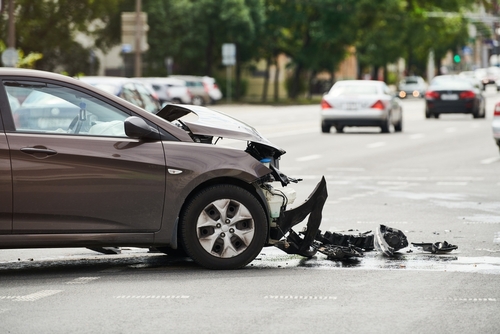
Think of evidence as a detective story, where every clue helps to tell the full story. In the legal world, this is often decided by a "preponderance of the evidence," a legal term that simply means it is more likely than not that one party’s version of events is true. This standard is less demanding than "beyond a reasonable doubt," which is used in criminal cases. To meet this standard, several types of evidence are often used to clearly show who hit who in a car accident, a process that highlights what car accident lawyers do to build a clear and persuasive case.
A strong case is built on a foundation of solid, verifiable proof. Each piece of evidence contributes to a comprehensive narrative of the collision, helping to answer the critical question of fault. Here are some of the most important elements that investigators and attorneys review:
- The Official Police Accident Report. When police respond to a crash scene, they create a report that includes their initial observations. This document often contains a diagram of the accident, notes on road conditions, citations issued, and sometimes the officer's preliminary opinion on how the collision occurred.
- Photographs and Videos. Pictures or videos taken at the scene are incredibly powerful. They capture the final resting positions of the vehicles, the specific points of impact, skid marks on the road, traffic signs, and any other visual details that might fade with time.
- Statements from Witnesses. Independent witnesses who saw the accident can provide an unbiased account of what happened. Their testimony about which driver had the green light, who was speeding, or who made an unsafe lane change can be very persuasive.
- The Nature and Location of Vehicle Damage. The damage to the cars involved tells a physical story. For instance, damage to the rear bumper of one car and the front bumper of another strongly suggests a rear-end collision. An automotive body professional can often analyze the damage to reconstruct the angle and force of the impact.
- Accident Reconstruction Analysis. In complex cases, a professional in accident reconstruction may be brought in. These individuals use physics, engineering, and computer modeling to scientifically recreate the crash sequence, providing a detailed analysis of vehicle speeds and driver actions.
These pieces of evidence work together to form a clear and convincing picture for insurance adjusters and, if necessary, a court. No single item is a magic bullet, but their combined weight can make all the difference in establishing what truly happened.
Understanding Negligence: The Legal Standard for Fault
When we talk about who is at fault, what we are really talking about is who was "negligent." Negligence is a legal concept that is central to personal injury claims. It doesn’t mean someone intended to cause harm, but rather that they failed to act with reasonable care, and that failure led to the accident and your injuries — a key factor in understanding how a car accident settlement take shape and who may ultimately be responsible for compensating you.
Every driver on a New York road, whether driving through downtown Rochester or on a quiet street in a smaller community, has a responsibility to operate their vehicle safely to avoid harming others.
To show that another driver was negligent, four things usually need to be demonstrated. First, the other driver had a duty to operate their vehicle safely. Second, that they breached, or violated, that duty. Third, that their breach of duty directly caused the accident. And fourth, that you suffered injuries or other losses as a result of the crash.
Common examples of driver negligence include distracted driving, speeding, running a red light, tailgating, or driving under the influence of alcohol or drugs. When you wonder how you can tell who hit who in a car accident, you are often really asking who was negligent.
New York's Pure Comparative Negligence Rule
New York has a specific way of handling situations where more than one person might share some blame for an accident. This is governed by a rule called Pure Comparative Negligence. This rule is important because it means you may still be able to recover compensation for your injuries even if you were partially at fault for the crash.
Here’s how it works: a court or insurance company will assign a percentage of fault to each driver involved. For example, if it's determined that the other driver was 80% at fault for running a stop sign, but you were 20% at fault for being slightly over the speed limit, you could still seek compensation. However, any award you receive would be reduced by your percentage of fault. In this case, your total compensation would be reduced by 20%. This system ensures that accountability is distributed based on each person's contribution to the incident, making the determination of fault even more critical.
How Insurance Companies Determine Who Hit Who in a Car Accident
After a crash, you will almost certainly be dealing with insurance companies. Their adjusters are the ones who conduct the initial investigation to determine fault and decide how much, if anything, the insurance company will pay. They are working for their employer, and their goal is to resolve claims based on their assessment of the evidence and their policyholder's liability — which is why understanding how these investigations work can help my car accident case by preparing you for what adjusters look for and how to protect your claim.
An insurance adjuster will collect and review much of the same evidence discussed earlier to get a full picture of the events. Their investigation is the first formal attempt at figuring out liability, and their conclusion will guide their settlement offers.
- Taking Initial Statements. The adjuster will contact everyone involved in the crash, including drivers and passengers, to get their version of what happened. It is very important to be careful and truthful in these conversations.
- Reviewing the Police Report. The police report is often one of the first documents an adjuster requests. They pay close attention to the officer's narrative, any citations given, and the crash diagram.
- Assessing Vehicle Damage. Adjusters will look at photos of the damage or send an appraiser to inspect the vehicles in person. They use this information to confirm the points of impact and the severity of the collision.
- Contacting Witnesses. If there were independent witnesses, the adjuster will likely try to speak with them to get a neutral perspective on the accident.
Once the adjuster has completed this process, they will make a fault determination. It is important to remember that this determination is not legally binding. It is the insurance company's opinion, and you have the right to challenge it if you believe it is incorrect.
Actions to Take from Home to Protect Your Rights
The time after an accident is crucial. Once you have received immediate medical attention and are safely back home, the steps you take can significantly impact your ability to build a strong claim. Being proactive and organized can help bring clarity to a chaotic situation. Hundreds of thousands of police-reported crashes occur across the state each year, and experiencing a car accident in New York can make the process feel overwhelming. Taking control of your own documentation can empower you during the claims process.
Here are some important actions you can take from the comfort of your home to help document your experience and protect your rights.
- Organize All Documents. Create a folder to keep all accident-related paperwork in one place. This includes medical bills, receipts for prescriptions, car repair estimates, and any correspondence from insurance companies.
- Be Cautious on Social Media. It is best to avoid posting anything about the accident, your injuries, or your daily activities on social media. Insurance companies often review social media profiles, and an innocent photo or comment can be taken out of context and used against your claim.
Staying organized and mindful of these details provides a solid foundation for your case and helps ensure that your side of the story is accurately represented.
FAQ for How Can You Tell Who Hit Who in a Car Accident?
Here are answers to some common questions that arise when trying to figure out who is at fault after a car crash in New York.
What happens if the other driver and I have different stories about the crash?
It is very common for drivers to have different recollections of an accident. When this happens, fault is determined by weighing the objective evidence. This includes the police report, the location of vehicle damage, physical evidence from the scene like skid marks, and the testimony of any independent witnesses. The more factual evidence you have to support your version of events, the stronger your position will be.
Does determining who is at fault affect my New York No-Fault insurance benefits?
No. New York is a No-Fault state, which means the applicable auto insurance policy covers your initial medical expenses and lost wages up to a certain limit, regardless of who caused the accident. Fault becomes the central issue when your injuries are considered "serious" under New York law, which then allows you to step outside the No-Fault system and file a claim against the at-fault driver for damages like pain and suffering.
How long do I have to file a personal injury claim after a car accident in New York?
In New York, there is a time limit for filing a lawsuit, which is known as the statute of limitations. For most personal injury claims stemming from a car accident, you generally have three years from the date of the accident to file a lawsuit, as outlined in New York Civil Practice Law & Rules § 214. It is important to be aware of this deadline, as failing to file within that timeframe can prevent you from ever seeking compensation in court.
Trusted Lawyers for Your Next Step Toward Your Recovery

Figuring out what happened in a car accident can be confusing. The questions about evidence, fault, and insurance companies can add a heavy layer of stress to an already difficult time. Understanding your rights and having a dedicated advocate on your side can make all the difference.
At William Mattar, P.C. our legal team focuses on helping people injured in motor vehicle accidents. We understand your challenges because this is the area of law we handle. Our attorneys have the knowledge and resources to investigate your accident, gather the necessary evidence to establish fault, and stand up for you throughout the claims process.
With our No Fee Until We Win, we work on a contingency fee basis and you don't have to worry about upfront legal fees. We get paid only after you receive compensation. If you have been hurt in a car, let our team help you find the clarity and support you need. Contact us today at (716) 444-4444 or through our online form for a free, no-obligation consultation to learn more about how we can help you.