When you are involved in a crash, two questions immediately dominate your thoughts: who was at fault, and who will pay for the damages and injuries? In New York, determining fault is based on a principle called comparative negligence, meaning more than one driver can be found partially responsible.
Payment for initial medical care and lost wages typically comes from the No-Fault insurance policy, but compensation for pain, suffering, and other significant losses is sought from the at-fault party's insurance. A New York car accident lawyer can help you navigate these claims, ensuring you receive full compensation for both your immediate and long-term losses.
While some situations seem clear-cut, the details of each collision are what truly matter. The path to receiving fair compensation begins with a careful look at the specific circumstances of the accident, from a fender bender in a Wegmans parking lot to a more serious collision on the Long Island Expressway.
Here are three car accident scenarios and who may be held liable for the resulting injuries and other losses:
Table of contents
Scenario 1: The Common Rear-End Collision
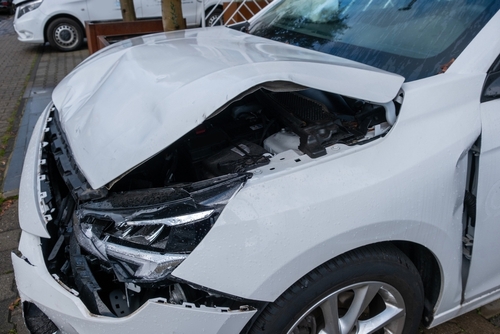
Imagine you are in stop-and-go traffic on the I-90 heading toward Buffalo, dutifully maintaining a safe distance. Suddenly, you feel a jarring impact from behind. A rear-end collision is one of the most frequent car accident scenarios, and in most cases, the fault seems obvious. The driver who strikes a vehicle from behind is usually presumed to be at fault. This is because every driver has a responsibility to maintain a safe following distance and be aware of the traffic ahead of them. Car accident lawyers do the critical work of investigating these crashes, gathering evidence, and proving liability to help victims recover full compensation.
However, this presumption is not absolute. There are specific situations where the driver of the front car could share a portion of the responsibility. The key is demonstrating that the lead driver did something unexpected or unsafe that contributed to the crash:
- The front driver’s brake lights were broken or non-functional.
- The lead driver suddenly and without reason put their car in reverse.
- The front car cut you off by making an abrupt and unsafe lane change, leaving you no time or space to react and stop safely.
Investigating these exceptions is crucial because New York's comparative negligence rule means that if the lead driver is found to be even 10% at fault, it can affect the outcome.
Who Pays?
So, who pays in this situation? Your No-Fault insurance is your first source of recovery for medical bills and a portion of your lost income. If your injuries meet the state's "serious injury" threshold, you can then file a claim against the at-fault driver's liability insurance for damages like pain and suffering. To support your claim, several pieces of evidence are vital.
- Photographs of the damage to both vehicles can help accident reconstructionists understand the force and angle of the impact.
- Statements from any witnesses who saw the collision can confirm your account of what happened.
- The official police report contains the responding officer's initial observations, diagrams, and sometimes a preliminary assessment of fault.
- Footage from nearby traffic cameras or dashboard cameras can provide objective proof of how the accident occurred.
Gathering this evidence helps build a strong case that clearly illustrates who was responsible for the collision.
Scenario 2: The Complicated Left-Turn Accident
Left-turn accidents are another common and often severe type of car accident scenario. Picture yourself at a busy intersection in downtown Syracuse, waiting to make a left turn. The light is green, but there is a steady stream of oncoming traffic. You believe you have a safe gap and begin your turn, only to collide with a car you did not see or whose speed you misjudged.
In most left-turn cases, the driver making the turn is considered primarily at fault. The law requires a turning vehicle to yield the right of way to all oncoming traffic that is close enough to be a hazard. This means the responsibility is on the turning driver to wait until it is completely safe to proceed. However, the other driver is not always free of blame. The principle of comparative negligence is frequently applied in these situations. An attorney can help my car accident case by analyzing traffic laws, reconstructing the crash, and identifying shared fault to strengthen your claim for compensation.
- The oncoming driver was speeding significantly, which means they reached the intersection much faster than a reasonable person would expect.
- The driver proceeding straight ran a red light or a stop sign, making their presence in the intersection unlawful.
- The oncoming vehicle was being operated at night or in poor visibility without its headlights on.
These factors can shift a portion of the fault to the driver who was traveling straight, impacting the final determination of responsibility.
Who Pays?
The question of who pays follows the same structure: No-Fault insurance covers initial economic losses, and a personal injury claim can be made against the at-fault party for non-economic damages if injuries are serious. Because these cases often involve shared fault, a thorough investigation is critical. A few key questions must be answered to untangle liability. Many people also wonder about the lawyer cost for a car accident in New York—most attorneys work on a contingency fee basis, meaning you pay nothing upfront and only owe fees if your case results in compensation.
- What was the status of the traffic signals for both drivers at the moment of impact? Was it a solid green light, a green arrow, or a yellow light?
- Did either driver's view of the intersection become obstructed by another vehicle, a building, or a natural feature like a tree?
- Were there any third-party witnesses, such as pedestrians or other drivers, who can provide an impartial account of the events?
The answers to these questions help paint a full picture of the accident, which is necessary for a fair allocation of fault and compensation.
Scenario 3: The Parking Lot Predicament
Parking lots are unique environments where typical traffic rules can feel a bit blurry. Imagine you are carefully backing out of a space at a busy shopping center in Rochester. At the same time, another car is backing out of a spot opposite you, and you collide. Or perhaps you are driving down a main lane when a car suddenly pulls out of a parking space directly into your path. These car accident scenarios are frustratingly common and present unique challenges for determining fault. When insurance disputes arise, filing a car accident lawsuit may become necessary to recover full compensation for your injuries, property damage, and other related losses.
Who Pays?
While parking lots are private property, established rules of driver conduct still apply. The primary rule is that cars in a thoroughfare or main travel lane have the right of way over cars pulling into or out of parking spaces. Drivers exiting a parking spot have a duty to yield until the lane is clear.
- If you are pulling out of a parking spot and hit a car that is already established in the driving lane, you will likely be found at fault.
- A driver who is not following the designated traffic flow, for instance, by cutting diagonally across empty parking spaces, will generally be held responsible for a resulting crash.
Every case is unique. These incidents highlight the importance of defensive driving, even at low speeds.
Because parking lot accidents are often minor and occur on private property, police may not respond or file a formal report. This makes your own evidence gathering more essential. Your No-Fault insurance will still apply if you are injured, and property damage will be handled through the at-fault driver's insurance. To protect your rights, you must act quickly to document the scene if safe and practicable.
- Use your phone to take extensive photos of the cars' positions and damage from multiple angles before they are moved.
- Look for any witnesses who may have seen the accident and politely ask for their name and contact information.
- Check with nearby stores or the property management office to see if any security cameras captured the incident.
Without a police report, this evidence becomes the primary basis for establishing what happened and who was at fault.
Compensation Available in a Car Accident Case

When your injuries are serious enough to pursue a claim beyond your No-Fault benefits, the goal is to recover compensation that covers the full scope of your losses. The financial recovery in a car accident case is designed to address not just the immediate bills, but the long-term impact the crash has on your life and livelihood. These damages fall into several distinct categories. Dealing with an insurance company after a car accident can be difficult, as adjusters often aim to minimize payouts. Having legal representation ensures your claim accurately reflects the true value of your losses.
- Economic Damages: This represents the tangible financial costs associated with the accident. It includes all past and future medical expenses not covered by your No-Fault policy, income you have lost from being unable to work, and any reduction in your future earning ability because of your injuries.
- Non-Economic Damages: This form of compensation addresses the immense personal and human cost of the collision. It is intended to account for your physical pain and suffering, emotional trauma, mental anguish, and the loss of enjoyment you experience when injuries prevent you from participating in hobbies and daily life activities.
- Incidental and Property Costs: You may also be able to recover other expenses incurred directly because of the crash. This can include the cost of repairing or replacing your vehicle, reimbursement for transportation to medical providers, or the cost of household help if your injuries prevent you from managing daily chores.
While no amount of money can undo the trauma of a serious collision, obtaining fair compensation can provide the financial resources necessary to rebuild and focus entirely on your health and well-being.
FAQ for Car Accident Fault and Payment Scenarios
Here are answers to some common questions that arise when handling a car collision claim
What does New York's "serious injury" threshold mean?
To pursue a claim for pain and suffering against an at-fault driver, you must generally show a “serious injury.” This includes conditions such as a fracture, significant disfigurement, permanent limitation of use of a body organ or member, or an injury that prevents you from performing your usual daily activities for at least 90 days.
What happens if the at-fault driver is uninsured or has minimal coverage?
If the at-fault driver has no insurance or not enough to cover your damages, you may be able to turn to your own policy. Supplemental Uninsured/Underinsured Motorist (SUM) coverage is a type of protection you can purchase that steps in to cover your losses in these situations.
How much time do I have to file a car accident claim in New York?
There are strict time limits, known as statutes of limitations, for filing a personal injury lawsuit in New York. Missing these deadlines can prevent you from ever being able to seek compensation for your injuries, so it is important to understand the applicable timelines for your case.
Is it a bad idea to talk to the other driver's insurance adjuster?
You should be very cautious when speaking with the other party's insurance company. Their goal is to minimize the amount they have to pay. They may ask leading questions or try to get you to make a recorded statement that could be used to undermine your claim later.
Can I still have a case if I believe I was partially to blame for the accident?
Yes, you can. New York follows a pure comparative negligence rule. This means you can still recover damages even if you were partially at fault, but your total compensation award will be reduced by your percentage of fault. For example, if you are found 20% at fault, your recovery would be reduced by 20%.
What if my accident was caused by a dangerous road condition?
If a road defect like a massive pothole, poor signage, or an improperly designed intersection caused your crash, you might have a claim against the government entity responsible for maintaining the road. These cases are complex and have very short notice deadlines.
The Importance of Legal Representation After a Car Accident

A car crash is a deeply personal and challenging experience. Untangling the complex questions of fault and payment adds a layer of stress when all of your energy should be focused on healing. You do not have to handle this confusing process by yourself or guess about the value of your claim. Getting clear, straightforward information about your rights and options is the most important step you can take.
The legal team at William Mattar Accident Lawyers focuses on helping people injured in motor vehicle accidents. Our experience is centered on these specific types of cases, and our large, established team is ready to support you. We are available 24/7 to listen to your story and help you understand the path forward. Contact us today at (716) 444-4444 or through our online form for a free, no-obligation consultation. Let’s discuss your case and legal options.